Thursday, December 14, 2023

Roger L'Estrange (42)

Here are some more fables from Roger L'Estrange's Fables of Aesop and Other Eminent Mythologists, and you can click here for all the L'Estrange fables at this blog.


A Lapwing Preferr'd.
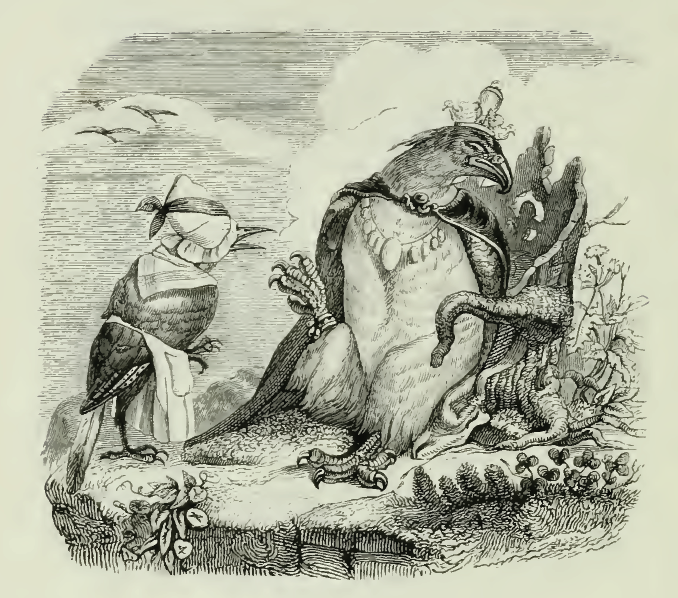
Upon a General Invitation to the Eagle's Wedding, there were several Birds of Quality among the Rest, that took it in Heavy Dudgeon to see a Lapwing Plac'd at the Upper End of the Table. 'Tis true, they cry'd, he has a kind of a Coxcomb upon the Crown of him, and a Few Tawdry Feathers; but Alas, he never Eat a Good Meals Meat in his Life, till he came to This Preferment.
'Tis a Scandal to a Government, and there goes Envy along with it, where Honours are Conferr'd upon Men for Address, Beauty, and External Advantages, rather then for their Good Qualities and Virtues.


A Hunts-man and a Currier.
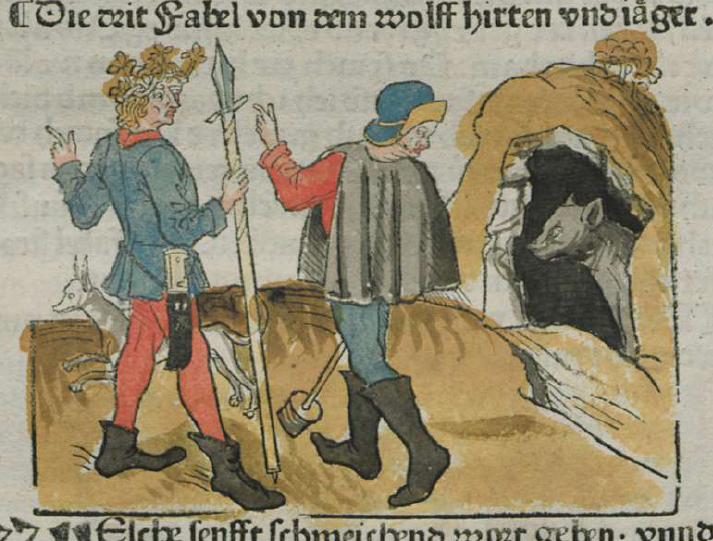
A Currier bought a Bear-Skin of a Hunts-man, and laid him down ready Money for't. The Hunts-man told him that he would kill a Bear next day and he should have the Skin. The Currier, for his Curiosity, went out with the Hunts-man to the Chace; and mounted a tree, where he might see the Sport. The Hunts-man advanc'd very bravely up to the Den where the Bear lay, and threw in his Dogs upon him. He Rustled out immediately, and the Man missing his Aim, the Bear overturn'd him. So the Fellow held his Breath, and lay Stone still, as if he were dead. The Bear snuffled, and smelt to him; and took him for a Carcass, and so left him. When the Bear was gone, and the Danger over, down comes the Currier from the Tree, and bad the Hunts-Man Rise. Heark ye, my Friend, says the Currier, the Bear whisper'd somewhat in your Ear. What was it, I prithee? Oh (says the Hunts-Man) he bad me have a care for the future, so make sure of the Bear, before I sell his Skin.
Let no Man undertake for more than he is able to make good.


An Oxe and a Heifer.
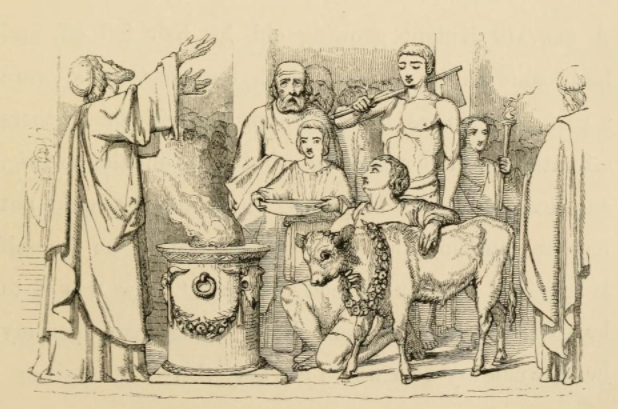
A Wanton Heifer that had little else to do than to frisk up and down in a Meadow, at Ease and Pleasure, came up to a working Oxe with a Thousand Reproaches in her Mouth; bless me, says the Heifer, what a Difference there is betwixt your Coat and Condition, and mine! Why, what a gall'd nasty Neck have we here! Look ye, mine's as clean as a Penny, and smooth as Silk I warrant ye. 'Tis a lavish Life to be yoak'd thus,and in perpetual Labour. What would you give to be as free and easy now as I am? The Oxe kept these Things in his Thoughts, without one Word in Answer at present; but seeing the Heifer taken up a while after for a Sacrifice: Well Sister, sayshe, and have you not frisked fair now, when the Ease and Liberty you valu'd your self upon, has brought you to this End?
'Tis no new Thing for Men of Liberty and Pleasure, to make sport with the Plain, Honest Servants of their Prince and Country. But mark the End on't, and while the one labours in his Duty with a good Conscience, the other, like a Beast, but Fatting up for the Shambles.


A Hermit and a Soldier.
There was a Holy Man, that took a Soldier to task, upon the Subject of his Profession, and laid before him the Hazard, the Sins, and the Troubles that attend People of that Trade: Wherefore, says he, for your Soul's Sake, Sir, pray give it over. Well! Father, says the Soldier, I'll do as you bid me; for really we are so ill paid, and there's so little to be gotten by Pillage, that I fancy I had e'en as good betake myself to a godly Life.
When People can live no longer by their Sins, 'tis high time for them to mend their Manners.


A River and a Fountain.
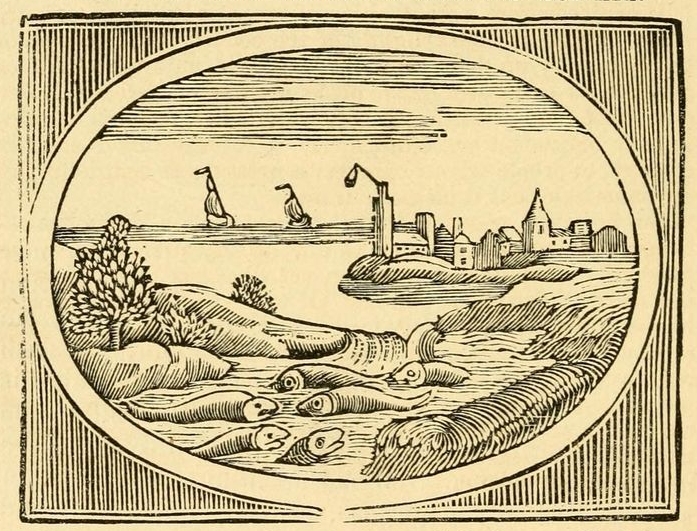
There happen'd a Dispute betwixt a River and a Fountain, which of the Two should have the Preference. The River valu'd it self upon the Plenty and Variety of Fish that it produc'd; the Advantages of Navigation; the many Brave Towns and Palaces that were built upon the Banks of it, purely for the Pleasure of the Situation. And then for the General Satisfaction, in fine, that it yielded to Mankind, in the Matter both of Convenience and Delight: Whereas (says the River) the Fountain passes obscurely through the Caverns of the Earth; lies bury'd up in Moss, and comes creeping into the World, as if it were asham'd to shew the Head. The Fountain took the Insolence and the Vanity of This Reproche so Heinously, that it presently Choak'd up the Spring, and Stopt the Course of its Waters: Insomuch that the Channel was immediately dry'd up, and the Fish left Dead and Stinking in the Mud; as a Just Judgment upon the Stream for Derogating from the Original and Author of All the Blessings it Enjoy'd.
He that Arrogates any Good to Himself, detracts from the Author of all the Good he Enjoys.


Monday, December 11, 2023

Roger L'Estrange (41)

Here are some more fables from Roger L'Estrange's Fables of Aesop and Other Eminent Mythologists, and you can click here for all the L'Estrange fables at this blog.


The Mice and the Oak.
The Mice found it so troublesom to be still climbing the Oak for every Bit they put in their Bellies, that they were once to set their Teeth to't, and bring the Acorns down to them; but some wiser than some, and a Grave Experienc'd Mouse, bad them have a care what they did; for it we destroy our Nurse at present, who shall feed us hereafter?
Resolution without Foresight is but a Temerarious Folly: And the Consequences of Things are the first Point to be taken into Consideration.


A Fox and a Worm.
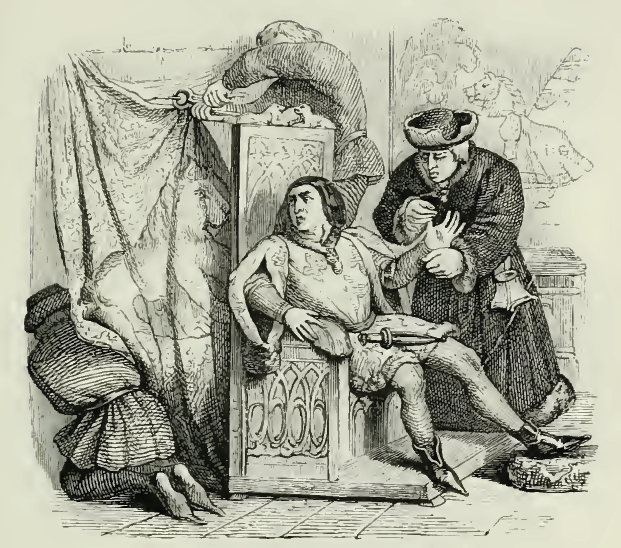
A Worm put forth his Head out of a Dunghill, and made Proclamation of his Skill in Physick. Pray, says the Fox, Begin with your own infirmities before you Meddle with other Peoples.
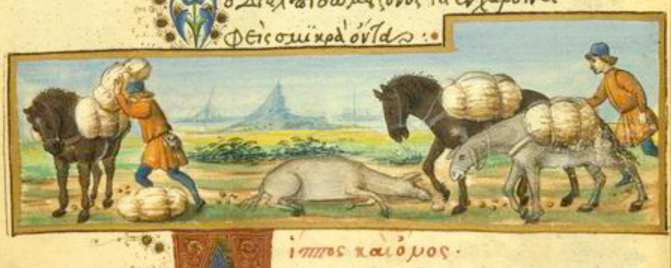
Physician Cure thy self.
Reflection. Saying and Doing are Two Things. Physician Cure thy Self, Preaches to us upon this Fable. Every Man does best in his own Trade, and the Cobbler is not to go beyond his Last. We have of these Dunghill-Pretenders in all Professions, and but too many of them that Thrive upon their Arrogance. If this Worm had met with an Ass to Encourage his Vanity, instead of a Fox to Correct it, he might have been Advanc'd to a Doctor of the College perhaps; or to some more Considerable Post of Honour, either in Church or State.

Vulpes et Vermiculus


A Run-away Dog and his Master.
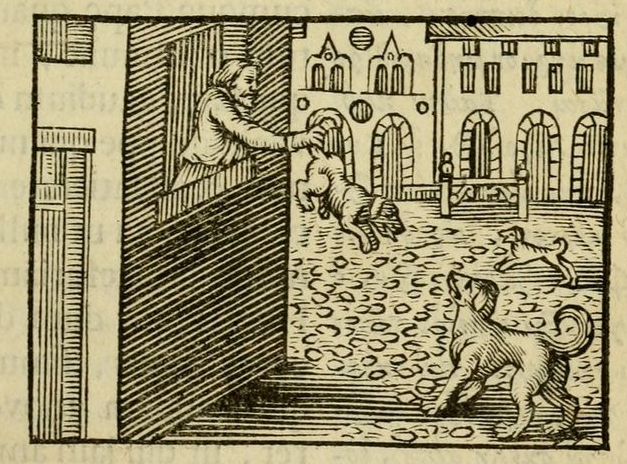
There was a Bob-tail'd Cur, cry'd in a Gazette, and one that found him out by his Marks, brought him home to his Master; who fell presently to reasoning the matter with him, how insensible and thankless a Wretch he was, to run away from one that was so extream kind to him. Did I ever give you a Blow in my Life, says he, or so much as one Angry Word, in all the time that ever you serv'd me? No, says the Dog, not with your own Hands, nor with your own Lips; but you have given me a Thousand and a Thousand by your Deputy; and when I am beaten by my Master's Order, 'tis my Master himself I reckon, that Beats me.
In Benefits as well as Injuries, 'tis the Principal that we are to consider, not the Instrument. That which a man does by Another, is in Truth and Equity by his own Act.


A Peacock and a Crane.
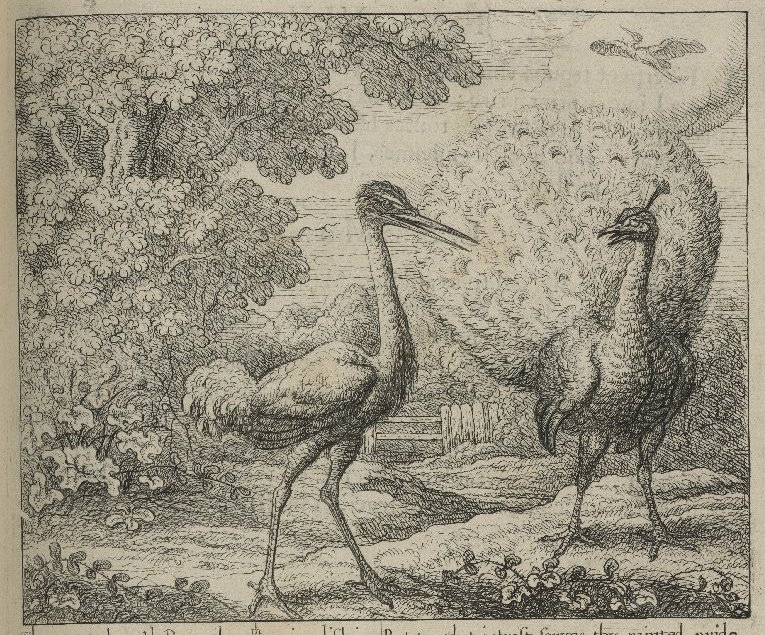
As a Peacock and a Crane were in Company together, the Peacock spread his tail, and challenges the other, to shew him such a Fan of Feathers. The Crane upon this, springs up into the Air, and calls to the Peacock to follow him if he could. You brag of your Plumes, says he, that are fair indeed to the Eye, but no way useful or fit for any manner of Service.
Heaven has provided not only for our Necessities, but for our Delights and Pleasures too; but still the Blessings that are most useful to us, must be preferr'd before the Ornaments of Beauty.


The Birds and Beetles.
The Birds were in a terrible Fright once, for fear of Gun-shot from the Beetles. And what was the Bus'ness, but the little Balls of Ordure, that the Beetles had rak'd together, the Birds took for Bullets: But a Sparrow in the Company, that had more Wit than his Fellows, bad them have a good Heart yet, for how shall they reach us in the Air, says he, with those Pellets that they can hardly roll upon the Ground?
Many People apprehend Danger where there's None, and reckon themselves sure where there is, for want of taking the true Measure of Things, and laying Matters rightly together.


Friday, December 8, 2023

Roger L'Estrange (40)

Here are some more fables from Roger L'Estrange's Fables of Aesop and Other Eminent Mythologists, and you can click here for all the L'Estrange fables at this blog.


A Son Singing at his Mother's Funeral.
There was a good Man that follow'd his Wife's Body to the Grave, weeping, and wailing all the Way he went, while his Son follow'd the Corps singing. Why Sirrah, says the Father, You should howl, and wring your Hands, and do as I do, ye Rogue you; and not go Sol-Fa-ing it about like a Mad-man. Why Father, says he, You give the Priests Money to sing, and will you be angry with me for giving ye a Song Gratis? Well, says the Father, but that which may become the Priests, will not always become you. 'Tis their Office to sing, but it is your Part to cry.
Funeral Tears are as arrantly hir'd out as Mourning Cloaks: and so are the very Offices: And whether we go to our Graves snivelling or singing, 'tis all but according to the Fashion of the Country, and meer Form.


An Ass puts in for an Office.
There was a bantering Droll got himself into a very good Equipage and Employment, by an admirable Faculty he had in Farting. The Success of this Buffoon encourag'd an Ass to put in for a Place too; for, says he, I'll fart with that Puppy for his Commission, and leave it to the Judgment of those that preferr'd him, which has the Clearer, and better scented Pipe of the Two.
Where Publick Ministers encourage Buffoonery, 'tis no wonder if Buffoons set up for Publick Ministers.


A River-Fish and a Sea-Fish.
There was a large over-grown Pike that had the Fortune to be carry'd out to Sea by a strong Curent, and had there the Vanity to value himself above all the Fish in the Ocean. We'll refer that (says a Sturgeon) to the Judgment of the Market, and see which of the Two yields the better Price.
Every Man has his Province assign'd him, and none but a Mad-Man will pretend to impose; and to give Laws where he has nothing to do.


A Man that would not take a Clyster.
When the Patient is Rich, there's no Fear of Physicians about him, as thick as Wasps to a Honey-Pot; and there was a whole College of them call'd to a Consultation upon a Purse-Proud Dutch Man, that was troubled with a Megrim. The Doctors prescrib'd him a Clyster; the Patient fell into a Rage upon't. Why, Certainly these People are all mad, says he, to talk of Curing a Man's Head at his Tail.
He that consults his Physician, and will not follow his Advice, must be his own Doctor: But let him take the old Adage along with him; He that teaches himself, has a Fool for his Master.


A Husband and Wife Twice Married.
There happen'd a Match betwixt a Widower and a Widow. The Woman would be perpetually twitting of her second Husband what a Man her First was, and her Husband did not forget the ringing of it in her Ears as often, what an admirable Woman he had to his First Wife. As the Woman was one Day upon the peevish Pin, a poor Body comes to the Door, while the froward Fit was upon her, to beg a Charity. Come in, poor Man (says the Woman) here's e'en the Leg of a Capon for thee, to pray for the Soul of my First Husband. Nay, Faith, says the Husband, and when they hand is in, e'ev take the Body and the rest on't, to pray for the Soul of my First Wife. This was their way of Teizing one another, and of Starving the Living to Honour the Dead: For they had but that One Capon betwixt them to Supper.
Sauce for a Goose is Sauce for a Gander. There's no contending with the Laws of God and Man, especially against those that have Power and Right on their Side.


Tuesday, December 5, 2023

Roger L'Estrange (39)

Here are some more fables from Roger L'Estrange's Fables of Aesop and Other Eminent Mythologists, and you can click here for all the L'Estrange fables at this blog.


A Country-man and a River.
A Country-man that was to pass a River, founded it up and down to try where it was most fordable: and upon Trial he made this Observation on't: Where the Water ran Smooth, he found it Deepest; and on the contrary, Shallowest where it made most Noise.
There's More Danger in a Reserv'd and Silent, than in a Noisy, Babbling Enemy.


A Fir and a Bramble.
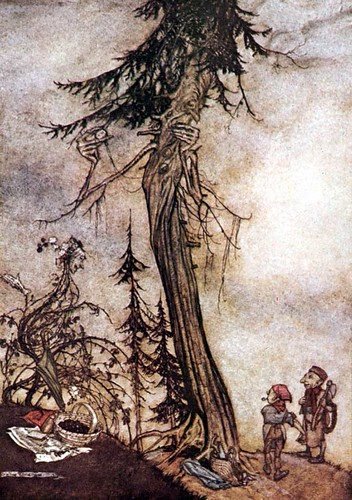
There goes a Story of a Fir-Tree, that in a vain spiteful Humour, was mightily upon the Pin of commending itself, and despising the Bramble. My Head (says the Fir) is advanc'd among the Stars. I furnish Beams for Palaces, Masts for Shipping: The very Sweat of my Body is a Sovereign Remedy for the Sick and Wounded. Whereas the Rascally Bramble runs creeping in the Dirt, and serves for nothing in the World but Mischief. Well, says the Bramble, (that over-heard all this) you might have said somewhat of your own Misfortune, and to my Advantage too, if your Pride and Envy would have suffer'd you to do it. But pray will you tell me however, when the Carpenter comes next with the Axe into the Wood, to fell Timber, whether you had not rather be a Bramble than a Fir-Tree.
Poverty secures a Man from Thieves, great and small: Whereas the Rich and the Mighty, are the Mark of Malice, and Cross Fortune; and still the Higher they are, the Nearer the Thunder.

Abies et Rubus


A Pigeon and a Pye.
A Pye was Wond'ring once to a Pigeon, why she would Breed still in the same Hole, when her Young Ones were constantly taken away from her before they were able to fly. Why That's my Simplicity, says the Pigeon. I mean no Harm, and I suspect none.
Do as you would be done by, it is a Better Rule in the Doctrine than in the Practice: For Trust as you would be Trusted, will not hold betwixt a Knave and an Honest Man. There's no Dealing with a Sharper but at his Own Play.


Oxen and a Piece of Timber.
The Timber was complaining of the Ingratitude of the Oxen. How often, says the Timber, have I fed ye with my Leaves, and reliev'd ye under my Shadow? and for you to drag me now at this Rate, over Dirt and Stones! Alas! cry'd the Oxen: Do not you see how we pant and groan, and how we are goaded on, to do what we do? The Timber consider'd how unwillingly they did it, and so forgave them.
What we are forc'd to do by an Over-ruling Power and Necessity is not properly our own Act.

Boves et Trabes


Capons Fat and Lean.
There were a great many Cramm'd Capons together in a Coop, some of 'em very Fair and Fat, and Others again did not thrive upon Feeding. The Fat Ones would be ever and anon making sport with the Lean, and calling them Starvelings; 'till in the End, the Cook was order'd to dress so many Capons for Supper, and to be sure to take the best in the Pen: When it came to that once, they that had most Flesh upon their Backs, wish'd they had had less, and 'twould have been better for 'em.
Prosperity makes People Proud, Fat, and Wanton; but when a Day of Reckoning comes, They are the First still that go to Pot.


Friday, December 1, 2023

Roger L'Estrange (38)

Here are some more fables from Roger L'Estrange's Fables of Aesop and Other Eminent Mythologists, and you can click here for all the L'Estrange fables at this blog.


A Creaking Wheel.
A Waggoner took notice upon the Creaking of a Wheel, that it was the worst Wheel of the Four that made most Noise, and was wondring at the Reason of it. Oh, says the Waggon, they that are Sickly are ever the most Piping and Troublesome.
'Tis with Creaking Wheels as 'tis with Courtiers, Physicians, Lawyers, (and with whom not?), They want Greazing.


Wolfe in a Sheeps-Skin.
There goes a Story of a Wolfe, that Wrapt himself up in a Sheeps-skin, and Worry'd Lambs for a Good while under That Disguise; but the Shepherd Met with him at last, and Truss'd him up, Sheeps-skin and all, upon an Eminent Gibbet, for a Spectacle, and an Example. The Neighbours made a Wonderment at it, and Ask'd him what he meant to Hang up his Sheep? Oh, says he, That's only the Skin of a Sheep, that was made use of to Cover the Heart, Malice, and Body of a Wolfe that Shrouded himself under it.
Hypocrisie is only the Devil's Stalking Horse, under an Affectation of Simplicity and Religion. People are not to be Judg'd by their Looks, Habits, and Appearances; but by the Character of their Lives and Conversations, and by their Works.


A Country-man and an Oxe.
A Countryman had got a stubborn Oxe, that would still be Pushing and Flinging, whenever they went to Yoak, or to Tye him up. The Man cuts off his Horns, and puts him to the Plough, and by that means secures himself, both against his Head and his Heels, and in the mean time, he himself Guides the Plough: But though the Oxe, when he was thus Shackled and Disarmed, could not either Strike or Gore him, he made a shift yet to throw Dust enough into his Eyes, and his Mouth, almost to Blind, and to Choak him.
A Malicious Man may be bound Hand and Foot, and put out of Condition of doing Mischief, but a Malicious Will is never to be master'd.

rusticus et iuvencus


An Incorrigible Son.
It was the Hard Lot of a very Good Man to have a Vicious Young Fellow to his Son; and he did what he could to Reclaim him: But Sir (says he) for Brevity's sake, 'tis only so much Time and Councel thrown away; for all the Parsons about the Town have been Baiting me I know not how long now, upon the same Subject, and I'm not One Jot the Better for't.
Some Men Live as if they had made a Covenant with hell; Let Divines, Fathers, Friends say what they will, they Stop their Ears against them: And Good Councel is wholly Cast away upon them.


An Old Man resolv'd to give over Whoring.
There was an Old Tost, that in the very State of Impotence, had still a Whore in the Head of him. His Ghostly Father took Notice of it, and Ply'd him Hard with Wholesome Advice, upon the Subject of the Lusts of the Flesh. This Reverend Fornicator thank'd him most Heartily for his Kind and Christian Councel, and the Grace of Heaven, says he, I'll Follow it; For to tell ye the Plain Truth on't, I am told that 'tis Naught for me; and really, my Body is quite out of Tune for Those Gambols.
When Things are at the Worst they'd Mend.


Thursday, November 30, 2023

Roger L'Estrange (37)

Here are some more fables from Roger L'Estrange's Fables of Aesop and Other Eminent Mythologists, and you can click here for all the L'Estrange fables at this blog.


A Man Had a Mind to Try his Friends.
There was a generous Rich Man, that kept a Splendid and an Open Table, and consequently never wanted Guests. This Person found all People came to him promiscuously, and a Curiosity took him in the Head to try which of them were Friends, and which only Trencher-Flies and Spungers. So he took an occasion one Day, at a Full Table, to tell them of a Quarrel he had, and that he was just then going to demand Satisfaction. There must be so many to so many, and he made no doubt, but they'd stand by him with their Swords in their Hands. they all excus'd themselves save only Two; which Two he reckon'd upon as his Friends, and all the rest no better than Hangers-on.
We may talk of many Friends; but not One Man of a Thousand will stand the Test.


An Eagle and a Pye.
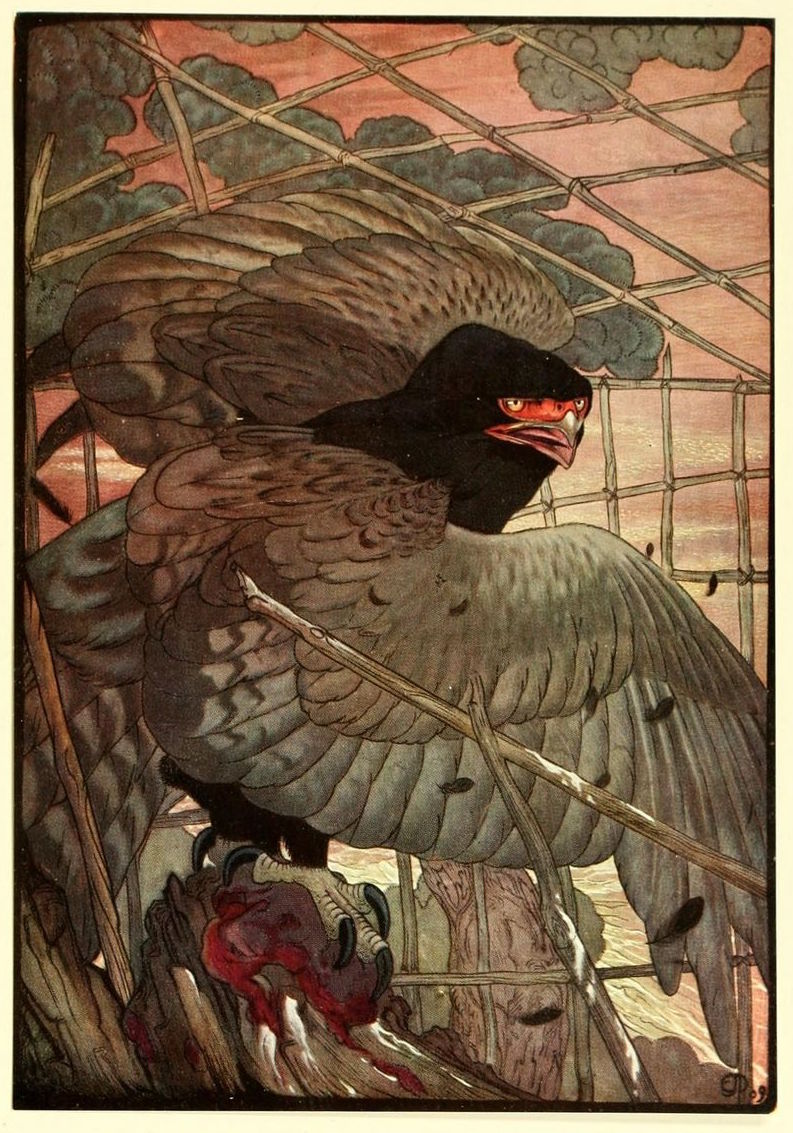
There was a pert-dapper Spark of a Mag-Pye, that fancy'd the Birds would never be well govern'd till he himself should come to sit at the Helm. In this Freak he petition'd the Eagle to take him into his Cabinet; for, says he, I have no ill turn of a Body for't. I have my Tongue and my Heels at command; and can make as much Noise and Bussle, to as little Purpose, as any He perhaps that flies between a Pair of Wings. He was going on in the History of his Qualifications, when the Eagle graciously told him, how sensible he was of the Volubility both of his Tongue, and of his Manners, and so of his Faculties and good Breeding; but, says he, you are so confoundedly given to Squirting up and down, and Chattering, that the World would be apt to say, I had chosen a Jack Pudding for a Prime Minister.
Great Babblers, or Talkers are a sort of People not fit either for Trust, Business or Conversation.


A Weak Young Man and a Wolfe.
A Creeping Young Fellow that had Committed Matrimony with a Brisk Gamesome Lass, was so Alter'd upon't in a Few Days, that he was liker a Sceleton than a Living Man. He was Basking himself one time in the Gleam of the Sun, and some Huntsmen pass'd by him upon the Chase of a Wolfe that led 'em That Way. Why how comes it (says he) that you don't Catch That Wolfe? They told him that he was too Nimble for 'em. Well (says he) If my Wife had the Ordering of him, she'd Spoil his Footmanships.
Marriage they say breeds Cares and Cuckolds.


A Cockle and Jupiter.
In old time, when Jupiter was in the Humour of granting Petitions, a Cockle made it his Request, that his House and his Body might be all of a piece. Jupiter made him Answer, that it would be a Burden to him instead of a Favour. Yes, says the Cockle, but it will be such a Burden as I had rather bear, than life expos'd to ill Neighbours.
Impertinent Visits are the Plague of a Sober Man's Life, and therefore 'tis a happy thing when a Body may be at Home, or not at Home, as he pleases.

Iuppiter et Coclea


A Corrupt Officer.
A Certain Governour of a Province that had a long Time Pill'd, and Oppress'd the People under his Charge, was call'd to Account in the Conclusion for Receiving of Bribes; and sentenc'd to Refund what he had wrongfully Taken. He came as unwillingly to the Point, as a Bear to the Stake, which gave Occasion to some Body's saying, that it was with this Man and his Money, as it is with Women and their Children; He was well enough pleased in the Getting of it; but it went to the very Heart of him when he Parted with it.
Great Officers are but like Sponges; they suck 'till they are full, and when they come once to be squeez'd, the very Heart's Blood of them come away with their Money.


Monday, November 27, 2023

Roger L'Estrange (36)

Here are some more fables from Roger L'Estrange's Fables of Aesop and Other Eminent Mythologists, and you can click here for all the L'Estrange fables at this blog.


A Miser and his Bags.
A Covetous Rich Churl finding himself at the Point of Death, caus'd his Coffers to be brought up, and his Bags laid before him. You and I, says he, must part, and I would willingly bequeath ye to Those that will take most Delight in ye. Why then, say the Bags, you must divide us betwixt your Heirs, and the Devils. Your Heirs will have Drink and Whores for your Money, and the Devils will be as well pleas'd on the other hand, that they are to have your Soul for't.
The Money of a Miser is the last Friend he takes his Leave of in this World.


A Woman that brought a Fire into the House.
The Question was put to an honest Man newly marry'd, What might be the Meaning of his New Bride's bringing a Torch out of her Father's House into her Husband's? Why this, says he; I have eas'd my Father-in-law of a Fire-brand, to set my own House in a Flame.
A Contentious Woman puts all into a Flame, wherever she comes.


Oxen and a Piece of Timber.
The Timber was complaining of the Ingratitude of the Oxen. How often, says the Timber, have I fed ye with my Leaves, and reliev'd ye under my Shadow? and for you to drag me now at this Rate, over Dirt and Stones! Alas! cry'd the Oxen: Do not you see how we pant and groan, and how we are goaded on, to do what we do? The Timber consider'd how unwillingly they did it, and so forgave them.
What we are forc'd to do by an Over-ruling Power and Necessity is not properly our own Act.

Boves et Trabes


A Lion and a Hog.
A Lion that found it extreme irksome to live Alone, gave the Beasts of the Forest to understand, that he was resolv'd to make choice of some or other of his Subjects for a Friend and Companion. There was a mightfy Bustle, who should be the Favourite, and the Wonder of all the rest: The Lion pitch'd upon a Hog: For, says the Lion, he is True and Faithful to his Friend, and will stand by him in all Times and Hazards.
A True Friend can ne'er fail of being a Loyal Subject: And That's the Man that a Brave Prince will make choice of for a Particular Favourite.


A Lad Robbing an Orchard.
An Old Fellow took a Boy Robbing his Orchard, Sirrah (says he) come down the Tree, and don't steal my Apples. The Lad never minded him, but went on with his Work. Well (says the Master of the Ground) they say there are Charms in Herbs as well as in Words, and so he threw a Handful of Grass at him; which was so ridiculous, that the Young Thief took the Old Man to be Mop'd. But in Conclusion, if neither Words, nor Herbs will do, says he, I'll try what may be done with Stones; for they say there's Vertue in Them too; and that Way he did his Work.
Those that will not be reclaimd's by Instruction, must be brought to a Sense of their Duty by Feeling.


Sunday, November 26, 2023

Roger L'Estrange (35)

Here are some more fables from Roger L'Estrange's Fables of Aesop and Other Eminent Mythologists, and you can click here for all the L'Estrange fables at this blog.


A Fox and a Cat.
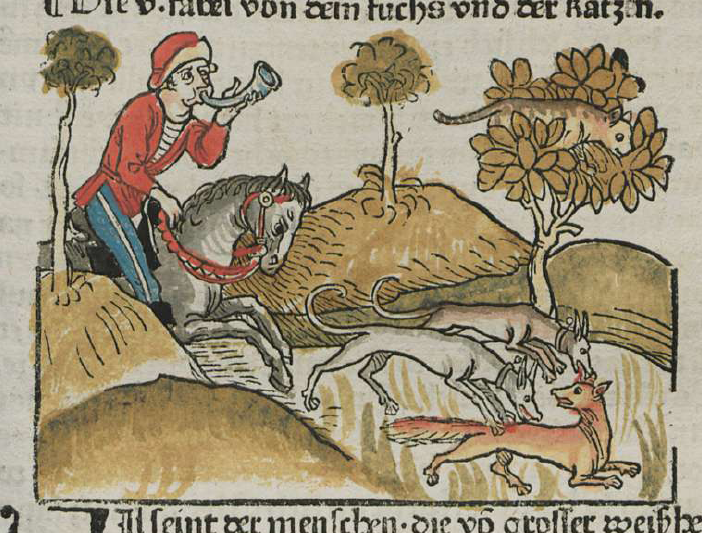
There was a Question started betwixt a Fox and a Cat; which of the Two could make the best Shift in the World if they were put to a Pinch. For my own Part (says Reynard) when the worst comes to the worst, I have a whole Budget of Tricks to come off with at last. At that very Instant, up comes a Pack of Dogs full cry towards them. The Cat presently takes a Tree, and sees the poor Fox torn to Pieces upon the very Spot. Well, says Puss to her self, One sure Trick, I find, is better than a Hundred slippery ones.
Nature has provided better for us, than we could have done for our selves.


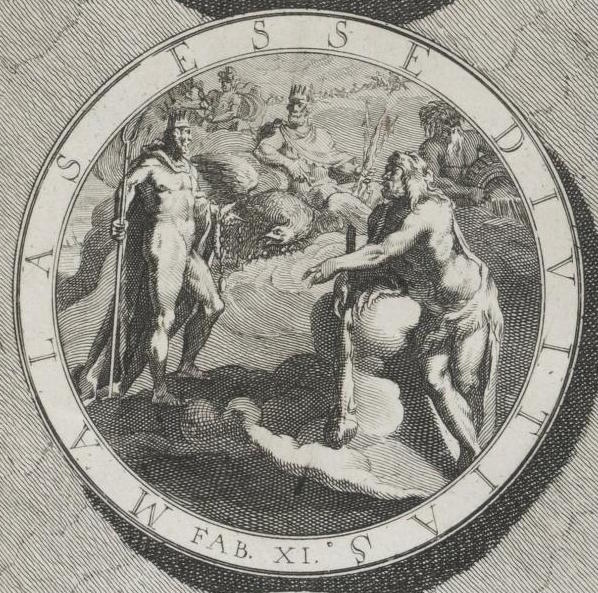
Hercules and Pluto
When Hercules was taken up to Heaven for his Glorious Actions, he made his Reverence in Course to all the Gods, 'till he came to Pluto, upon whom he turn'd his Back with Indignation and Contempt. Jupiter ask'd him what he meant by that Dis-respect? Why, says Hercules, that Son of Fortune Corrupts the whole World with Mony, Encourages all manner of Wickedness, and is a common Enemy to all Good Men.
This is only to shew the Opposition betwixt a Narrow, Sordid, Avaritious Humour, and the Publick Spirited Generosity of a Man of Honour, Industry and Virtue.


A Cock and a Fox.
A Fox spy'd a Cock at Roost with his Hens about him. Why how, my Friend, says Reynard, What makes you upon a Tree there? Your Bus'ness lies upon the Terra Firma, and a Cock in the Air is out of his Element, methinks. But you don't hear the News perhaps, and it is certainly true: There's a General Peace concluded among all Living Creatures, and not one of them to presume, upon Pain of Life and Limb, directly or indirectly, to hurt another. The Blessedest Tidings in the World, says the Cock; and at the same time he stretches out his Neck, as if he were a looking at somewhat a great way off. What are you Peering at? says the Fox. Nothing, says t'other, but a Couple of Great Dogs younder, that are coming this Way, Open-Mouth, as hard as they can drive. Why then, says Reynard, I fancy I'd e'ev best be Jogging. No, no, says the Cock, the General Peace will secure you: Ay, quoth the Fox, so it will; but if these Roguy Curs should not have heard of the Proclamation, my Coat may come to be Pink'd yet for all that. And so away he scamper'd.
In all the Liberties of Sharping and Tricking one upon another, there must still a Regard be had to the Punctilio's of Honour and Justice.


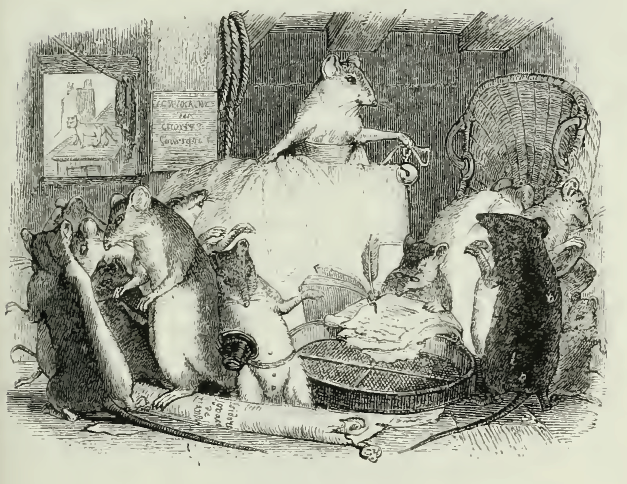
Mice, Cat and a Bell.
There was a Devillish Sly Cat it seems, in a certain House, and the Mice were so Plagu'd with her at every turn, that they call'd a Court to Advise upon some way to prevent being surpriz'd. If you'll be Rul'd by me, (says a Member of the Board) there's nothing like Hanging a Bell about the Cats Neck, to give Warning before-hand, when Puss is a coming. They all lookt upon't as the best Contrivance that the Case would bear. Well (says another) and now we are agreed upon the Bell, say who shall put it about the Cats Neck. There was no body in fine that would Undertake it, and so the Expedient fell to the Ground.
The Boldest Talkers are not always the Greatest Doers.


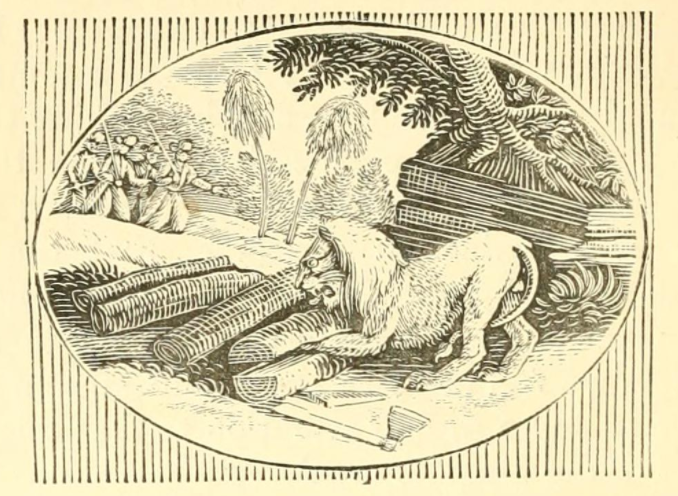
A Lion and a Man.
Among other good Counsels that an Old Experienced Lion gave to his Whelp, this was One; That he should never Contend with a Man; for says he, if ever you do, you'll be Worsted. The Little Lion gave his Father the Hearing, and kept the Advice in his Thought, but it never went near his Heart. When he came to be grown up afterward, and in the Flower of his Strength and Vigour, About and About he Ranges to look for a Man to Grapple with: In his Ramble he changes to Spy a Yoak of Oxen; so up to 'em he goes presently; Heark ye Friends, says he, are you MEN? They told him No; but their Master was a Man. Upon leaving the Oxen, he went to a Horse, that he saw Bridled, and Ty'd to a Tree, and ask'd him the same Question; No, says the Horse, I am no Man my Self, but he that Bridled and Saddled me, and ty'd me up here, he's a Man. He goes after this, to one that was Cleaving of Blocks. D'ye hear, says the Lion, You seem to be a Man. And a Man I am, says the Fellow. That's well, quoth the Lion, and dare you Fight with Me? Yes, says the Man, I dare Fight with ye: Why I can Tear all these Blocks to Pieces ye see. Put your Feet now into this Gap, where you see an Iron Thing there, and try what you can do. The Lion presently put his Claws into the Gaping of the Wood, and with one Lusty Pluck, made it give way, and out drops the Wedge, the Wood immediately Closing upon't; and there was the Lion caught by the Toes. The Woodman presently upon this, Raises the Country; and the Lion finding what a Streight he was in, gave one Hearty Twitch, and got his Feet out of the Trap, but left his Claws Behind him. So away he goes back to his Father, all Lame and Bloody, with this Confession in his Mouth; Alas, my Dear Father, says he, This had never been, if I had follow'd your Advice.
Disobedience to Parents is against the Laws of Nature and of Nations, Common Justice, Prudence and Good Manners; and the Vengeance of Heaven, Sooner or Later, Treads upon the Heels on't.


Friday, November 24, 2023

Roger L'Estrange (34)

Here are some more fables from Roger L'Estrange's Fables of Aesop and Other Eminent Mythologists, and you can click here for all the L'Estrange fables at this blog.


A Council of Beasts
The Beasts (a great while ago) were so harass'd out with Perpetual feuds and Factions, that they call'd a General Council, in the nature of a Committee of Grievances, to Advise upon some way for the Adjusting of Differences, in order to a Publick Peace. After a great many Notable Things said upon the Debate, Pro and Con, the Hares at last (according to the Printed Votes of those Days) deliver'd their Sense to this Effect: There can never be any Quiet in this World, so long as one Beast shall be Allow'd Nails, Teeth, or Horns, more then Another; but the Weaker will still be a Prey to the Stronger: Wherefore we humbly propose an Universal Parity, and that we may be all upon the same Level, both for Dignity and Power; for we may then, and not till then, promise our selves a Blessed State of Agreement, when no one Creature shall be able to Hurt another.
The Mobile are still for Levelling; that is to say, for Advancing themselves, For 'tis as Broad as'tis long, whether they Rise to others, or bring others down to them. Beside, that the Doctrine of Levelling strikes at the very Order of Providence.


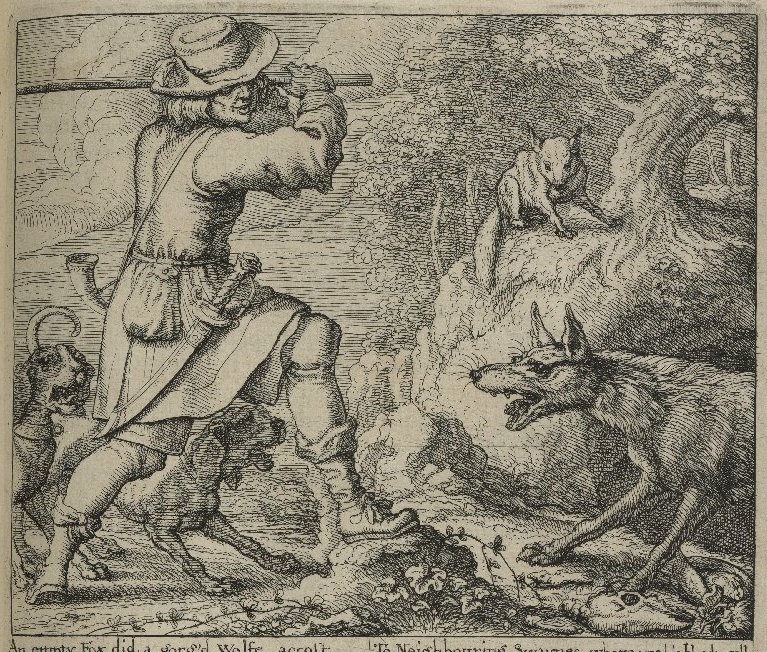
A Wolf and a Fox
A Wolf that had a mind to take his ease, stor’d himself privately with Provisions, and so kept close a-while. Why, how now Friend, says a Fox to him, we han’t seen you abroad at the Chase this many a Day! Why truly, says the Wolf, I have gotten an Indisposition that keeps me much at home, and I hope I shall have your Prayers for my Recovery. The Fox had a fetch in’t, and when he saw it would not fadge; away goes he presently to a Shepherd, and tells him where he might surprize a Wolf, if he had a mind to’t. The Shepherd follow’d his Directions, and destroy’d him. The Fox immediately, as his next Heir, repairs to his Cell, and takes Possession of his Stores; but he had little Joy of the Purchase, for in a very short time, the same Shepherd did as much for the Fox, as he had done before for the Wolf.
‘Tis with Sharpers as ‘tis with Pikes, they prey upon their own kind; and ‘tis a pleasant Scene enough, when Thieves fall out among themselves, to see the cutting of one Diamond with another.


The Crows and Pigeons
There happen'd a Suit in Law betwixt the two Families of the Crows and the Pigeons; but for Quietness sake, they agreed upon an Order of Reference, and the Kite was to be Arbitrator. The Cause was Heard, and Judgment given for the Crows.
Ask my Brother if I'm a Thief. One Criminal upon the Bench, will be sure to bring off another at the Barr.


An Agreement between the Wolves and the Dogs
The Wolves found themselves in a great Straight once how to deal with the Dogs, they could do well enough with 'em one by one they saw, but were still worsted and over-born by Numbers. they took the Matter into Debate, and came at last to this conclusion, That unless they could make a Party among them, and by a Parcel of Fair Words and Pretences, engage them in a Confederacy against their Masters and Themselves, there was no good to be done in the matter. Upon this, they sent out their Spies among the Dogs, with Instructions to go to those among them that were nearest their own Make, Size and Colour, and to reason the matter with them, after this or the like manner. Why should not we that are all of a Colour, and in a manner all of a Kind, be all of a Party too, and all of an Interest? You'll say perhaps, that your Masters, and your Fellows may take it Ill, and pick a Quarrel with ye. Well, and what will they be able to maek on't then, against You and us together? If it comes to that once, 'twill be but One Push for all, and the Work is done. This Discourse wrought as well as Heart could wish; for a great many of the Wolf-Colour'd-Dogs cry'd out, Well mov'd upon't, and so went over to the other side: And what came on't at last, but that after the Dogs had Deserted, the Wolves Worry'd one Part of their Enemies by the help of the Curs that went over to them; and they were then strong enough to destroy the Revolters themselves.
A House divided against it self, cannot stand.


A Taylor and his Wife
There happen'd a Grievous Quarrel once betwixt a Taylor and his Wife. The Woman in contempt of his Trade, call'd her Husband Pricklouse; he gave her a Box o'th' Ear for't, which serv'd only to make her more outragious. When this would do no good, he set her up to the Chin in a Horse-Pond; but so long as her Tongue was at liberty, there was not a Word to be got from her, but the same Nick-Name in Derision over and over again. Well (says he to himself) there's no way, I perceive, to quiet this Woman, but by stopping of her Mouth; and so he had Duck's next bout over Head and Ears. When she was under Water, and could call him Pricklouse no longer with her Lips, she held up her Hands over her Head, and did it with her Thumbs by the Knicking of her Nails; and when he saw that once, he was e'ev glad to give her over.
The last Two Things that die in an Impetuous Woman, are her Tongue and her Stomach, when she cannot have her Will.


Tuesday, November 14, 2023

Clarke: English (40)

Here are some more fables from H. Clarke's Latin textbook Fabulae Aesopi selectae, or, Select fables of Aesop, and you can click here for all the fables reposted from this book at the blog.


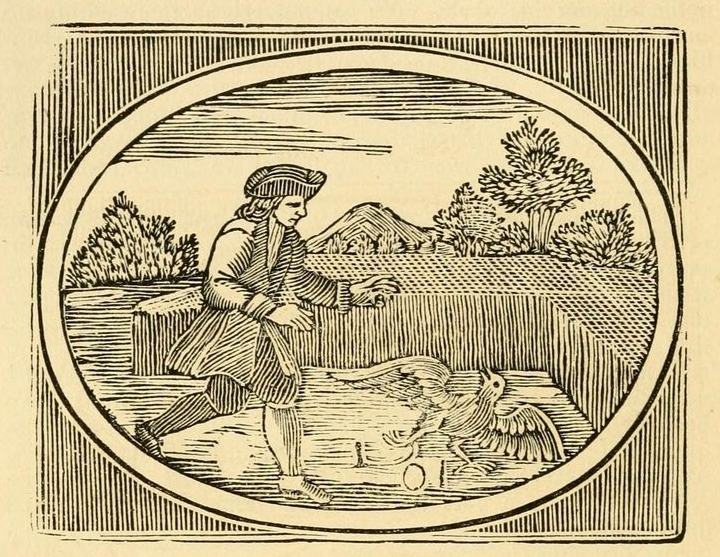
196. Of a Lark
A lark, taken in a snae, said lamenting, "Ah me! Miserable and unhappy, I have not stolen the gold nor the silver of any one, but a grain of wheat has been the cause of my death."
Moral. The fable tends to them who undergo great danger for unprofitable gain.


197. Of a Lion Worn Out with Age
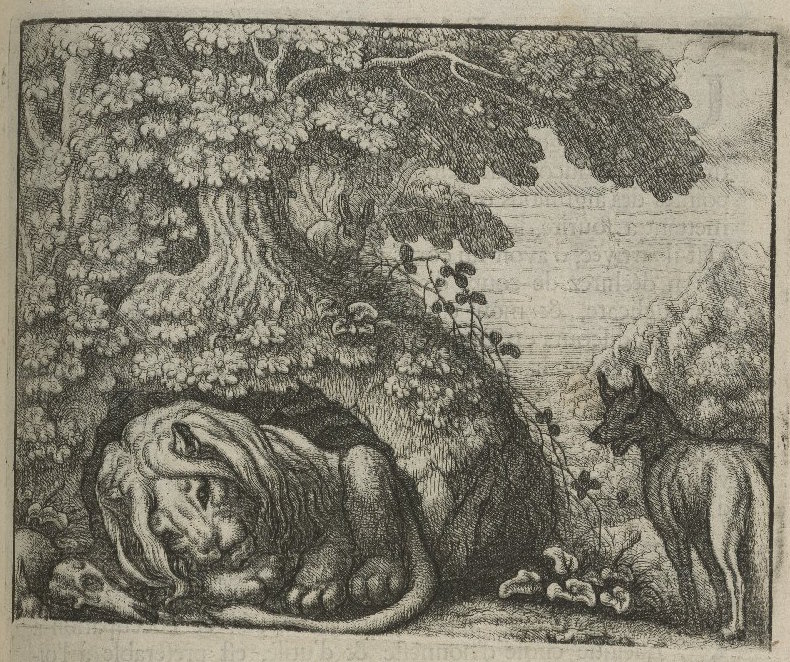
A lion when he had grown old, nor could get his living, contrived a way, how provisions should not be wanting to him. Therefore having entered the den, lying down, he feigned himself vehemently to be sick. The living creatures, thinking him verily to be sick, went to him for the sake of visiting him; whom the lion taking ate up one by one. When now he had killed many animals, the fox, the art of the lion being known, coming to the entrance of the cave, standing without, asks the lion how he did. The lion milkly answering her said, "Daughter fox, why dost thou not enter in to me?" The fox said, not unwittily, "Because, my master, I perceive indeed very many footsteps of animals entering in, but no footsteps of them coming out."
Moral. The fable signifies that a prudent man who foresees imminent dangers easily avoids them.


198. Of a Lion and a Bull
A lion, following a great bull by treachery, when he came near, invited him to supper, saying, "Friend, I have killed a sheep; you shall sup with me today if it pleases you." As soon as they had sat down, the bull, seeing many cauldrons and spits ready, and that there was no sheep for him, was willing to depart; whom the lion perceiving now going away asked him why he would go. The bull answered, "Truly, I do not go away for nothing when I see instruments prepared not to dress a sheep, but a bull."
Moral. The fable signifies that the arts of the wicked do not lie hid from the prudent.


199. Of a Sick Man and a Physician
A sick man, being asked by the physician about his health, answered that he had sweated violently; the physician says that that was good; asked by the same physician a second time how he found himself, the sick man said that he was seized with a vehement coldness; the physician also says that that was for his health. Asked a third time by the same how he found himself, the sick man said that he was not able to digest without great difficulty. The physician says again that that was the best for his health; afterwards, when some one of his domestics asked the sick man, how he did, says he, "As the physician says, there are to me many and the best signs for health, yet I perish by those signs."
Moral. The fable shows that flatterers are to be blamed.


200. Of a Certain Woodcutter
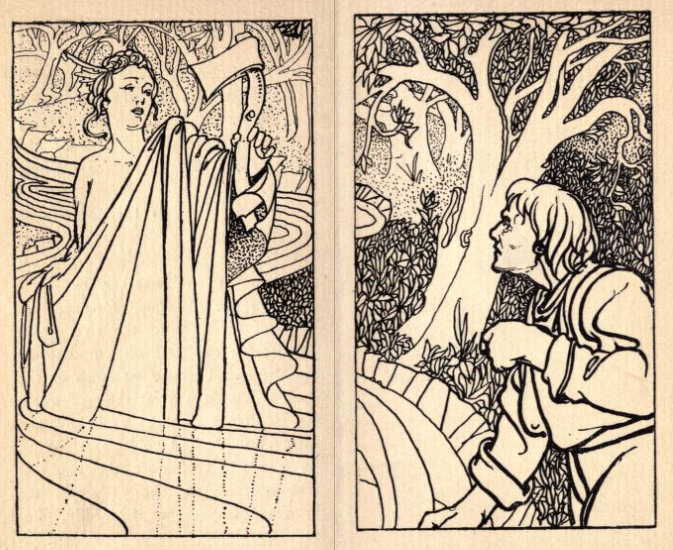
While a certain woodcutter cleaved wood near a river dedicated to the god Mercury, his ax by chance fell into the river. Therefore affected with much grief, he sat down sighing near the bank of the river. Mercury, moved with pity, appeared to the woodcutter and asked the cause of his weeping, which, as soon as he learnt, bringing him a golden ax, he asked whether it was that which he had lost. But the poor man denied that it was his. A second time Mercury brought another, a silver one, which, when the poor man denied also to be his, at last Mercury reached the wooden one, when the poor man agreed that that was his. Mercury, knowing him to be a man true and just, gave them all toh im for a gift. Therefore the woodcutter, coming to his companions, declares what had happened to him. One of his companions, willing to try it, when he came to the river threw his ax in the water, then he sat weeping on the bank; the cause of whose weeping when Mercury had heard, bringing a golden ax, he asked whether that was it, which he had lost, which, when he asserted to be his own, Mercury, his impudence being known, neither delivered to him the golden one, nor his own. 
Moral. The fable signifies that by how much God is more propitious to the honest he is the more severe to the wicked.


201. Of a Physician who Cured the Mad
Many talked of the superfluous care of those who feed dogs for fowling. A certain man of them says, the fool of Milan laughed at them rightly. When the story was demanded, he said, there was a physician, a citizen of Milan, who undertook to cure the mad, brought to him within a certain time, but the cure was of this manner; he had at home a court, and in it a pond of stinking water, in which he bound them naked to a stake, some up to the knees, others up to the belly, some more deeply, according to the degree of madness; and so long he starved them in the water, till they seemed sound in mind. A certain man was brought among the rest, whom he put into the water up to the thigh; who began to recover after fifteen days, and to ask his physician, that he might be brought out of the water; he took out the man from the torment yet on that condition that he should not go out of the court. When he had obeyed some days, he permitted that he might walk over the whole house, but that he should not go out of the outward gate (his companions, who were many, being left in the water); he obeyed the commands of the physician diligently, but standing upon the threshold on a certain time (for he did not dare to go out) he saw a young man coming on a horse with two dogs, and a hawk, moved with the novelty of the thing (for he did not retain in memory the things which he had seen before his madness) when the young man came near, he said, "So ho, you, I pray, answer me in a few things: what is this on which thou art carried?" says he, "it is a horse." Then afterwards "what is called this, which thou hast in thine hand and in what thing dost thou use it?" He answered "it is a hawk, and fit for the catching of partidges." Then the madman asks "and these, that accompany thee, who are they, and what do they profit to thee?" He says "they are dogs, and fit for fowling, to trace the birds." "But these birds, for the sake of catching which you prepare so many things, of what price are they, if you put together the prey of a whole year into done?" When he had answered, "a little, I know not what, and that it could not exceed six guineas," the madman asks, "what may be the expense of the horse, of the dogs, and of the hawk?" He affirmed the expense of them to be yearly fifty guineas. Then having admired the folly of the young man, says he, I pray, go hence quickly before that the physician return home; for if he should find thee, he will throw thee into his pond, as the most mad of all men, and he will place thee in the water up to the chin.
Moral. The fable shows many madnesses to be daily unobserved.


202. Of an Obstinate Woman who Called her Husband Lousy
A certainw oman, absove measure contrary to her husgband so that she would be superior, once in a heavy quarrel with him called him lousy. He, that she might retract that word, bruised his wife, beating her with his fists and heels. By how much the more she was beaten, by so much the more she called him lousy. The man at length tired withe beating her that he might overcome the obstinacy of his wife, let her down into a river by a rope, saying that he would suffocate her if she would not abstain from such words. She persisted in nothing the less to continue that word, although fixed upt o the chin in the water. THen the man plunged her into the river so that she could not speak more, trying if he could turn her from her obstinacy by the fear of death. But she, the faculty of speaking being taken away, expressed with her fingers what she could not with her mouth: for, her hands being raised above her head, the nails of each thumb being joined, she gave what reproach she could to her husband by that gesture.
Moral. This fable shows that some will retain their obstaincy even at the hazard of death.


Clarke: English (39)

Here are some more fables from H. Clarke's Latin textbook Fabulae Aesopi selectae, or, Select fables of Aesop, and you can click here for all the fables reposted from this book at the blog.


191. Of a Physician and a Dead Man
A certain physician, who had attended a sick man, who a little after died, said to those who bore the funeral, if that man had abstained from wine and had used clysters, he would not have been dead. A certain one of those who were present, says to the physician, not unwittily, "So ho, physician, those counsels were to be told, when they were able to profit, not now, when they avail nothing.
Moral. The fable signifies that when cuonsel does not profit, to give it at that time is truly to play upon a friend.


192. Of a Dog and a Wolf
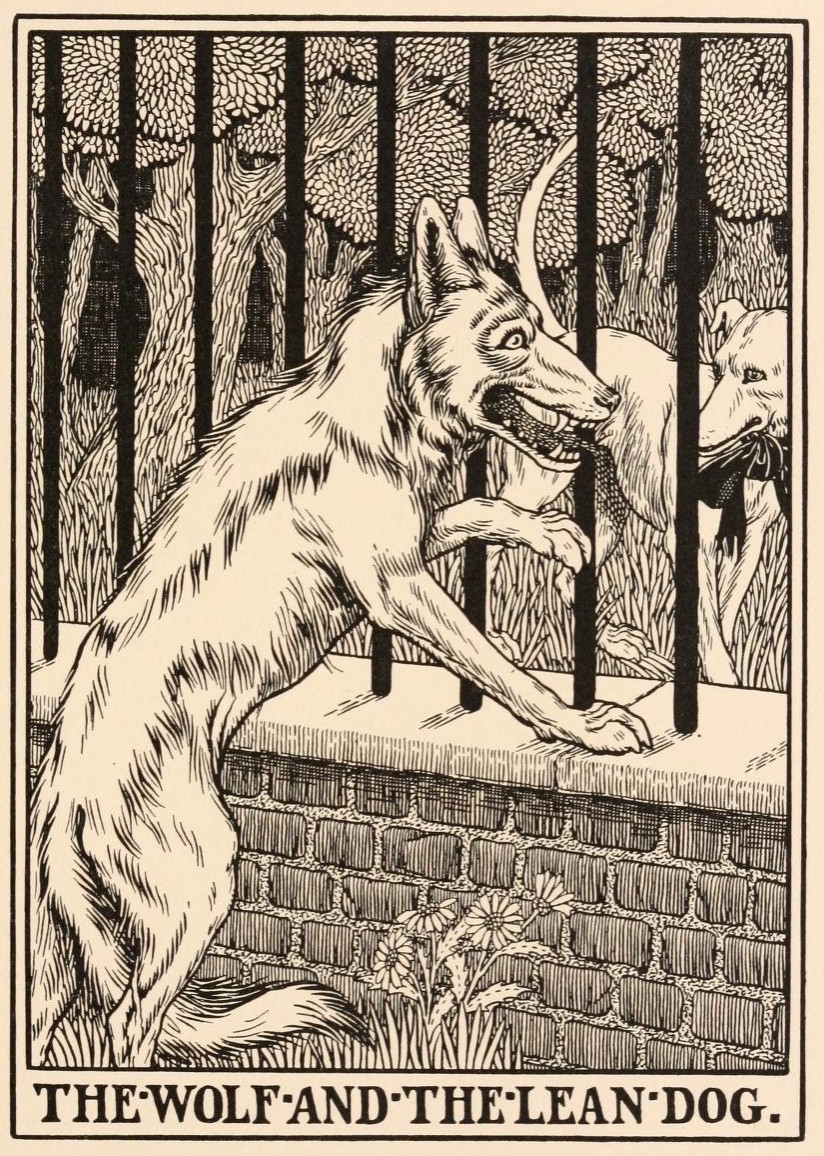
When a dog slept before the hall, a wolf coming upon him, presently took him, and when he was willing to slay him, the dog besought him that he would not kill him, saying, "So ho, my wolf, now be unwilling to kill me, for as you see I am thin, lean, and lsnder, btu my master is about to make a wedding when, if you will wait a little, I eating daintily and become fatter, shall be more advantageous to thee. The wolf having faith in these words dismissed the dog. After a few days the wolf coming, when he found the dog sleeping at home, standing before the hall, asks the dog, that he would perform his promises to him. The do gsays, "Hark ye, wolf, if thou hadst taken me before the hall, thou wouldest not have expected the wedding in vain."
Moral. This fable shows that a wise man, when once he hath avoided a danger, continually takes care for the future.


193. Of a Dog and a Cock
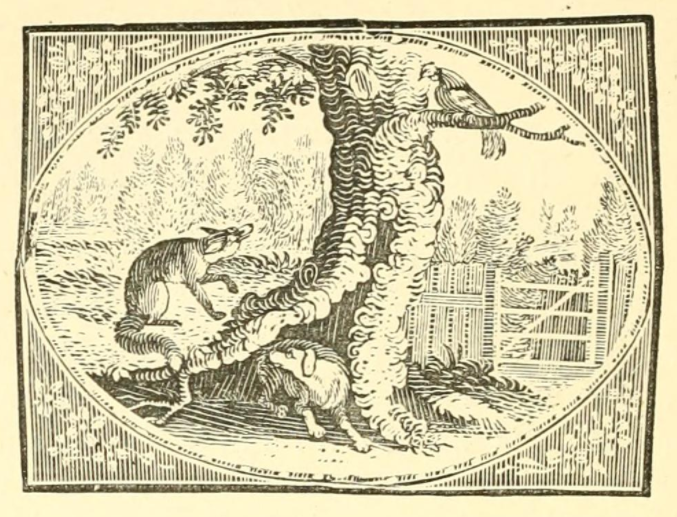
A dog and a cock companions made a journey, but evening coming on, the cock slept among the branches of a tree, but the dog at the root. When the cock, as he is wont, crowed in the night, a fox heard him, runs to him, and standing below asked that he would come down to him because he desired to embrace an animal so commendable for song, but, when he had said that first he should wake the porter sleeping at the root that he might come down when he had opened; he asking that he would call him, the dog leaping out, tore to pieces the fox.
Moral. The fable signifies that prudent men through craft send enemies more powerful than themselves to the more brave.


194. Of the Frogs
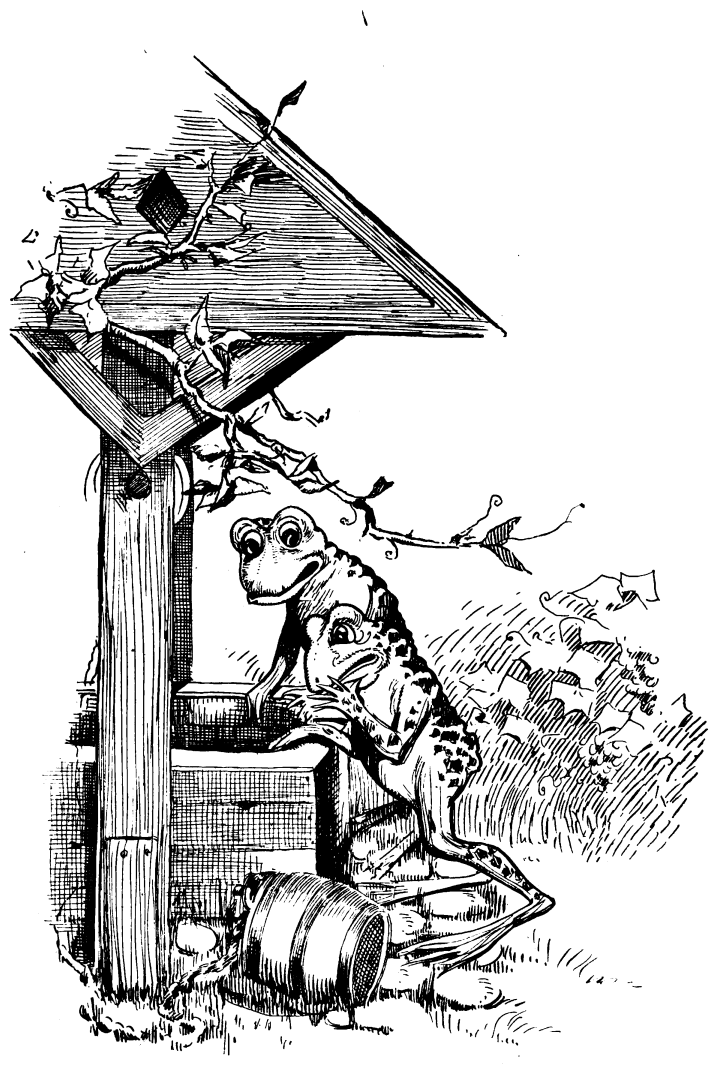
Two frogs were fed in a marsh, but in summer, the marsh being dried up, they sought another, but whey found a deep well which, being seen, one said to the other, "So ho, you, let us descend into this well." The other answering says, "If the water should dry up here, how shall we get up?"
Moral. The fable declares that no things are to be done inconsiderately.


195. Of a Lion and a Bear
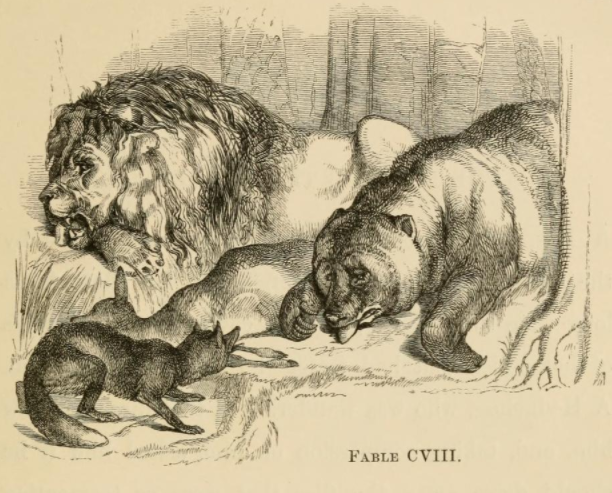
A lion and a bear, when they had taken ag reat fawn, fought about him and, wounded grievously by one another, they lay down tired. A fox, seeing them laid prostrate, and the fawn lying in the middle, snatched him, and ran away. They saw him, but because they could not rise, they said, "Alas! Wretched us, because we have laboured for the fox."
Moral. The fable signifies that whilst some labour, others enjoy the prey.


Clarke: English (38)

Here are some more fables from H. Clarke's Latin textbook Fabulae Aesopi selectae, or, Select fables of Aesop, and you can click here for all the fables reposted from this book at the blog.


186. Of the Fishermen
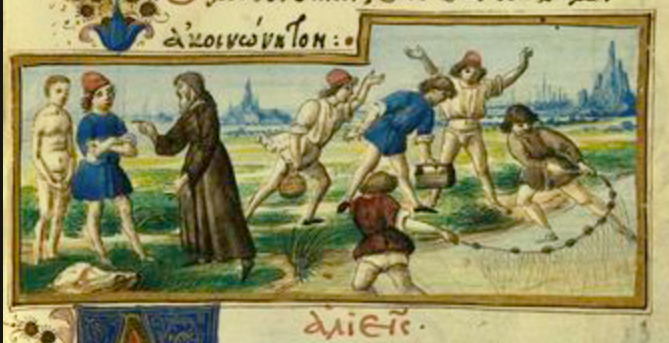
Certain fishermen drew their net out of the sea, which when they perceived to be heavy, they rejoiced greatly, thinking that there were many fishes, but as soon as they had dragged the net on the land, when they perceive few fishes indeed, but a vast stone to be in the net, they become sad. A certain one of them, now advanced in age, says prudently to his companions, "Be ye of quiet minds, for sorrow is the sister of gladness, for it behooveth us to foresee future mischances, and that any man may bear them more lightly to persuade himself that they will come to pass."
Moral. This fable signifies that he who remembereth human lot, is affected the least in adverse affairs.


187. Of a She-Cat Changed into a Woman
A certain cat, taken with the love of a certain beautiful young man, besought Venus, that she would change her into a woman. Venus, having pitied her, changed her into the shape of a woman, whom, when she was very beautiful, the lover led home. But when they sat together in the chamber, Venus, willing to try  if, the face being changed, she had changed also her morals, placed a mouse in the middle; which, when she saw, having forgot her shape and love, she pursued the mouse that she might take her; upon which thing Venus, being angry, again changed her into the former shape of a cat.
Moral. The fable signifies that a man, although he may change his character, yet retains the same manners.


188. Of Two Enemies
Tow certain men having enmities between themselves sailed together in a ship. And when the one would not suffer the other to stand in the same place, one sat at the head, the other at the stern. But a tempest having arose, when the ship was in danger, he that sat at the prose asks the governor of the ship, what part of the ship would be sunk first, and when the pilot had said the stern, he said, "Death now is not so troublesome to me if I perceive my enemy to die first."
Moral. This fable reproves the enmities of men; when an enemy very often chooses to destroy himself that he may destroy his enemy.


189. Of a Dog and a Smith
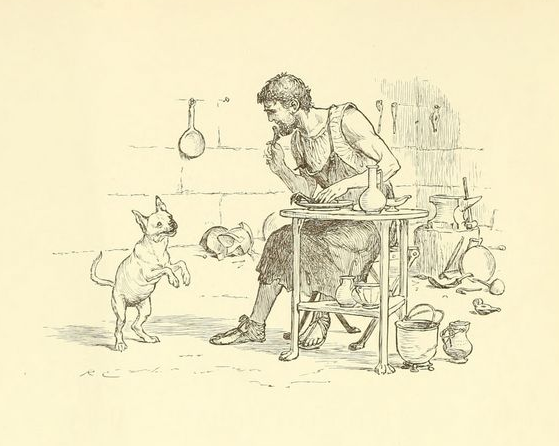
A certain smith had a dog which, whilst he struck the iron, slept continually, but when he was eating, the dog immediately rose up and, without delay, gnawed those things which were thrown down under the table, as bones and other things of this kind, which thing the smith perceiving, he says to the dog, "So ho, wretch, I know not what I shall do to thee; who, whilst I strike the iron, sleepest continually and art possessed with sloth; again when I move my teeth, presently thou risest, and flatterest me with thy tail."
Moral. The fable signifies that the slothful and drowsy, who live out of the labours of others, are to be restrained with a heavy censure.


190. Of a Certain Mule
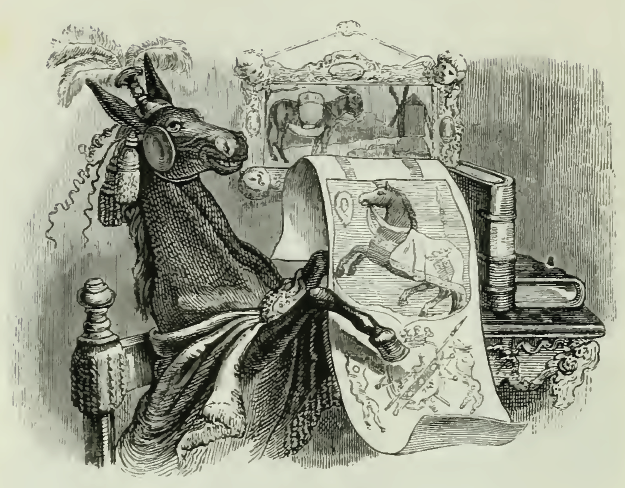
A certain mule, being made fat with too much barley, wantoned with too much fatness, saying with herself, "A horse was my father who was swiftest in the race, and I am like him in all things." A little after, it happened that it behooved the mule to run as much as she could, but when she ceased from running, she said, "Alas! Wretched me, who thought myself to be the offspring of a horse! But now I remember that my father was an ass."
Moral. The fable signifies that fools do not know themselves in prosperous things, but in adverse things very often they again know their errors.


Clarke: English (37)

Here are some more fables from H. Clarke's Latin textbook Fabulae Aesopi selectae, or, Select fables of Aesop, and you can click here for all the fables reposted from this book at the blog.


181. Of an Eagle and a Man
When a certain man had taken an eagle, the feathers of the wings being plucked from her, he dismissed her to dwell amon ght ehens. Afterwards a certain man, having purchased her, fortifies her wings with feathers; then the eagle, flying, takes a hare and bears him to her benefactor. Which thing a fox perceiving, he says to the man, be unwilling to have this eagle in your house, lest she hunt thee as well as the hare. Then the man also plucked off the feathers from the eagle.
Moral. This fable signifies that benefactors indeed are to be required, but the wicked altogether to be avoided.


182. Of an Husbandman
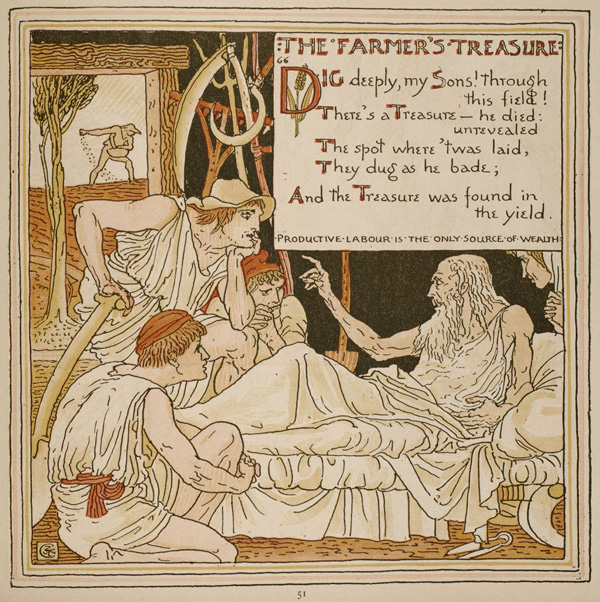
A certain man, being a husbandman, when he knew that there was an end of life to him and desired his son to become skillful in the tillage of lands, called them, and said, "O sons, I depart out of life; all my goods are placed in the vineyard." They, after the death of the father, thinking to find this treasure in the vineyard, spades, mattocks, and prongs being taken, entirely dig up the vineyard and do not find the treasure, but, when the vine was well dug up, it produced by far more fruits than usual and made them rich.
Moral. This fable signifies that daily labour bringeth forth treasure.


183. Of a Certain Fisherman
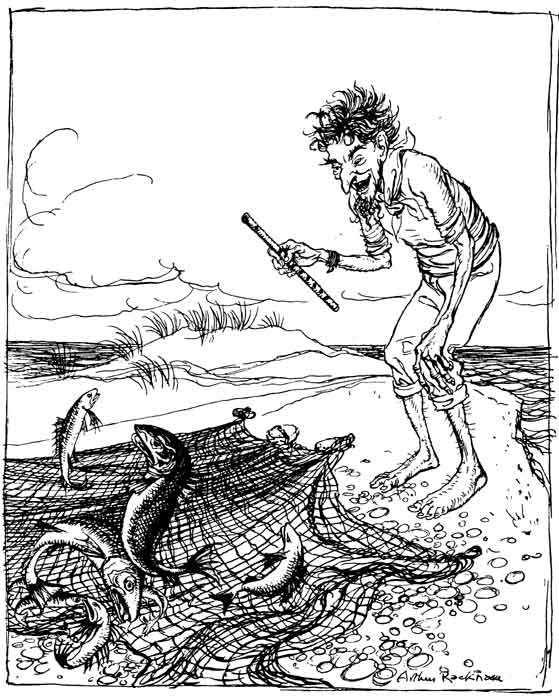
A certain fisherman unskillful in fishing, his net and pipes being taken, goes near the shore of the sea and, standing up on a certain rock, he began at first to pipe, thinking that he should take fishes easily with a tune, but when he obtained no effect with a tune, the pipes being laid down, he let down the net into the sea, and took very many fishes, but when he drew the fishes out of the net and perceived them dancing, he says, not unwittily, "O wicked animals, when I piped, ye were unwilling to dance, now because I cease to pipe, ye dance continually."
Moral. This fable shows that all things are done well which are done in their own season.


184. Of Certain Fishermen
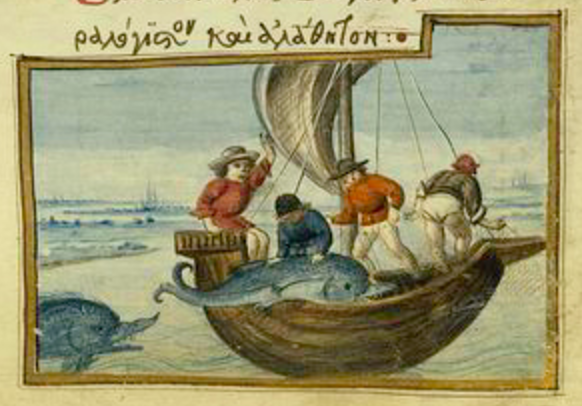
Fishermen having gone to fish and tired with fishing a long while, besides oppressed with hunger and grief, because they had taken nothing, when they resolve to go away, behold, a certain fish flying from another pursuing him, leaps into the boat. THe fishermen very joyful take him and sell him in the city at a great price.
Moral. This fable shows that fortune offers that very frequently which art is not able to effect.


185. Of a Poor and Infirm Man
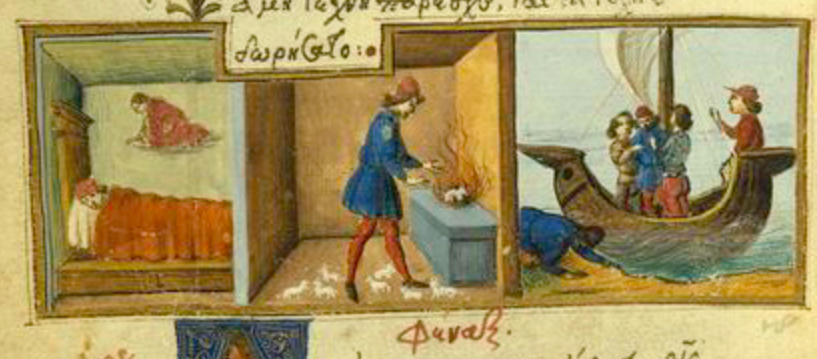
A certain poor man, when he was sick, vowed to the gods that if he should be freed from that disease, he would sacrifice a hundred oxen. Which the gods willing to try, easily restore health to him. Therefore free from the disase, when he had not the oxen because he was poor, he gathered the bones of a hundred oxen and, placing them upon the altar, he said, "Behold, now I pay the vow which I vowed to you." The gods, hearing this, stand before him in dreams and say, "Go to the shore of the sea, for there thou shalt find a hundred talents of gold in a secret place." He, having awoke, mindful of the dream, whilst he goes on to the shore, falls among thieves, who rob and beat him.
Moral. This fable shows that liars receive the rewards of lies.


Sunday, November 5, 2023

Clarke: English (36)

Here are some more fables from H. Clarke's Latin textbook Fabulae Aesopi selectae, or, Select fables of Aesop, and you can click here for all the fables reposted from this book at the blog.


176. Of the Son of a Certain Old Man and a Lion
A certain elderly man had an only son of a generous spirit, and a lover of hunting-dogs. He had seen him in a dream to be killed by a lion. Therefore afraid, lest by chance sometime the event should follow this dream, he built a certain very fine and very pleasant house, bringing his son thither, a daily guardian was present to him. He had painted in the house every kind of animals for the delight of his son, with which also a lion. The youth looking on these things contracted trouble by so much the more. But on a certain time, standing nearer to the lion, he said, "O most cruel wild beast, I am kept up in this house for a vain dream of my father: what shall I do to thee?" And so saying, he struck his hand on the wall, willing to pluck out the eye of the lion, and he hit it on a nail, which lay hid there, with which blow the hand rankled, and corruption grew beneath, and a fever followed, and in a short time he died. Thus the lion killed the youth, art of the father availing nothing.
Moral. This fable shows that no man is able to avoid those things which are to come.


177. Of a Fox and a Bramble
A fox, when she was ascending a certain hedge that she might avoid a danger which she saw to hang over her, caught hold of a bramble with her paws, and pricked the hollow of her paw with the thorns, and when she was wounded grievously, she said, groaning, to the bramble, "When I had fled to thee that thou mightest have helped me, thou hast hurt me." To whom the bramble says, "O fox, thou hast erred who hast thought to take me with the like deceit with which thou hast used to take other things."
Moral. The fable signifies that it is a foolish thing to implore help from them to whom it is given by nature rather to hurt than to profit.


178. Of a Fox and a Crocodile
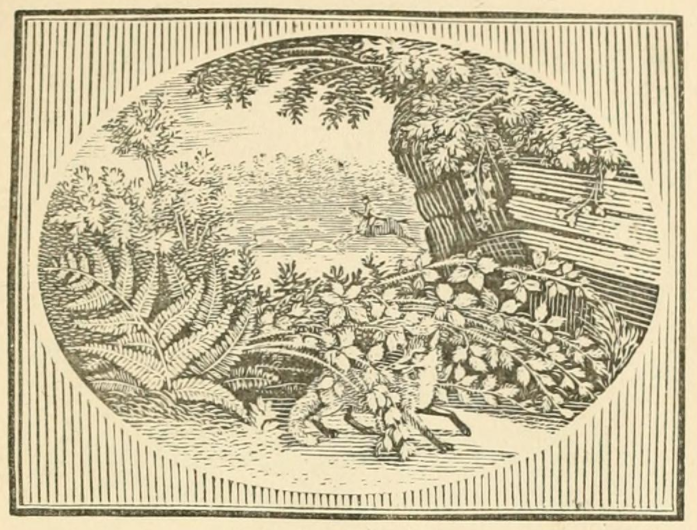
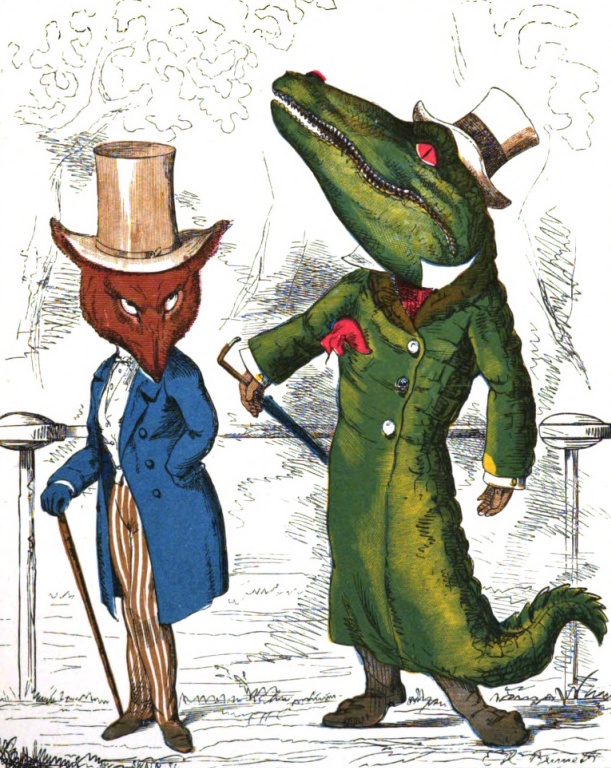
A fox and a crocodile contended concerning their nobility. When the crocodile adduced many things for himself and boasted himself beyond measure concerning the splendor of his ancestors; the fox smiling, said to him, "So ho, friend, although indeed thou hadst not said this, it appears clearly by thy skin that now many years thou hast been deprived of the splendor of thy ancestors."
Moral. The fable signifies that the thing itself chiefly refutes lying men.


179. Of a Fox and Huntsmen
A fox, flying from huntsmen and now tired with running along the way, by chance found a woodcutter whom he asks that he may hide himself in any place. He showed the cottage; the fox entering it hides himself in a certain corner. The huntsmen come up, ask the woodcutter if he saw the fox. The woodcutter denies in words indeed that he had seen him, but he showed the place with his hand, where the fox lay hid, but the huntsmen, the thing not being perceived, immediately go away. The fox, as soon as he perceives them to be gone away, coming out of the cottage, retires silently. The woodcutter accuses the fox that when he had made him safe, he gave no thanks to him. Then the fox, turning himself says softly to him, "Hark ye, friend, if thou hadst had the works of thy hands, and thy morals like to thy words, I would pay the deserved thanks to thee."
Morale. The fable signifies that a wicked man, although eh promises good things, yet he performeth bad and wicked things.


180. Of a Dog Invited to Supper
A certain man, when he had prepared a dainty supper, invited a certain friend home; his dog also invited the dog of the other man to supper. The dog, having entered, when he saw so great dainties prepared, joyful, says with himself, "Truly I shall fill myself today that I shall not want to eat tomorrow." But the cook, seeing him, silent took him by the tail and, whirling him three and four times, threw him through the window. He amazed rising up from the ground, whilst he flies crying, the other dogs run up to him and ask how daintily he had supped, but he, languishing, says, "I have filled myself so with drink and dainties that when I came out, I saw not the way."
Moral. The fable signifies that many things fall between the cup and the lips.


Saturday, October 28, 2023

Roger L'Estrange (33)

Here are some more fables from Roger L'Estrange's Fables of Aesop and Other Eminent Mythologists, and you can click here for all the L'Estrange fables at this blog.


 A Wolf and a Hog
A Wolf that had liv'd many Years upon the Spoil, came at last to be Troubled in Conscience for the Spilling of so much Innocent Blood, and so took up a christian Resolution to keep a long Lent for't; and not to Eat One Bit of Flesh for a whole Twelve-Month: But Fasting it seems did not agree with his Constitution, for upon the sight of a Hog Wallowing in a Muddy Puddle, he ran presently to him, and ask'd him what he was? Why, says the Hog, I belong to a Neighbour here in the Village, and the Ancient Romans call me Porcus. In Good Time, says the Wolf; for I have read in Littleton's Dictionary, that Porcius is a Fish, that being Taken, Grunteth like a Hog; and so he made a Supper of the Hog, without breaking his Fast, and without any Offence to his Vow of Mortification.
In a long Practice of Wickedness, now and then a Faint Vow or Promise of Amendment, goes for Nothing: And if a Body should have a Mind to break a Commandment under such an Obligation, it will be hard if he cannot bring himself off at last with some Salvo or Distinction, and be his own Confessor.


A Man that Would Never Hear Ill News
One came to a Country Grazier, and ask'd him if he should tell him a piece of News. Is't Good or Bad? (says he.) Nay, says t'other, 'tis not very Good. Pray, says the Grazier, keep it to your self then; and so he went his way. The Grazier was telling the next day, that the Wolves had Kill'd one of his Bullocks: That's like enough says the same Man, for I saw hin Wandring from the Herd, and I was afraid on't. I would you had told me this in time, says the Grazier. Why I came I know not how far Yesterday a-purpose to tell you the Story, and you would not hear on't.
The Man is too Delicate to be Happy, that makes it in his Bargain not to hear any ting that may give him a Present Trouble.


A Crow and a Raven
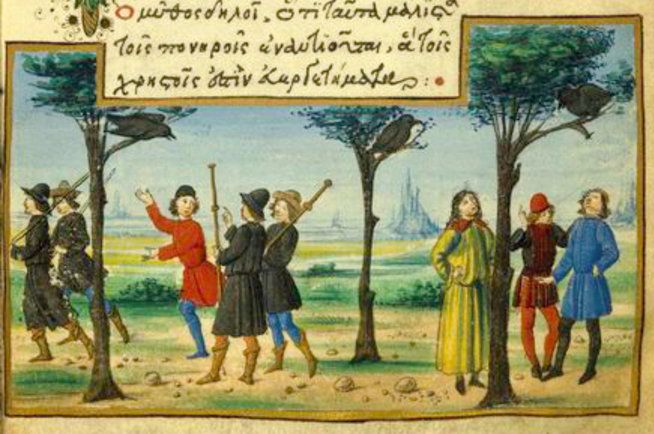
Your Raven has a Reputation in the World for a Bird of Omen, and a kind of small Prophet. A Crow that had Observ’d the Raven’s manner and Way of Delivering his Predictions, sets up for a Foreboder too; nd so gets upon a Tree, and there stands Nodding and Croaking, just over the Heads of some People that were Passing by. They were a little Surpriz’d at first; but so soon as they saw how ‘twas. Come, my Masters (says One of the Company) let’s e’en go forward, for this is but the chattering of a foolish Crow, it signifies Nothing.
How are Superstitious Men Hagg’d out of their Wits and Senses, with the Fancy of Omens, Forebodings, Old Wives Tales and Visions; and upon a Final Examination of the Matter, nothing at all in the Bottom on’t.


A Woman, Cat and Mice
A Good Woman that was willing to keep her Cheese from the Mice, thought to mend the matter by getting her a Cat. Now Puss Answer'd the Womans Intent and Expectation, in keeping the Mice from Nibbling the Cheeses; but she her self at the same time devour'd the Mice, Cheese and all.
This has been our Case within the Memory of Man: There were a matter of Half a Dozen Little Roguy Political Mice lay Nibbling at our Liberties and Properties, and all Peoples Mouths Open'd for the Providing of some 500 Cats to Destroy them. The End on't was this, they Kill'd the Vermine; but then they Gobbled up Privileges and All: And was not the World well Amended?


An Eagle and a Leveret
An Eagle that was Sharp set, and upon the Wing, looking about her for her Prey, spy'd out a leveret, made a Stoop like Light'ning, and Truss'd it; and as she had it in the Foot, the Miserable Wretch Enter'd into an Idle Expostulation upon the Conscience, and Justice of the Proceeding: With what Honesty, says the Hare, Can you Invade the Right of another Body? Why, says the Eagle, To whom do you belong then? I belong to him, (says the Other) whom Heaven has made the Matter of all Living Creatures under the Sun, and from whom That Propriety cannot be taken without manifest Wrong and Usurpation. Man is My Master, and I know no other. Well, says the Eagle again in Wrath, And what's the Title now, that he pretends to this Propriety? Why 'tis the Excellency of his Reason, says the Hare, that Entitles him to this Sovereignty; which is a Claim that from the Creation of the World, to this Day, was never Subjected to the Question. In Truth, says the Eagle, You have advanc'd a very Pretty Invention here, insestting up Reason against Force, where the Cause is not to be Decided by Argument, but by Power: And to Convince ye now how much I am in the Right, You shall find, in despite of all other Pretensions, since I have ye under my Government and Law, that you were not Born for Him, but for Me.
Laws with Penalties are made for the Government of the Simple, and the Weak, like Cobwebs to Catch Flies; but Power is the Law of Laws, and there's no Disputing with it, but pon the Swords Point.


Friday, October 27, 2023

Clarke: English (35)

Here are some more fables from H. Clarke's Latin textbook Fabulae Aesopi selectae, or, Select fables of Aesop, and you can click here for all the fables reposted from this book at the blog.


171. Of a Horse and an Ass
A certain man had a horse and an ass, but whilst they make a journey, the ass says to the horse, "If you are willing that I be safe, lighten me of a part of my burden." The horse not obeying his words, the ass, falling under the burden, dies. Then the master of the beasts puts on the horse all the packs which the ass carried, and moreover the hide which he had stripped off from the dead ass, with which burden the horse depressed and groaning said, "Woe to me, most unhappy of beasts! What an evil has happened to wretched me! For, refuing a part, now I carry the whole burden, and moreover his hide.
Moral. This fable hints that superiors ought to be partakers in the labours of inferiors that both may be safe.


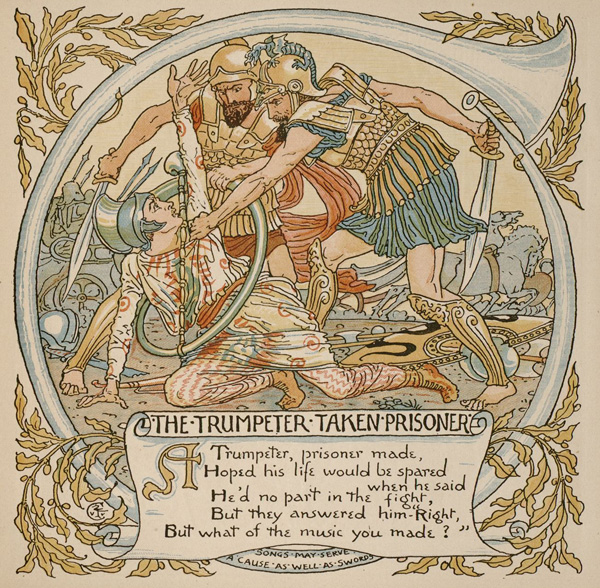
172. Of a Trumpeter
A certain trumpeter, taken by enemies in war, cried out to them who stood about, O men, be not willing to kill me, harmless and innocent, for never have I killed any one, for I have nothing else than this trumpet." To whom they answered in turn with a noise, "But thou shalt be slain rather on this same account, because when thou thyself can'st not fight, thou art able to impel the rest to the engagement."
Moral. This fable hints that they sin beyond others who persuade bad and wicked princes to act unjustly


173. Of a Fortuneteller
A fortuneteller, sitting in a market, discoursed, to whom one declares that his doors were broken open and all things taken away which had been in the house. The fortuneteller, sighing and hasting in his pace, betook himself home; whom a certain man perceiving running said, "O thou, who promisest that thou wilt divine others' affairs, surely thou hast not divined thine own."
Moral. This fable regards those who, not rightly administering their own affairs, endeavour to foresee and consult for other men's, which do not belong to them.


174. Of a Boy and his Mother
A certain boy in school, having stolen a little book, brought it to his mother, by whom not being chastised, daily he stole more and more, but in progress of time he began to steal greater things. At length being apprehended by the magistrate, he was led to punishment. But the mother following and crying, he asked that it might be lawful for him to speak a little with her in her ear. He, being permitted and the mother hastening and moving her eat to the mouth of the son, he tore off the ear of his mother with his teeth. When the mother and the others who stood about blamed him, not ly as a thief, but also as impious to his parent, he said, "She has been the cause of my destruction, for if she had chastised me for the little book which I stole first, I had done nothing further; now I am led to punishment."
Moral. This fable shows that they who are not restrained at the beginnings of sinning, go on to greater crimes.


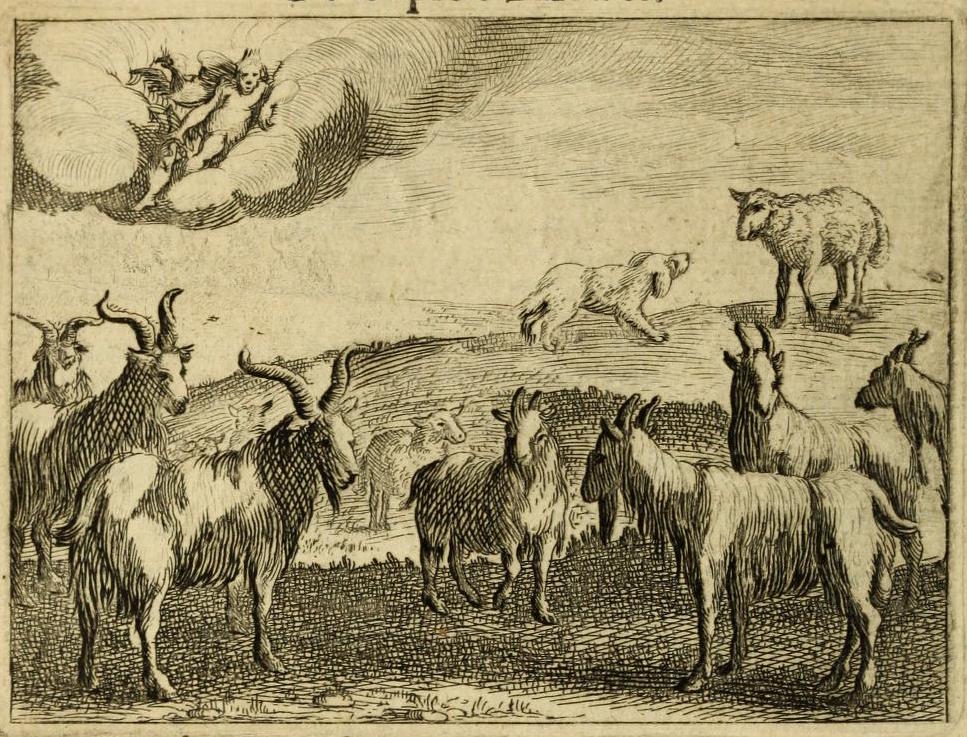
175. Of the He-Goats and the She-Goats
When the she-goats had obtained a beard from Jupiter, the he-goats began to be offended because the females had equal honour with them. Jupiter said, "Suffer ye them ot enjoy the vain gloyr and to usurp the ornament of your dignity, since they do not equal your virtue.
Moral. This fable teaches thee that thou mayest bear those to usurp thy ornament who are inferiors to thee in virtue.