Showing posts with label Clarke. Show all posts

Tuesday, November 14, 2023

Clarke: English (40)

Here are some more fables from H. Clarke's Latin textbook Fabulae Aesopi selectae, or, Select fables of Aesop, and you can click here for all the fables reposted from this book at the blog.


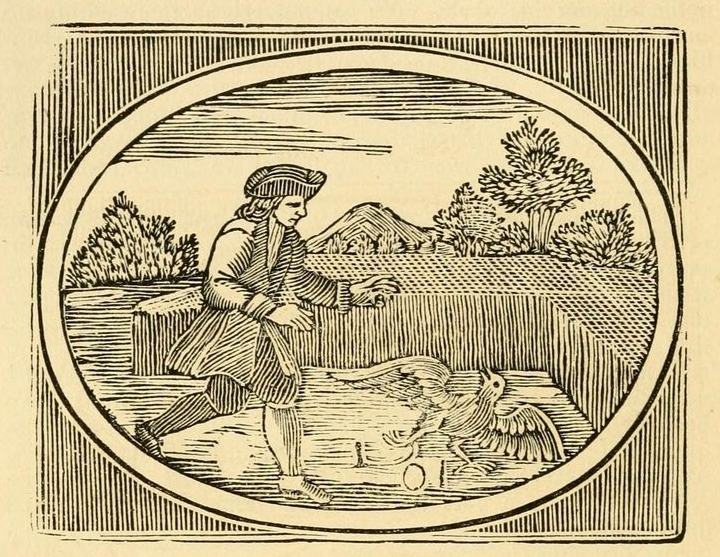
196. Of a Lark
A lark, taken in a snae, said lamenting, "Ah me! Miserable and unhappy, I have not stolen the gold nor the silver of any one, but a grain of wheat has been the cause of my death."
Moral. The fable tends to them who undergo great danger for unprofitable gain.


197. Of a Lion Worn Out with Age
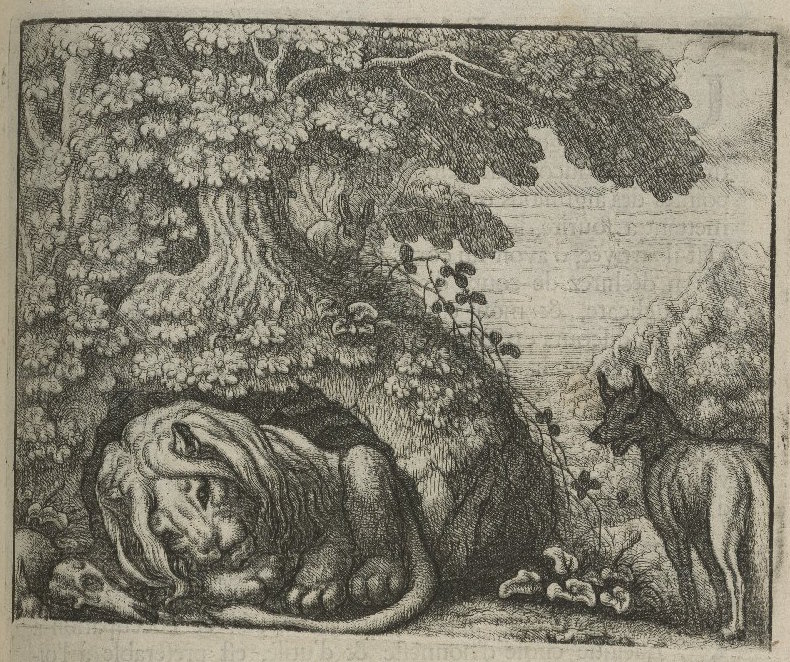
A lion when he had grown old, nor could get his living, contrived a way, how provisions should not be wanting to him. Therefore having entered the den, lying down, he feigned himself vehemently to be sick. The living creatures, thinking him verily to be sick, went to him for the sake of visiting him; whom the lion taking ate up one by one. When now he had killed many animals, the fox, the art of the lion being known, coming to the entrance of the cave, standing without, asks the lion how he did. The lion milkly answering her said, "Daughter fox, why dost thou not enter in to me?" The fox said, not unwittily, "Because, my master, I perceive indeed very many footsteps of animals entering in, but no footsteps of them coming out."
Moral. The fable signifies that a prudent man who foresees imminent dangers easily avoids them.


198. Of a Lion and a Bull
A lion, following a great bull by treachery, when he came near, invited him to supper, saying, "Friend, I have killed a sheep; you shall sup with me today if it pleases you." As soon as they had sat down, the bull, seeing many cauldrons and spits ready, and that there was no sheep for him, was willing to depart; whom the lion perceiving now going away asked him why he would go. The bull answered, "Truly, I do not go away for nothing when I see instruments prepared not to dress a sheep, but a bull."
Moral. The fable signifies that the arts of the wicked do not lie hid from the prudent.


199. Of a Sick Man and a Physician
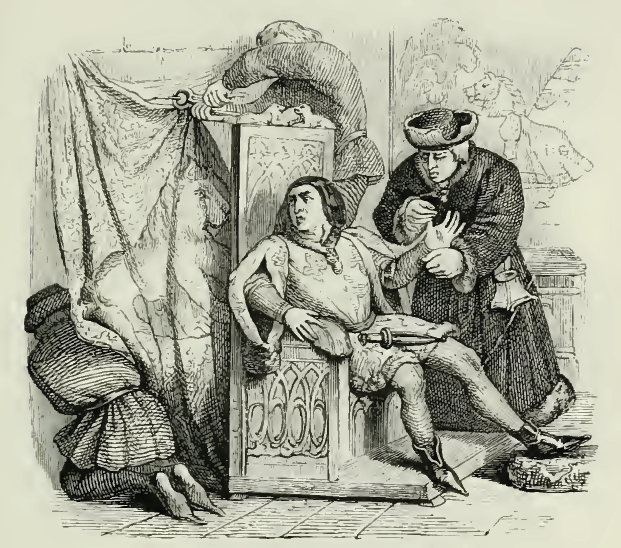
A sick man, being asked by the physician about his health, answered that he had sweated violently; the physician says that that was good; asked by the same physician a second time how he found himself, the sick man said that he was seized with a vehement coldness; the physician also says that that was for his health. Asked a third time by the same how he found himself, the sick man said that he was not able to digest without great difficulty. The physician says again that that was the best for his health; afterwards, when some one of his domestics asked the sick man, how he did, says he, "As the physician says, there are to me many and the best signs for health, yet I perish by those signs."
Moral. The fable shows that flatterers are to be blamed.


200. Of a Certain Woodcutter
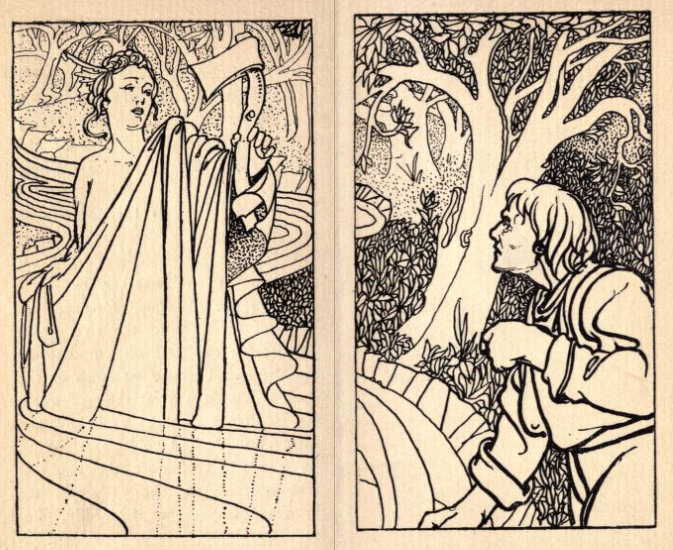
While a certain woodcutter cleaved wood near a river dedicated to the god Mercury, his ax by chance fell into the river. Therefore affected with much grief, he sat down sighing near the bank of the river. Mercury, moved with pity, appeared to the woodcutter and asked the cause of his weeping, which, as soon as he learnt, bringing him a golden ax, he asked whether it was that which he had lost. But the poor man denied that it was his. A second time Mercury brought another, a silver one, which, when the poor man denied also to be his, at last Mercury reached the wooden one, when the poor man agreed that that was his. Mercury, knowing him to be a man true and just, gave them all toh im for a gift. Therefore the woodcutter, coming to his companions, declares what had happened to him. One of his companions, willing to try it, when he came to the river threw his ax in the water, then he sat weeping on the bank; the cause of whose weeping when Mercury had heard, bringing a golden ax, he asked whether that was it, which he had lost, which, when he asserted to be his own, Mercury, his impudence being known, neither delivered to him the golden one, nor his own. 
Moral. The fable signifies that by how much God is more propitious to the honest he is the more severe to the wicked.


201. Of a Physician who Cured the Mad
Many talked of the superfluous care of those who feed dogs for fowling. A certain man of them says, the fool of Milan laughed at them rightly. When the story was demanded, he said, there was a physician, a citizen of Milan, who undertook to cure the mad, brought to him within a certain time, but the cure was of this manner; he had at home a court, and in it a pond of stinking water, in which he bound them naked to a stake, some up to the knees, others up to the belly, some more deeply, according to the degree of madness; and so long he starved them in the water, till they seemed sound in mind. A certain man was brought among the rest, whom he put into the water up to the thigh; who began to recover after fifteen days, and to ask his physician, that he might be brought out of the water; he took out the man from the torment yet on that condition that he should not go out of the court. When he had obeyed some days, he permitted that he might walk over the whole house, but that he should not go out of the outward gate (his companions, who were many, being left in the water); he obeyed the commands of the physician diligently, but standing upon the threshold on a certain time (for he did not dare to go out) he saw a young man coming on a horse with two dogs, and a hawk, moved with the novelty of the thing (for he did not retain in memory the things which he had seen before his madness) when the young man came near, he said, "So ho, you, I pray, answer me in a few things: what is this on which thou art carried?" says he, "it is a horse." Then afterwards "what is called this, which thou hast in thine hand and in what thing dost thou use it?" He answered "it is a hawk, and fit for the catching of partidges." Then the madman asks "and these, that accompany thee, who are they, and what do they profit to thee?" He says "they are dogs, and fit for fowling, to trace the birds." "But these birds, for the sake of catching which you prepare so many things, of what price are they, if you put together the prey of a whole year into done?" When he had answered, "a little, I know not what, and that it could not exceed six guineas," the madman asks, "what may be the expense of the horse, of the dogs, and of the hawk?" He affirmed the expense of them to be yearly fifty guineas. Then having admired the folly of the young man, says he, I pray, go hence quickly before that the physician return home; for if he should find thee, he will throw thee into his pond, as the most mad of all men, and he will place thee in the water up to the chin.
Moral. The fable shows many madnesses to be daily unobserved.


202. Of an Obstinate Woman who Called her Husband Lousy
A certainw oman, absove measure contrary to her husgband so that she would be superior, once in a heavy quarrel with him called him lousy. He, that she might retract that word, bruised his wife, beating her with his fists and heels. By how much the more she was beaten, by so much the more she called him lousy. The man at length tired withe beating her that he might overcome the obstinacy of his wife, let her down into a river by a rope, saying that he would suffocate her if she would not abstain from such words. She persisted in nothing the less to continue that word, although fixed upt o the chin in the water. THen the man plunged her into the river so that she could not speak more, trying if he could turn her from her obstinacy by the fear of death. But she, the faculty of speaking being taken away, expressed with her fingers what she could not with her mouth: for, her hands being raised above her head, the nails of each thumb being joined, she gave what reproach she could to her husband by that gesture.
Moral. This fable shows that some will retain their obstaincy even at the hazard of death.

Clarke: English (39)

Here are some more fables from H. Clarke's Latin textbook Fabulae Aesopi selectae, or, Select fables of Aesop, and you can click here for all the fables reposted from this book at the blog.


191. Of a Physician and a Dead Man
A certain physician, who had attended a sick man, who a little after died, said to those who bore the funeral, if that man had abstained from wine and had used clysters, he would not have been dead. A certain one of those who were present, says to the physician, not unwittily, "So ho, physician, those counsels were to be told, when they were able to profit, not now, when they avail nothing.
Moral. The fable signifies that when cuonsel does not profit, to give it at that time is truly to play upon a friend.


192. Of a Dog and a Wolf
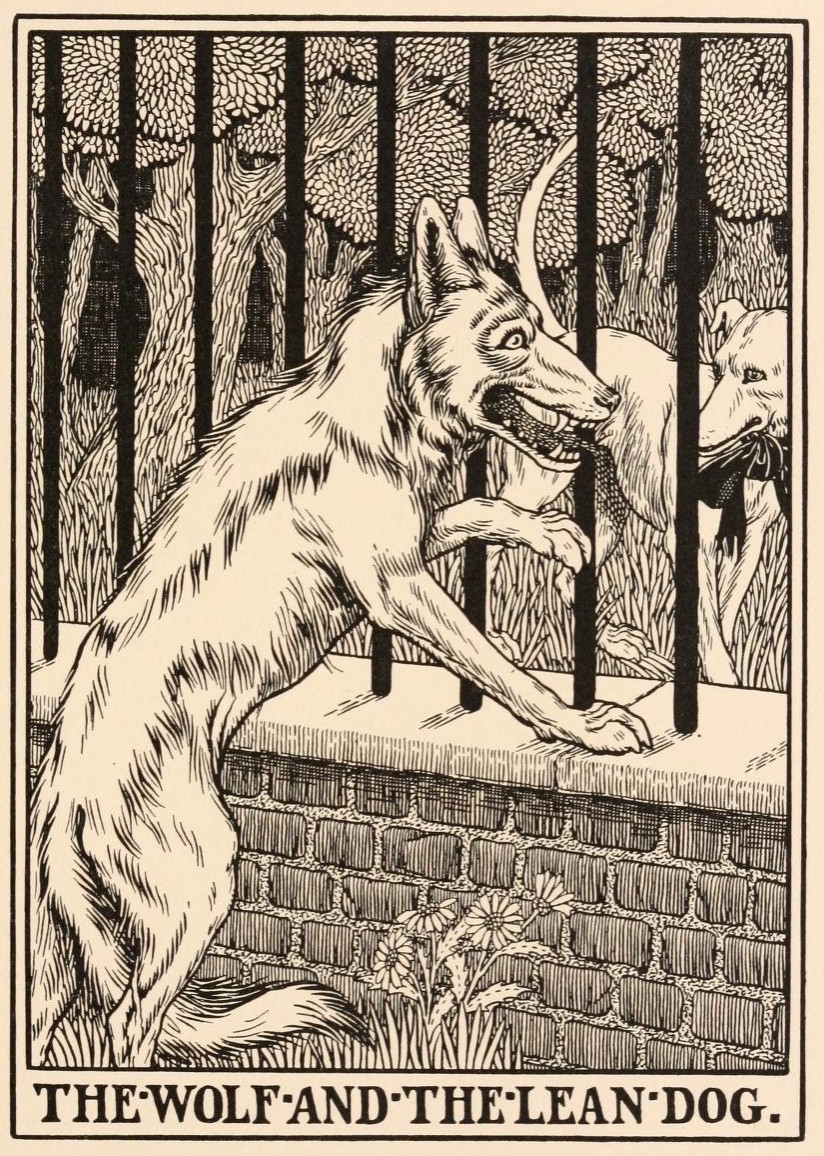
When a dog slept before the hall, a wolf coming upon him, presently took him, and when he was willing to slay him, the dog besought him that he would not kill him, saying, "So ho, my wolf, now be unwilling to kill me, for as you see I am thin, lean, and lsnder, btu my master is about to make a wedding when, if you will wait a little, I eating daintily and become fatter, shall be more advantageous to thee. The wolf having faith in these words dismissed the dog. After a few days the wolf coming, when he found the dog sleeping at home, standing before the hall, asks the dog, that he would perform his promises to him. The do gsays, "Hark ye, wolf, if thou hadst taken me before the hall, thou wouldest not have expected the wedding in vain."
Moral. This fable shows that a wise man, when once he hath avoided a danger, continually takes care for the future.


193. Of a Dog and a Cock
A dog and a cock companions made a journey, but evening coming on, the cock slept among the branches of a tree, but the dog at the root. When the cock, as he is wont, crowed in the night, a fox heard him, runs to him, and standing below asked that he would come down to him because he desired to embrace an animal so commendable for song, but, when he had said that first he should wake the porter sleeping at the root that he might come down when he had opened; he asking that he would call him, the dog leaping out, tore to pieces the fox.
Moral. The fable signifies that prudent men through craft send enemies more powerful than themselves to the more brave.


194. Of the Frogs
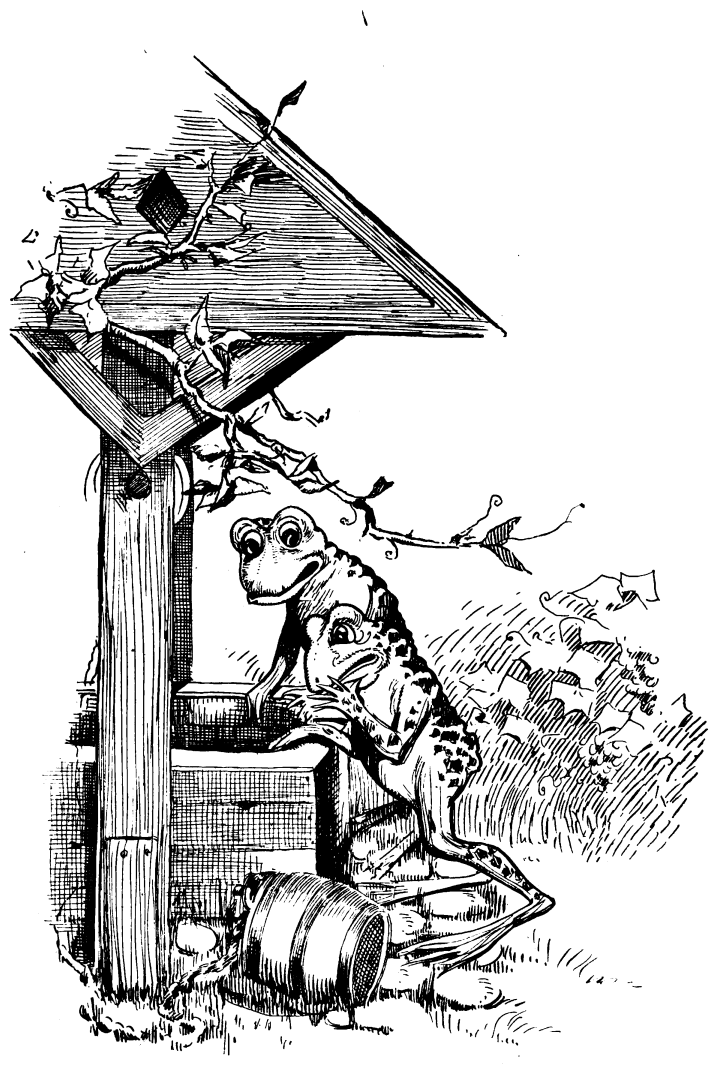
Two frogs were fed in a marsh, but in summer, the marsh being dried up, they sought another, but whey found a deep well which, being seen, one said to the other, "So ho, you, let us descend into this well." The other answering says, "If the water should dry up here, how shall we get up?"
Moral. The fable declares that no things are to be done inconsiderately.


195. Of a Lion and a Bear
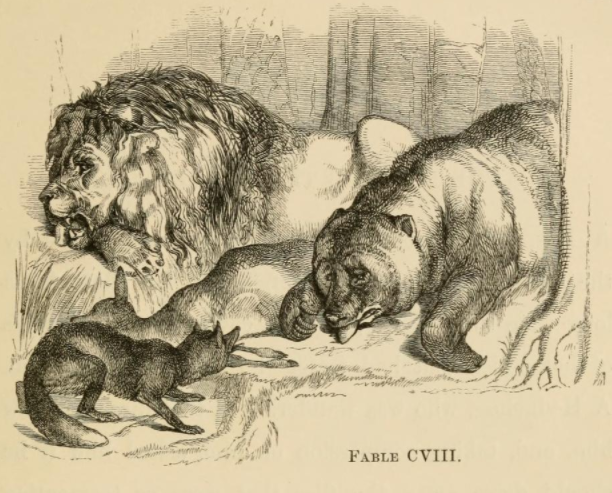
A lion and a bear, when they had taken ag reat fawn, fought about him and, wounded grievously by one another, they lay down tired. A fox, seeing them laid prostrate, and the fawn lying in the middle, snatched him, and ran away. They saw him, but because they could not rise, they said, "Alas! Wretched us, because we have laboured for the fox."
Moral. The fable signifies that whilst some labour, others enjoy the prey.


Clarke: English (38)

Here are some more fables from H. Clarke's Latin textbook Fabulae Aesopi selectae, or, Select fables of Aesop, and you can click here for all the fables reposted from this book at the blog.


186. Of the Fishermen
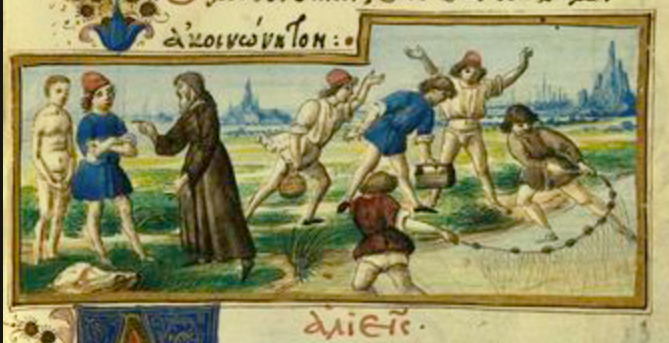
Certain fishermen drew their net out of the sea, which when they perceived to be heavy, they rejoiced greatly, thinking that there were many fishes, but as soon as they had dragged the net on the land, when they perceive few fishes indeed, but a vast stone to be in the net, they become sad. A certain one of them, now advanced in age, says prudently to his companions, "Be ye of quiet minds, for sorrow is the sister of gladness, for it behooveth us to foresee future mischances, and that any man may bear them more lightly to persuade himself that they will come to pass."
Moral. This fable signifies that he who remembereth human lot, is affected the least in adverse affairs.


187. Of a She-Cat Changed into a Woman
A certain cat, taken with the love of a certain beautiful young man, besought Venus, that she would change her into a woman. Venus, having pitied her, changed her into the shape of a woman, whom, when she was very beautiful, the lover led home. But when they sat together in the chamber, Venus, willing to try  if, the face being changed, she had changed also her morals, placed a mouse in the middle; which, when she saw, having forgot her shape and love, she pursued the mouse that she might take her; upon which thing Venus, being angry, again changed her into the former shape of a cat.
Moral. The fable signifies that a man, although he may change his character, yet retains the same manners.


188. Of Two Enemies
Tow certain men having enmities between themselves sailed together in a ship. And when the one would not suffer the other to stand in the same place, one sat at the head, the other at the stern. But a tempest having arose, when the ship was in danger, he that sat at the prose asks the governor of the ship, what part of the ship would be sunk first, and when the pilot had said the stern, he said, "Death now is not so troublesome to me if I perceive my enemy to die first."
Moral. This fable reproves the enmities of men; when an enemy very often chooses to destroy himself that he may destroy his enemy.


189. Of a Dog and a Smith
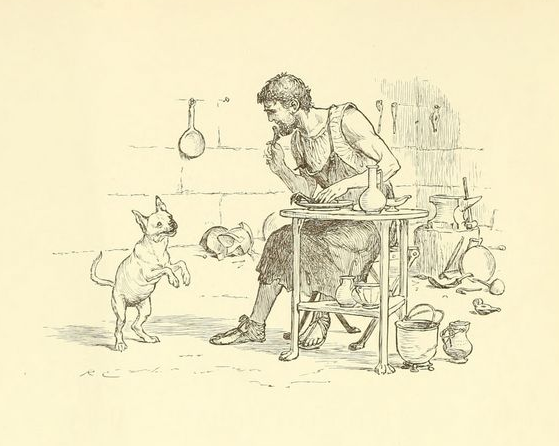
A certain smith had a dog which, whilst he struck the iron, slept continually, but when he was eating, the dog immediately rose up and, without delay, gnawed those things which were thrown down under the table, as bones and other things of this kind, which thing the smith perceiving, he says to the dog, "So ho, wretch, I know not what I shall do to thee; who, whilst I strike the iron, sleepest continually and art possessed with sloth; again when I move my teeth, presently thou risest, and flatterest me with thy tail."
Moral. The fable signifies that the slothful and drowsy, who live out of the labours of others, are to be restrained with a heavy censure.


190. Of a Certain Mule
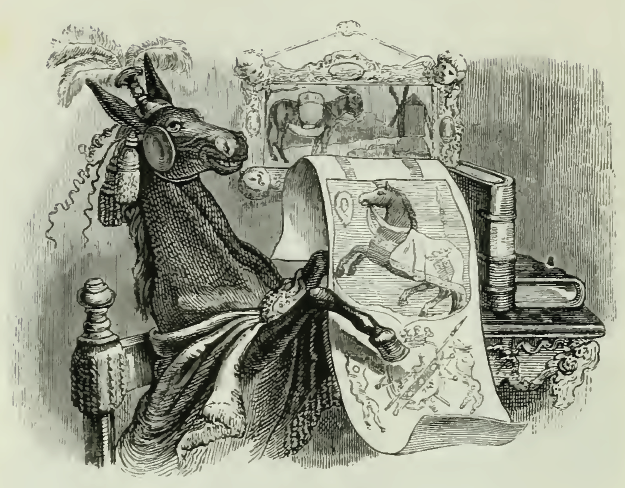
A certain mule, being made fat with too much barley, wantoned with too much fatness, saying with herself, "A horse was my father who was swiftest in the race, and I am like him in all things." A little after, it happened that it behooved the mule to run as much as she could, but when she ceased from running, she said, "Alas! Wretched me, who thought myself to be the offspring of a horse! But now I remember that my father was an ass."
Moral. The fable signifies that fools do not know themselves in prosperous things, but in adverse things very often they again know their errors.


Clarke: English (37)

Here are some more fables from H. Clarke's Latin textbook Fabulae Aesopi selectae, or, Select fables of Aesop, and you can click here for all the fables reposted from this book at the blog.


181. Of an Eagle and a Man
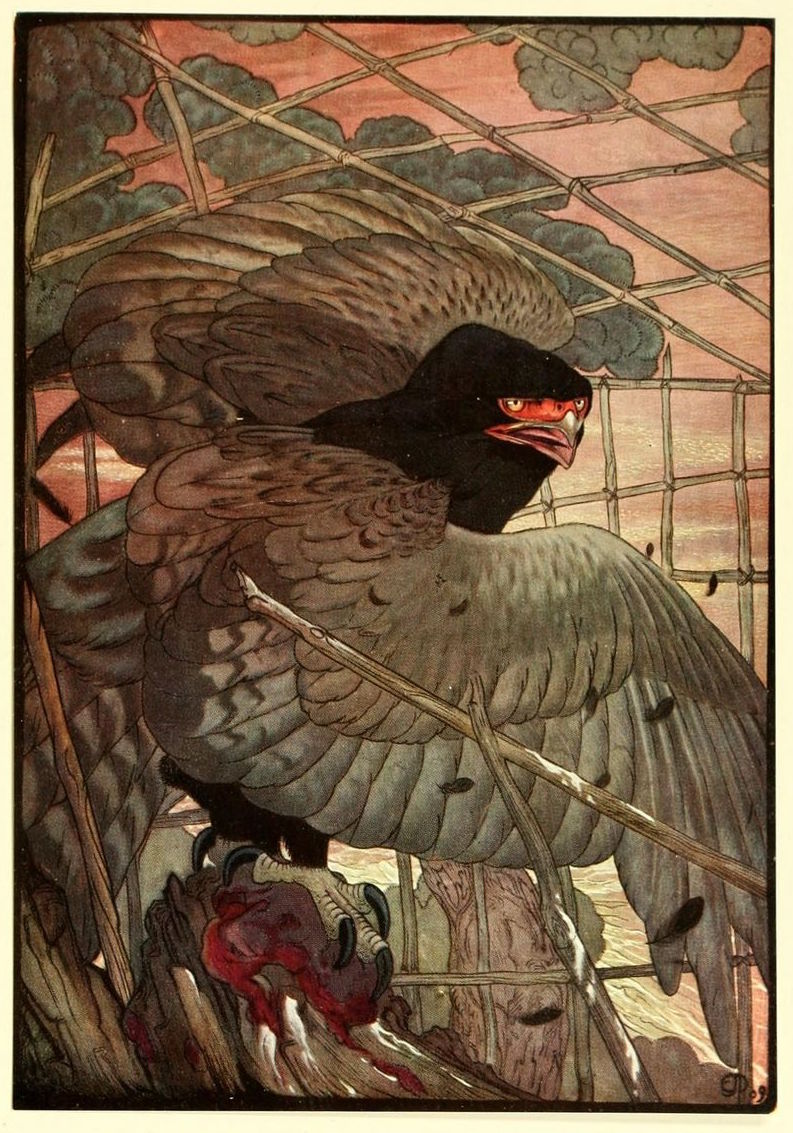
When a certain man had taken an eagle, the feathers of the wings being plucked from her, he dismissed her to dwell amon ght ehens. Afterwards a certain man, having purchased her, fortifies her wings with feathers; then the eagle, flying, takes a hare and bears him to her benefactor. Which thing a fox perceiving, he says to the man, be unwilling to have this eagle in your house, lest she hunt thee as well as the hare. Then the man also plucked off the feathers from the eagle.
Moral. This fable signifies that benefactors indeed are to be required, but the wicked altogether to be avoided.


182. Of an Husbandman
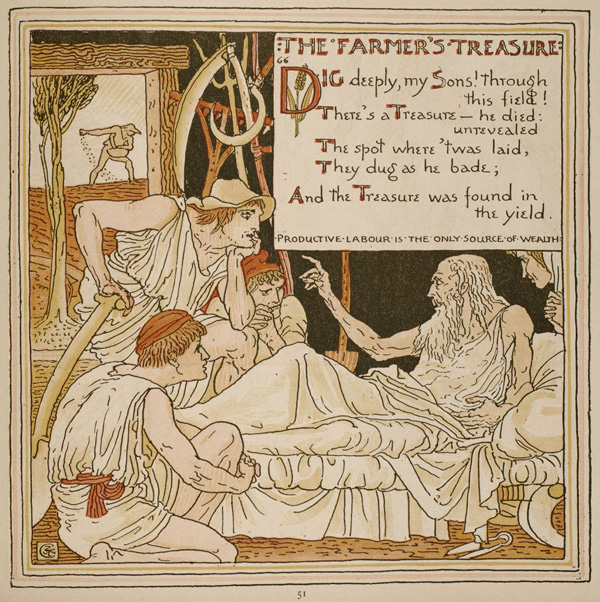
A certain man, being a husbandman, when he knew that there was an end of life to him and desired his son to become skillful in the tillage of lands, called them, and said, "O sons, I depart out of life; all my goods are placed in the vineyard." They, after the death of the father, thinking to find this treasure in the vineyard, spades, mattocks, and prongs being taken, entirely dig up the vineyard and do not find the treasure, but, when the vine was well dug up, it produced by far more fruits than usual and made them rich.
Moral. This fable signifies that daily labour bringeth forth treasure.


183. Of a Certain Fisherman
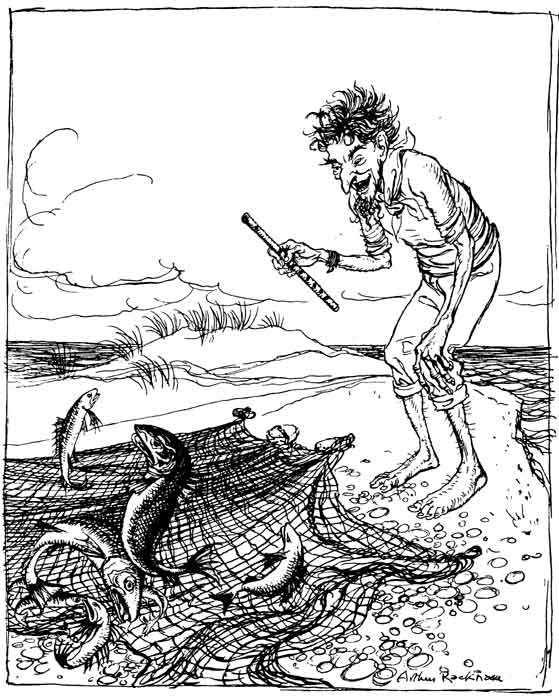
A certain fisherman unskillful in fishing, his net and pipes being taken, goes near the shore of the sea and, standing up on a certain rock, he began at first to pipe, thinking that he should take fishes easily with a tune, but when he obtained no effect with a tune, the pipes being laid down, he let down the net into the sea, and took very many fishes, but when he drew the fishes out of the net and perceived them dancing, he says, not unwittily, "O wicked animals, when I piped, ye were unwilling to dance, now because I cease to pipe, ye dance continually."
Moral. This fable shows that all things are done well which are done in their own season.


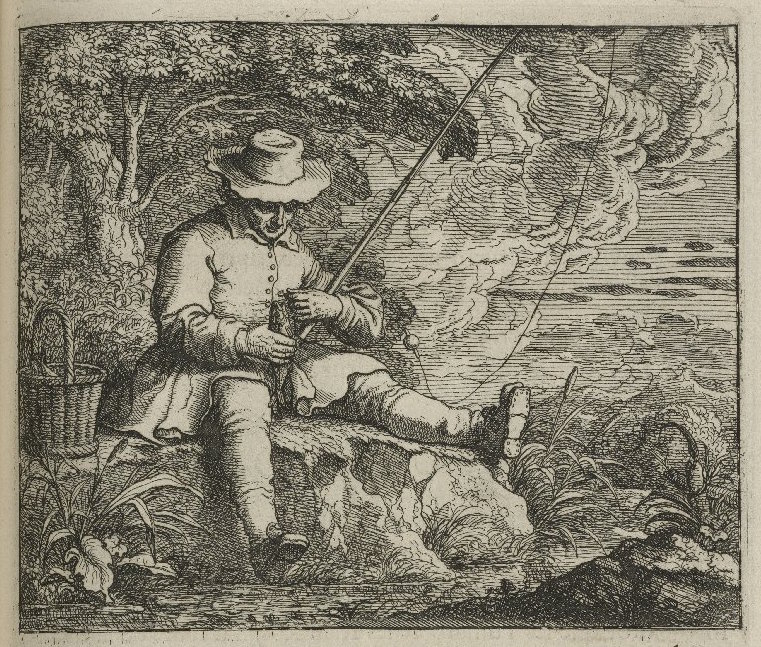
184. Of Certain Fishermen
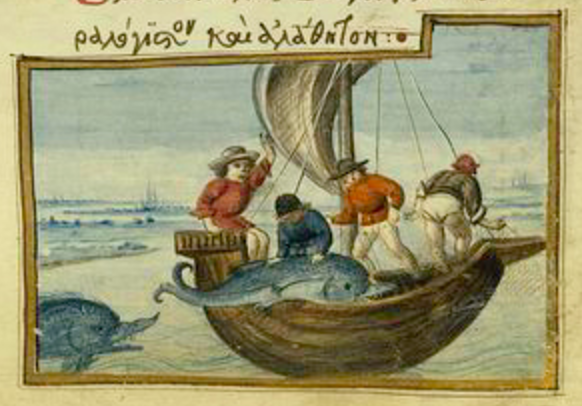
Fishermen having gone to fish and tired with fishing a long while, besides oppressed with hunger and grief, because they had taken nothing, when they resolve to go away, behold, a certain fish flying from another pursuing him, leaps into the boat. THe fishermen very joyful take him and sell him in the city at a great price.
Moral. This fable shows that fortune offers that very frequently which art is not able to effect.


185. Of a Poor and Infirm Man
A certain poor man, when he was sick, vowed to the gods that if he should be freed from that disease, he would sacrifice a hundred oxen. Which the gods willing to try, easily restore health to him. Therefore free from the disase, when he had not the oxen because he was poor, he gathered the bones of a hundred oxen and, placing them upon the altar, he said, "Behold, now I pay the vow which I vowed to you." The gods, hearing this, stand before him in dreams and say, "Go to the shore of the sea, for there thou shalt find a hundred talents of gold in a secret place." He, having awoke, mindful of the dream, whilst he goes on to the shore, falls among thieves, who rob and beat him.
Moral. This fable shows that liars receive the rewards of lies.


Sunday, November 5, 2023

Clarke: English (36)

Here are some more fables from H. Clarke's Latin textbook Fabulae Aesopi selectae, or, Select fables of Aesop, and you can click here for all the fables reposted from this book at the blog.


176. Of the Son of a Certain Old Man and a Lion
A certain elderly man had an only son of a generous spirit, and a lover of hunting-dogs. He had seen him in a dream to be killed by a lion. Therefore afraid, lest by chance sometime the event should follow this dream, he built a certain very fine and very pleasant house, bringing his son thither, a daily guardian was present to him. He had painted in the house every kind of animals for the delight of his son, with which also a lion. The youth looking on these things contracted trouble by so much the more. But on a certain time, standing nearer to the lion, he said, "O most cruel wild beast, I am kept up in this house for a vain dream of my father: what shall I do to thee?" And so saying, he struck his hand on the wall, willing to pluck out the eye of the lion, and he hit it on a nail, which lay hid there, with which blow the hand rankled, and corruption grew beneath, and a fever followed, and in a short time he died. Thus the lion killed the youth, art of the father availing nothing.
Moral. This fable shows that no man is able to avoid those things which are to come.


177. Of a Fox and a Bramble
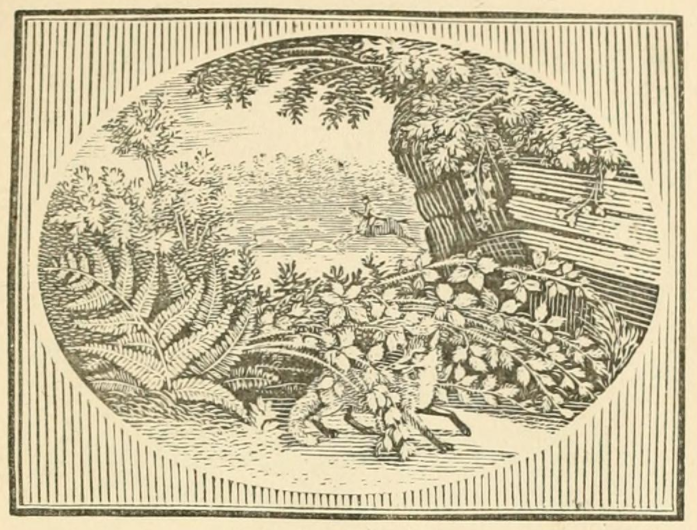
A fox, when she was ascending a certain hedge that she might avoid a danger which she saw to hang over her, caught hold of a bramble with her paws, and pricked the hollow of her paw with the thorns, and when she was wounded grievously, she said, groaning, to the bramble, "When I had fled to thee that thou mightest have helped me, thou hast hurt me." To whom the bramble says, "O fox, thou hast erred who hast thought to take me with the like deceit with which thou hast used to take other things."
Moral. The fable signifies that it is a foolish thing to implore help from them to whom it is given by nature rather to hurt than to profit.


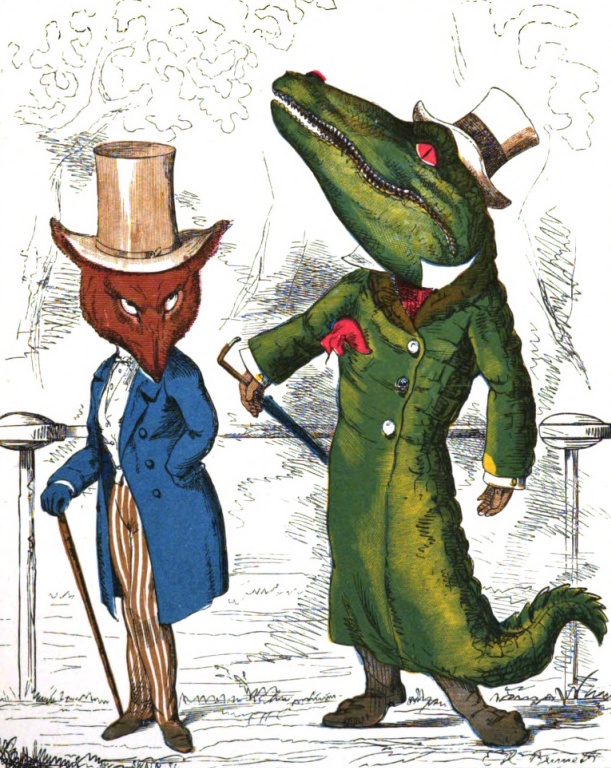
178. Of a Fox and a Crocodile
A fox and a crocodile contended concerning their nobility. When the crocodile adduced many things for himself and boasted himself beyond measure concerning the splendor of his ancestors; the fox smiling, said to him, "So ho, friend, although indeed thou hadst not said this, it appears clearly by thy skin that now many years thou hast been deprived of the splendor of thy ancestors."
Moral. The fable signifies that the thing itself chiefly refutes lying men.


179. Of a Fox and Huntsmen
A fox, flying from huntsmen and now tired with running along the way, by chance found a woodcutter whom he asks that he may hide himself in any place. He showed the cottage; the fox entering it hides himself in a certain corner. The huntsmen come up, ask the woodcutter if he saw the fox. The woodcutter denies in words indeed that he had seen him, but he showed the place with his hand, where the fox lay hid, but the huntsmen, the thing not being perceived, immediately go away. The fox, as soon as he perceives them to be gone away, coming out of the cottage, retires silently. The woodcutter accuses the fox that when he had made him safe, he gave no thanks to him. Then the fox, turning himself says softly to him, "Hark ye, friend, if thou hadst had the works of thy hands, and thy morals like to thy words, I would pay the deserved thanks to thee."
Morale. The fable signifies that a wicked man, although eh promises good things, yet he performeth bad and wicked things.


180. Of a Dog Invited to Supper
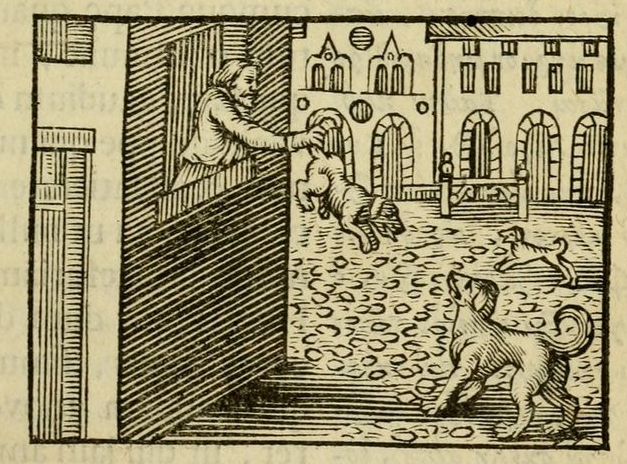
A certain man, when he had prepared a dainty supper, invited a certain friend home; his dog also invited the dog of the other man to supper. The dog, having entered, when he saw so great dainties prepared, joyful, says with himself, "Truly I shall fill myself today that I shall not want to eat tomorrow." But the cook, seeing him, silent took him by the tail and, whirling him three and four times, threw him through the window. He amazed rising up from the ground, whilst he flies crying, the other dogs run up to him and ask how daintily he had supped, but he, languishing, says, "I have filled myself so with drink and dainties that when I came out, I saw not the way."
Moral. The fable signifies that many things fall between the cup and the lips.


Friday, October 27, 2023

Clarke: English (35)

Here are some more fables from H. Clarke's Latin textbook Fabulae Aesopi selectae, or, Select fables of Aesop, and you can click here for all the fables reposted from this book at the blog.


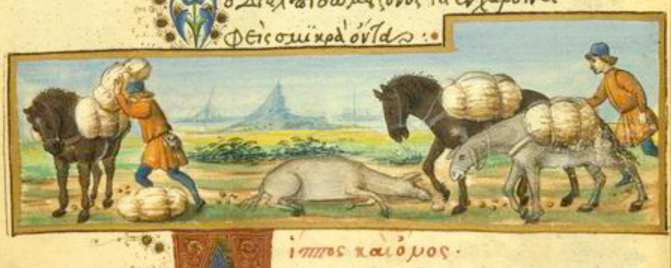
171. Of a Horse and an Ass
A certain man had a horse and an ass, but whilst they make a journey, the ass says to the horse, "If you are willing that I be safe, lighten me of a part of my burden." The horse not obeying his words, the ass, falling under the burden, dies. Then the master of the beasts puts on the horse all the packs which the ass carried, and moreover the hide which he had stripped off from the dead ass, with which burden the horse depressed and groaning said, "Woe to me, most unhappy of beasts! What an evil has happened to wretched me! For, refuing a part, now I carry the whole burden, and moreover his hide.
Moral. This fable hints that superiors ought to be partakers in the labours of inferiors that both may be safe.


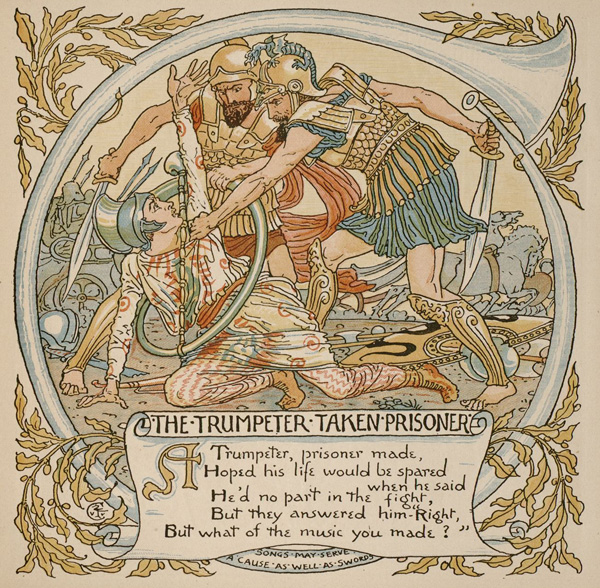
172. Of a Trumpeter
A certain trumpeter, taken by enemies in war, cried out to them who stood about, O men, be not willing to kill me, harmless and innocent, for never have I killed any one, for I have nothing else than this trumpet." To whom they answered in turn with a noise, "But thou shalt be slain rather on this same account, because when thou thyself can'st not fight, thou art able to impel the rest to the engagement."
Moral. This fable hints that they sin beyond others who persuade bad and wicked princes to act unjustly


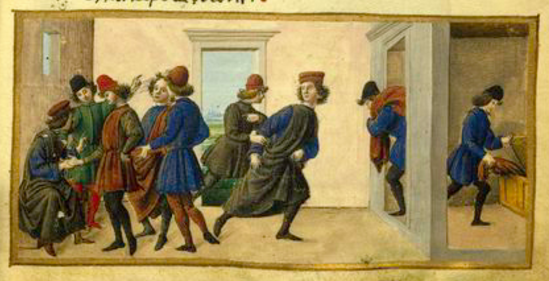
173. Of a Fortuneteller
A fortuneteller, sitting in a market, discoursed, to whom one declares that his doors were broken open and all things taken away which had been in the house. The fortuneteller, sighing and hasting in his pace, betook himself home; whom a certain man perceiving running said, "O thou, who promisest that thou wilt divine others' affairs, surely thou hast not divined thine own."
Moral. This fable regards those who, not rightly administering their own affairs, endeavour to foresee and consult for other men's, which do not belong to them.


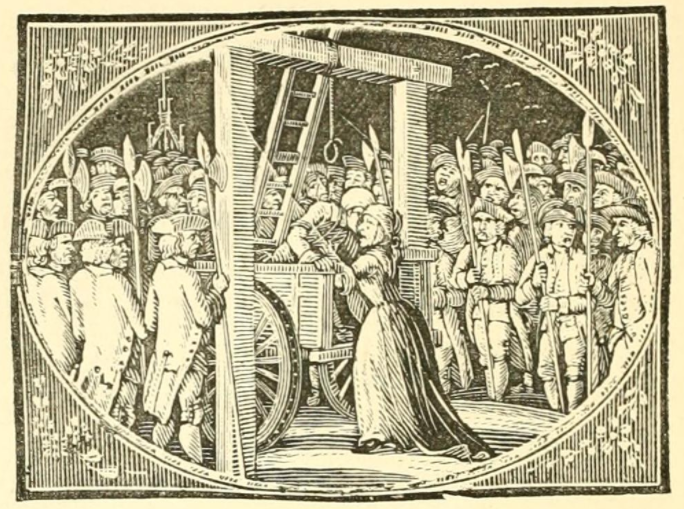
174. Of a Boy and his Mother
A certain boy in school, having stolen a little book, brought it to his mother, by whom not being chastised, daily he stole more and more, but in progress of time he began to steal greater things. At length being apprehended by the magistrate, he was led to punishment. But the mother following and crying, he asked that it might be lawful for him to speak a little with her in her ear. He, being permitted and the mother hastening and moving her eat to the mouth of the son, he tore off the ear of his mother with his teeth. When the mother and the others who stood about blamed him, not ly as a thief, but also as impious to his parent, he said, "She has been the cause of my destruction, for if she had chastised me for the little book which I stole first, I had done nothing further; now I am led to punishment."
Moral. This fable shows that they who are not restrained at the beginnings of sinning, go on to greater crimes.


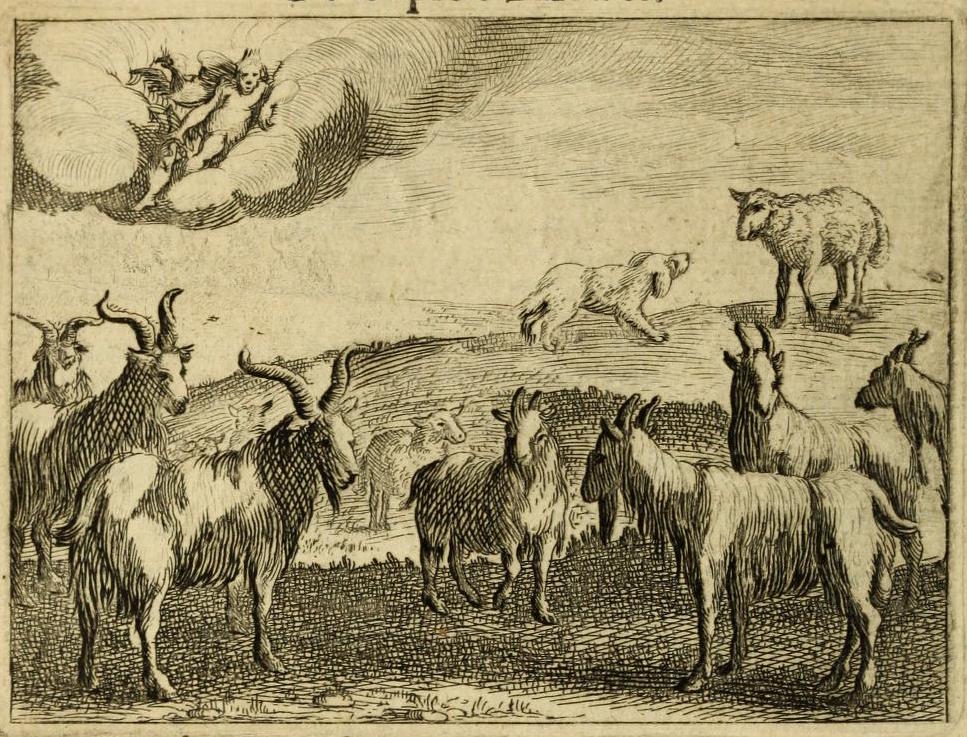
175. Of the He-Goats and the She-Goats
When the she-goats had obtained a beard from Jupiter, the he-goats began to be offended because the females had equal honour with them. Jupiter said, "Suffer ye them ot enjoy the vain gloyr and to usurp the ornament of your dignity, since they do not equal your virtue.
Moral. This fable teaches thee that thou mayest bear those to usurp thy ornament who are inferiors to thee in virtue.


Thursday, October 26, 2023

Clarke: English (34)

Here are some more fables from H. Clarke's Latin textbook Fabulae Aesopi selectae, or, Select fables of Aesop, and you can click here for all the fables reposted from this book at the blog.


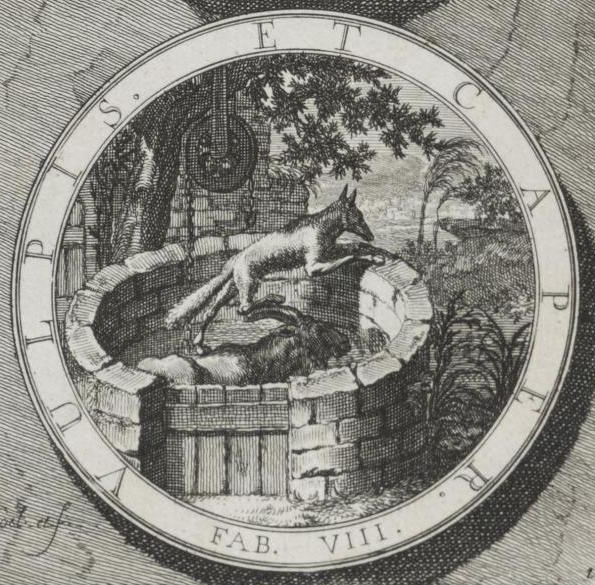
166. Of a Fox and a He-Goat
A fox and a goat being thirsty descended into a certain well, in which, when they had well drank, the fox says to the goat, looking about for a return, "Goat, be of good cheer, for I have thought by what means we both may be brought back. If truly thou wilt raise up thyself straight they forefeet being set to the wall, and wilt lean forward thy horns, thy chin being drawn to thy breast, I leaping over thy back and horns, and escaping out of the well, will bring thee thence afterwards. In whose counsel the goat having faith and obeying, as she commanded, she leaped out of the well, and then jumped for joy upon the bring of the well, and rejoiced, having no care of the goat. But when she was accused by the goat as a league-breaker, she answered, "Indeed, goat, if there had been to thee as much of sense in thy mind as there i of hairs on thy chin, thou wouldst not have descended into the well before that thou hadst examined about a return."
Moral. This fable hints that a prudent man ought to examine the end before that he comes to perform a thing.


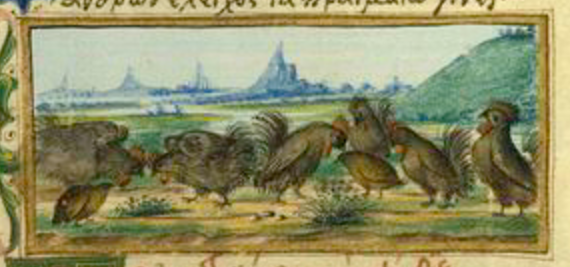
167. Of the Cocks and a Partridge
When a certain man had cocks at home, he bought a partridge, and gave her into the company of the cocks to be fed, and fattened together with them. The cocks every one for himself bit and drove her away. But the partridge was afflicted with herself, thinking that such things were offered to her by the cocks, because her kind was different from their kind. But when not long afterwards she saw them fighting amongst themselves and mutually striking, recovered from grief and sadness, she said, "Truly after these things I shall not be afflicted more, seeing them fighting even amonst themselves."
Moral. This fable hints that prudent men ought to bear the contumelies offered by foreigners, whom they see not to abstain from the injury of their own countrymen.

illustration from the Medici Aesop


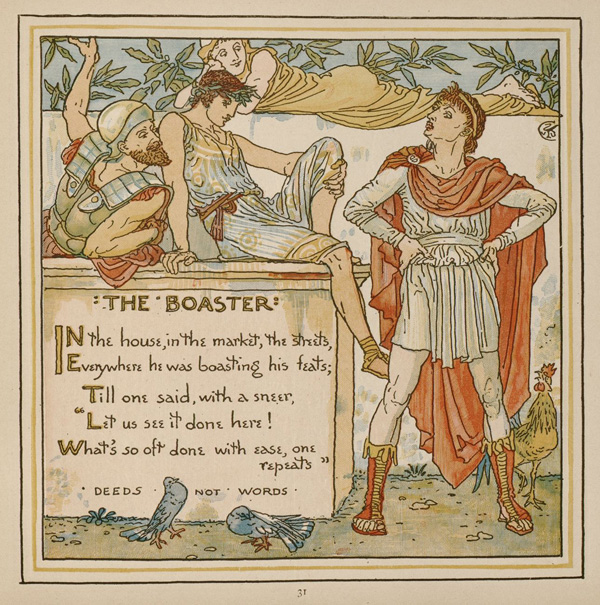
168. Of a Boaster
A certain man having traveled a long while, when he was returned home again, when boasting told many other things done by him manfully in diverse regions, and truly that especially, that at Rhodes, he had excelled all in leaping, that the Rhodians who had been present, were witnesses of the same thing: one of those, who were present, answering him said, "O man, if that is true, which you speak, what need is there to you of witnesses? Behold a Rhodian! Behold here a trial of leaping!"
Moral. This fable shows that where true testimonies are present there is no need of words.


169. Of a Man Tempting Apollo
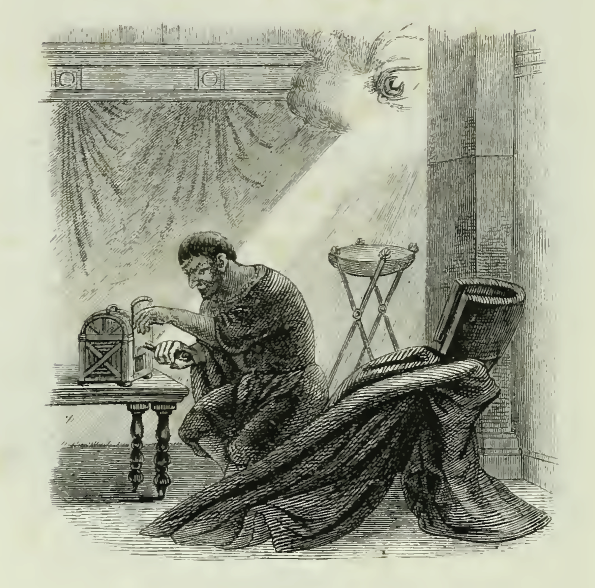
A certain wicked man betook himself to Delphos about to tempt Apollo, and having a little sparrow under his cloak which he held in his first, and going to the trevet, he asked him, saying, "What I have in my right hand: is it living or is it dead?" About th epluck forth the sparrow alive, if he had answered dead; again about the pluck it forth dead, if he had answered, alive, for he would have killed it presently under the cloak privily before that he plucked it out. But the God, understanding the deceitful craftiness of the man, said, "O consulter, do thou which of the two thou art more willing to do, for it is in the power of thee, and pluck out either alive or dead what thou hast in thy hands.
Moral. This fable hints that nothing lies hid from nor deceives the divine mind.


170. Of the Fisherman and the Sprat
A certain fisherman, hsi nets being let down into the sea, brought out a small sprat, which thus besought the fisherman, "Be not willing to take me so little at present; suffer me to go away and to grow, that afterwards thou mayest obtain me thus gorwn up with greater advantage." To whom the fisherman said, "But I should be mad if I should omit a gain, although small, which I have between my hands for the hope of a future good, although great."
Moral. This fable shows him to be foolish who, for hope of a greater advantage, does not embrace a thing both present and certain, although small.


Wednesday, October 25, 2023

Clarke: English (33)

Here are some more fables from H. Clarke's Latin textbook Fabulae Aesopi selectae, or, Select fables of Aesop, and you can click here for all the fables reposted from this book at the blog.


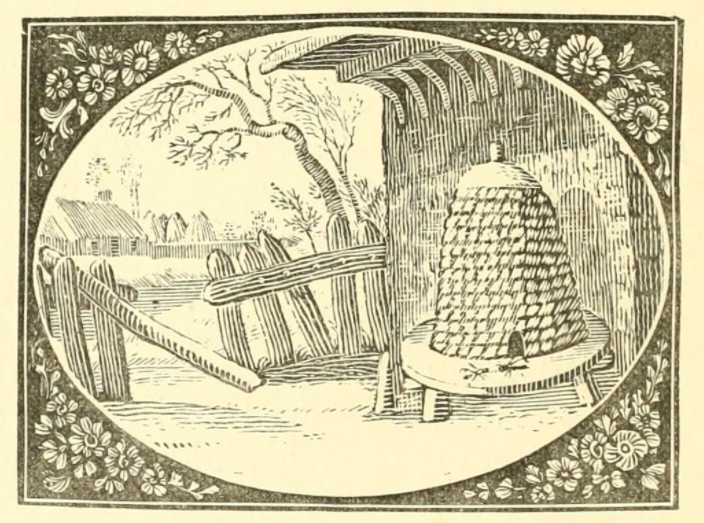
161. Of a Gnat Asking Meat and Lodging of a Bee
When the gnat in the winter time conjectured that he should perish with cold and hunger, he went to the hives of the bees, asking meat and lodging from them, which if he should obtain from them, he promised that he would teach their children the art of musick. Then a certain bee answered, "But I had rather that my children should learn my art, which will be able to exempt them from the danger of hunger and cold."
Moral. The fable admonishes us that we instruct our children in those arts which are able to defend them from want.


162. Of the Ass the Trumpeter and the Hare the Letter-Carrier
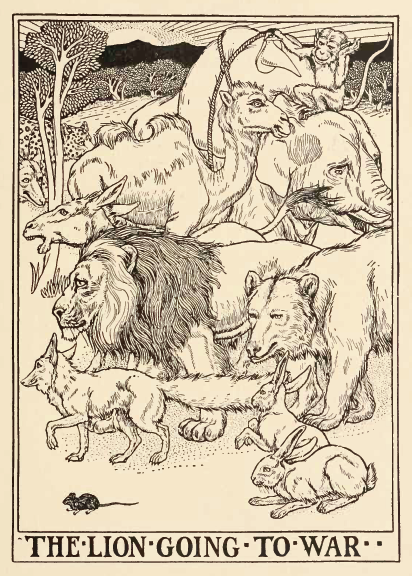
The lion, the king of the four-footed beasts, about to fight against the birds, disposed his troops, but being asked by the bear, how the sluggishness of the ass or the fearfulness of the hare would bring victory to him, whom he saw to be present there among the rest, he answered, "The ass, with the sound of his trumpet, will rouse the soldiers to the fight, but the hare will perform the office of a letter-bearer through the swiftness of his feet." 
Moral. This fable signifies that no one is so contemptible, who cannot be profitable to us in some thing.


163. Of the Hawks Enemies among Themselves, whom the Doves Reconciled
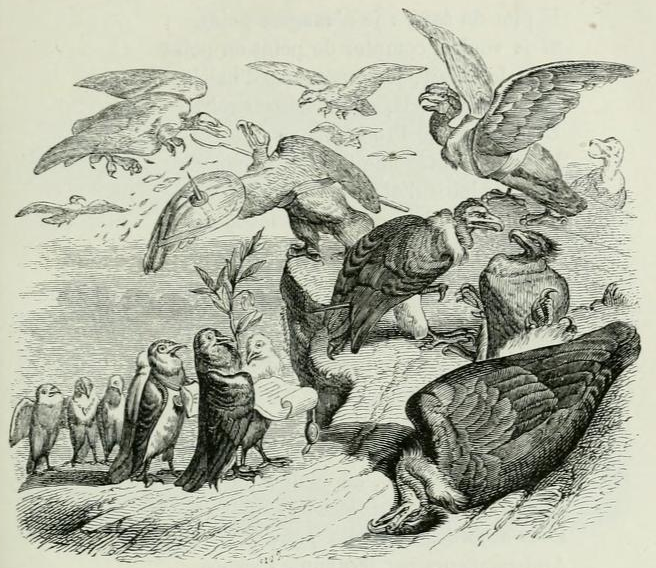
The hawks enemies among themselves contended daily, and busied with their own enmities they very little infested the other birds. The doves grieving, ambassadors being sent, reconciled them, but they , when they were made friends among themselves did not cease to harass and kill the other weaker birds, and chiefly the doves. Then the doves said, by how much was the discord of the hawks better for us, than their agreement.
Moral. This fable admonishes that the hatreds of bad citizens among themselves rather are to be nourished than extinguished that, whilst they contend among themselves, they may permit good men to live quietly.


164. Of an Old Man Being Willing to Defer Death
A certain old man asked death who came to snatch him out of life, that he would delay till he made his will and prepared the other necessary things for so great a journey. To whom death said, "Why warned so often by me hast thou not prepared thyself?" And,when he said that he never had seen him before, he said, "When daily I snatched away not only thy equals of which none almost now remain, but also young men, boys, and infants, did not I admonish thee of thy mortality? When thou perceivedst thine eyes to grown dim, thy hearing to be lessened, and thy other senses to decay daily, did I not say to thee, that I was near? And dost thou deny that thou hast been admonished? Wherefore it is not to be deferred longer."
Moral. This fable shows that we ought to live as if always we saw death to be present.


165. Of a Covetout Man Speaking to a Bag of Money
A certain covetous man about to die and about to leave a vast heap of golden pieces ill gotten, asked a bag of monies which he commanded to be brought to him to whom he was about to produce pleasure? To whom the bag said, "To thine heirs, who will lavish the monies gotten by thee with so great sweat upon whores and feasts, and to the devils, who will torment thy soul with eternal punishments."
Moral. This fable shows it to be a most foolish thing to labour in those things, which may be about to produce joy to others, but torments to us.


Saturday, October 21, 2023

Clarke: English (32)

Here are some more fables from H. Clarke's Latin textbook Fabulae Aesopi selectae, or, Select fables of Aesop, and you can click here for all the fables reposted from this book at the blog.


156. Of a Horse, Ugly but Swift, and the Rest Mocking Him
Many horses were brought to the Circensian games, adorned with most beautiful trappings, except one, whom the rest laughed at as ugly, and unfit for such an engagement, nor did they think that he would be ever victor. But when the time of running approached and the signal of the trumpet being given, all leaped from the goal; then, at length, it appeared by how much this a little before derided excelled the rest in swiftness; for, all the others being left behind him at a long distance, he gained the victory.
Moral. The fable signifies that men are not to be judged by dress, but by virtue.


157. Of a Countryman Admitted to a Lawyer by the Voice of a Kid
A certain countryman, entangled in a heavy suit, went to to a certain lawyer that, he being patron, he might extricate himself. But he hindered with other affairs orders him to be told, that he now was not able to be at leisure for him; wherefore he should go away to return another time. The countryman, who trusted to him very much, as an old and faithful friend, never was admitted. At length bringing with him a kid, as yet sucking and fat, he stood before the doors of the lawyer, and plucking the kid, forced him to bleat. The porter, who was wont to admit those, who brought gifts, by the command of his master, the voice of the kid being heard, presently opening the gate, orders the man to enter. Then the countryman, having turned to the kid, said, my little kid, I give thanks to thee, who hast made these doors so easy to me.
Moral. The fable shows that no things are so hard and difficult, which gifts do not open.


158. Of an Old Man Driving Down with Stones a Young Man Stealing Apples from Him
A certain old man besought a young man stealing apples from him with fair words that he would descend out of the tree, nor would take away his things, but when he poured out words in vain, the young man despising his age and words, he said, "I hear that there is some virtue not only in words, but also in herbs; therefore he began to pull the grass, and to throw it at him, which the young man having seen laughed vehemently, and thought the old man to doat, who believed, that he was able to drive down him out of the tree with grass. Then the old man, desiring to try all things, said, when words and herbs avail nothing against the stealer of my things, I will drive him with stones, in which also they say that there is virtue, and throwing stones, wiht which he had filled his lap, he forced him to descend and to go away. 
Moral. This fable shows that all things are to be tried by a wise man before that he fleeth to the help of arms.


159. Of a Nightingale Promising a Hawk a Song for her Life
A nightingale being caught by a hungry hawk, when she understood that she would be devoured by him, asked him mildly that he would dismiss her, having promised that she would return a vast reward for so great a benefit. But when the hawk asked what favour she was able to return to him, she said, "I will soothe thy ears with sweet songs." The hawk answered, "I had rather thou shouldst soothe my belly; I am able to live without thy songs, but not without meat."
Morale. This fable teacheth that profitable things are to be preferred to pleasant.


160. Of a Lion Choosing a Hog a Companion for Himself
A lion, when he would get companions to himself, and many animals wished to join themselves to him, and required it with vows and prayers, the others being despised, he was willing to enter into society only with the hog. But being asked the cause, he answered, because this animal is so faithful that he never would leave his friends and companions in any, however great, danger.
Moral. This fable teaches that the friendship of those is to be desired who in the time of adversity do not draw back a foot from affording assistance.


Friday, October 20, 2023

Clarke: English (31)

Here are some more fables from H. Clarke's Latin textbook Fabulae Aesopi selectae, or, Select fables of Aesop, and you can click here for all the fables reposted from this book at the blog.

151. Of a Sheep Railing against a Shepherd
A sheep railed against a shepherd that, not content with the milk which he milked from her for his own use and the use of his children, moreover he stripped her of the fleece. Then the shepherd, angry, dragged her young one to death. The sheep says, what worse are you able to do to me? The shepherd says, I may kill thee, and throw thee out to be devoured by the wolves and dogs. The sheep held her peace, fearing still greater evils.
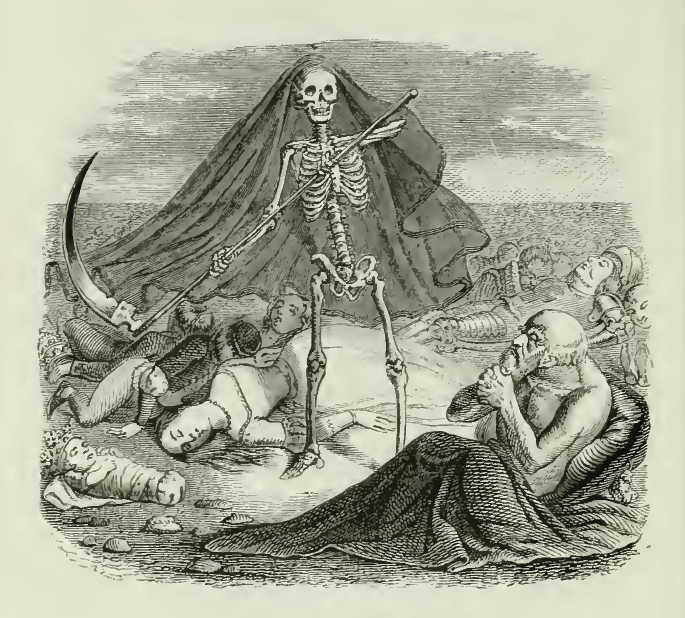
Moral. This fable shows that men ought not to grow warm against God, if he permitteth riches and children to be taken from them, when he is able to bring even greater punishments upon them both living and dead.


152. Of a Wagoner and a Wheel of the Wagon Creaking
A wagoner asked the wagon, wherefore the wheel, which was worse, creaked, when the rest did not do the same? To whom the wagon said, the sick always have used to be morose and complaining.
Morale. This fable shows that evils always are wont to drive men to complain.


153. Of a Man Willing to Try his Friends
A certain man very rich and liberal, had a great abundance of friends whom often he invited to supper, to whom they went most willingly. But willing to try whether they would be faithful to him in labours and dangers, he called together them all, saying that enemies were risen up against him, whom he resolved to kill; wherefore, arms being taken up, they should go with him, that they might revenge the injuries offered to him. Then all began to excuse themselves except two. Therefore, the rest being rejected, he held only those two in the number of friends.
Morale. This fable shows adverse fortune to be the best experiment of friendship.


154. Of a Fox Praising the Flesh of a Hare to a Dog
When the fox was put to flight by the dog, and just now was about to be caught, nor knew any other way of escaping, he said, O dog, why dost thou desire to destroy me, whose flesh cannot be of any use to thee? Take rather that hare (for the hare was near), whose flesh men say is most sweet. therefore the dog, moved by the counsel of the fox, the fox being let alone, pursued the hare, which yet he could not take for his incredible swiftness. After a few days the hare meeting the fox accused her vehemently (for he had heard her words) because she had shown him to the dog. To whom the fox said, O hare, why do you accuse me, when I have praised thee so greatly? What would you say if I had disgraced you?
Morale. This fable shows that men contrive destruction for others under the pretense of commendation.


155. Of the Hare Asking Craftiness, and the Fox Swiftness from Jupiter
The hare and the fox begged of Jupiter; this, that he would join swiftness to her craftiness; that, that he would join craftiness to his swiftness. To whom Jupiter answered, "We have bestowed gifts to all living creatures, from the beginning of the world, out of your most liberal bosom, but to have given all to one would have been the injury of others.
Moral. This fable shows that God has given his gifts with so equal a balance, that every one ought to be content with his own lot.


illustration by Tenniel (for another fable)


Thursday, October 12, 2023

Clarke: English (30)

Here are some more fables from H. Clarke's Latin textbook Fabulae Aesopi selectae, or, Select fables of Aesop, and you can click here for all the fables reposted from this book at the blog.


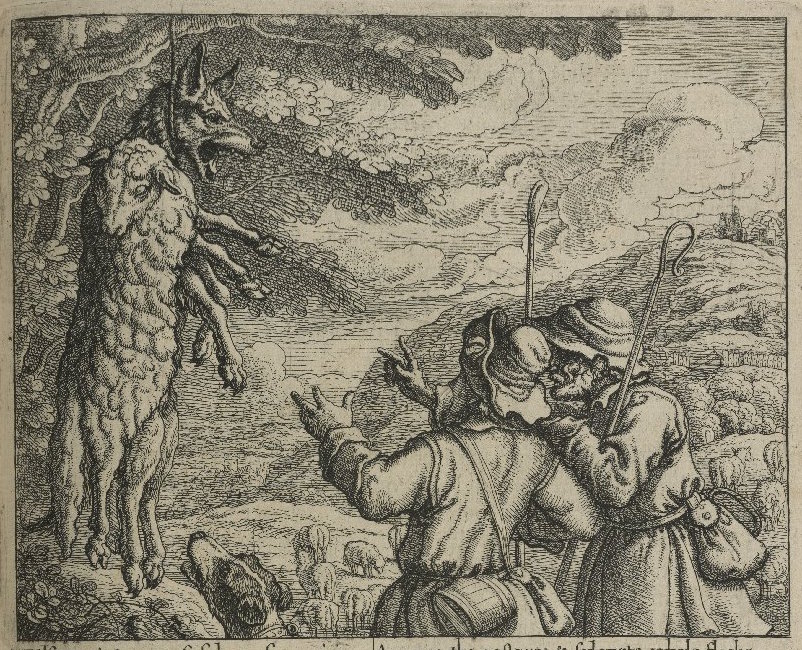
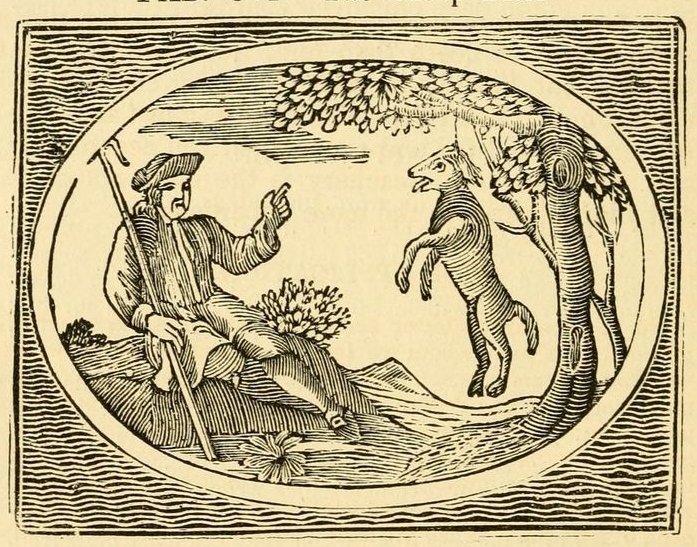
146. Of the a Wolf, Clothed with the Skin, of a Sheep, who Devoured the Flock
A wolf, clothed with the skin of a sheep, mixed himself with a flock of sheep, and daily slew some one of them: which when the shepherd had observed, he hanged him on a very high tree. But the other shepherds asking, why he had hung a sheep, he said, indeed the skin is a sheep's, as you see; but the works were a wolf's.
Moral.This fable shows that men are not to be judged by their habit, but by works because many do wolves' works under the garments of sheep.


147. Of a Dog Killing tthe Sheep of His Master
A certain shepherd had given his sheep to his dog to be kept, feeding him with the best meats. But he often killed some sheep, which when the shepherd had observed, taking the dog, he was willing to kill him. To whom the dog said, "Wherefore dost thou desire to destroy me? I am one of thy domestics; rather slay the wolf who continually lies in wait for your sheepfold." "Nay," asys the shepherd, "I think thee more worthy of death than the wolf, for he professes himself my enemy openly, but thou, under the show of friendship, daily diminishest my flock."
Moral. This fable shows that they are to be punished by far more who hurt us under a pretence of friendship than they who profess themselves our enemies openly.


148. Of a Ram Fighting with a Bull
There was a certain ram among the sheep who had so firm a head and horns that presently and easily he overcame the other rams, wherefore when he found no ram more who dared to withstand him running against him, puffed up with frequent victories he dared to provoke a bull to battle, but at the first onset when he had butted against the forehead of the bull, he was struck back with so cruel a blow that, almost dying, he said these words, "Fool that I am! What have I done? Why dared I to provoke so powerful an adversary to whom nature hath created me unequal?"
Moral. This fable shows that we ought not to strive with the more powerful.


149. Of an Eagle Snatching the Young of a Coney
An eagle, having built a nest in a very high tree, had snatched away the young of a coney, who was fed not far from thence, for the prey of her yong; whom the coney prayed with fair words, that she would vouchsafe to restore her young to her, but she, supposing him to be a little and earthly animal, tore them with her talons, which she placed for her young to eat in the sight of the dam; then the coney, moved at the death of her young, permitted not this injury to go unpunished; for she dug up the tree by the roots, which sustained the nest, which falling with a light blast of the winds, threw down the young of the eagle, as yet unfledged, upon the ground, who being eaten up by the wild beasts afforded comfort of grief to the coney.
Moral. This fable show that no man relying on his power ought to despise the weaker, seeing that sometimes the weaker revenge the injuries of the more powerful.


150. Of a Pike, a Fish of the River, Affecting the Dominion of the Sea
There was a pike in a certain river who exceeded the other fishes of the same river in fairness, greatness, and strength; whence all admired and treated him with the greatest honor; wherefore puffed up with pride, he began to desire greater command. Therefore, the river being left in which he had reigned many years, he entered into the sea that he might claim the dominion of it to himself, but finding a dolphin of a wonderful greatness, who reigned in it, he was so pursued by him that flying away scarcely could he enter into the mouth of the river, whence he dared to go out no more.
Moral. this fable admonishes us that content with our own things we do not desire what are by far greater than our strength.


Wednesday, October 11, 2023

Clarke: English (29)

Here are some more fables from H. Clarke's Latin textbook Fabulae Aesopi selectae, or, Select fables of Aesop, and you can click here for all the fables reposted from this book at the blog.


141. Of a Wolf, Persuading a Procupine that She Would Lay Down Her Darts
A wolf, huntering, had bent his mind upon a porcupine which nevertheless he dared not to attack because she was fortified everywhere with darts. But a cunning being thought on of destroying her, he began to persuade her not to carry so great a burden of darts on her back in a time of peace, seeing that the archers did not carry anything unless when the time of battle approached, to whom the porcupine said, "It is to be believed always to be a time of fighting against a wolf."
Moral. This fable hints that a wise man ought always to be fortified against deceits of enemies and foes.


142. Of a Mouse Freeing a Kite
A mouse, having espied a kite entangled in the snare of the fowler, pitied the bird, although an enemy to him, and the bands being gnawed with his teeth, he made a way for him of flying out. The kite, unmindful of so great benefit, when he saw himself loosed, seizing the mouse suspecting no such thing, tore him with his claws and bill. 
Moral. This fable shows that wicked men are wont to repay thanks of this kind to their benefactors.


143. Of a Snail, Desiring of Jupiter that She Might Be Able to Bear Her House with Her
When Jupiter, from the beginning of the world, bestowed on all animals the gifts which they had desired, the snail desired of him that she might be able to bear about her house. Being asked by Jupiter why she demanded such a gift from him, which would be heavy and troublesome to her, she said, "I had rather bear so heavy a burden perpetually than not to be able to avoid a bad neighbor when I choose."
Moral. This fable shows that the nighborhood of bad men is to be avoided with every disadvantage.

Iuppiter et Coclea


144. Of a Hedgehog, Casting Out a Viper, Her Host
A hedgehog, perceiving the winter to approach, asked the viper that she would grant a place to him in her cavern against the extremity of the cold, which, when she had done, the hedgehog, rolling himself hither and thither, pricked the viper with the sharpness of his darts, and tormented her vehemently. She seeing herself ill treated, when she took the hedgehog guestwise, entreated him with fair words, that he would go out, seeing that the place was too narrow for both. To whom the hedgehog said, let him go out, who cannot abide here; wherefore the viper perceiving, there was not place for her there, departed thence out of her lodging.
Moral. This fable shows that those are not to be admitted into fellowship, who are able to cast us out.


145. Of a Certain Husbandman and a Poet
A certain husbandman coming to a poet, whose fields he ploughed, when he had found him alone among his books, asked him, by what means he was able to live so alone? To whom he said, I began only to be alone, since you came hither.
Moral. This fable shows that learned men, who continually are thronged with a crowd of the most learned men, then are alone, when they are among illiterate fellows.


Monday, October 9, 2023

Clarke: English (28)

Here are some more fables from H. Clarke's Latin textbook Fabulae Aesopi selectae, or, Select fables of Aesop, and you can click here for all the fables reposted from this book at the blog.


136. Of an Ass Being Sick, and Wolves Visiting Him
An ass was sick, and report had gone out that he would die quickly; therefore, when the wolves had come to see him and asked of the son how his father did, he answered through the chink of the door, "Better than ye would have him."
Moral. This fable shows that many feign to bear the death of others with trouble, whom yet they desire to perish quickly.


Lupi et Asinus Aegrotus


137. Of a Nut-Tree, an Ass, and a Woman
A certain woman asked a nut-tree growing by the wayside, which was beaten with stones by the people passing by, why it was so mad that by how much it was beaten with more and greater stripes, by so much it yielded more and better fruits? To whom it said, "Art thou unmindful of the proverb saying thus: a nut-tree, an ass, and a woman are bound by a like law. These three do nothing rightly if blows cease."
Moral. This fable shows taht men often are wont to wound themselves with their own darts.


138. Of an Ass, Not Finding an End of His Labors
An ass was grieved very much in winter time that he was affected with too much cold and had hard meat of chaff, wherefore he desired the spring season and the tender grass. But when spring came and he was compelled by the master, who was a a potter, to carry clay into the yard and wood to the furnace, and thence bricks and tiles to diverse places. Tired of the spring, in which he bore so many labors, he hoped for summer, that the master, being hindered by the harvest, would suffer him to rest, but then also, when he was compelled to bear the corn into the barn, and thence the wheat home, nor was there space for rest for him. At least he hoped tha tautumn would be the end of his labors, but, when not then also he perceived an end of evils, seeing that daily wine, apples, and wood were to be carried, again he desired the snow and ice of winter, that then at least some rest might be granted to him from such great labors.
Moral. This fable shows that there are no times of the present life which are not subject to perpetual labors.


139. Of a Mouse Who Was Willing to Contract Friendship with a Cat
Many mice dwelling in the hollow of a wall, espied a cat, who lay on the boarded floor, with her head hung down, and a sad countenance. Then one of them said, this animal seems very kind and milkd; for she shows a certain sanctity in her very countenance; I am willing to speak to her and to knit an indissoluble friendship with her; which things when he had said, and had approached nearer, he was taken and torn to pieces by the cat. Then the rest, seeing this, said wish themselves, truly we must not trust rashly to the countenance.
Moral. This fable hints that men are not to be judged by the countenance, but by actions: seeing that fierce wolves often lie hid under a sheep's skin.

Feles Senex et Mus


140. Of an Ass, Who Served an Ungrateful Master
An ass, who had served an ungrateful master many years with an inoffensive foot, once, as it happens while he was pressed with a heavy load, and went in an uneven way, fell under the burden. Then the implacable master compelled him to rise with many blows, calling him an idle and dull animal. But the miserable ass said with himself, among these stripes, unhappy I, who have got so ungrateful a master! For although I have served him a long time without offence, yet he does not weigh this one fault with my so many former benefits.
Moral. This fable was feigned against those who unmindful of benefits conferred on them prosecute even the least offence of their benefactor with cruel punishment.


Thursday, October 5, 2023

Clarke: English (27)

Here are some more fables from H. Clarke's Latin textbook Fabulae Aesopi selectae, or, Select fables of Aesop, and you can click here for all the fables reposted from this book at the blog.


131. Of the Birds Being Willing to Choose More Kings
The birds consulted about choosing more kings, seeing that the eagle alone was not able to rule so great flocks of birds, and they would have done enough to their wish unless they had desisted from the counsel by the advice of the crow who, when the cause was asked why she did not think more kings were to be chosen, said, "Because many bags are filled more difficultly than one."
Moral. This fable teaches it to be by far better to be governed by one than by many princes.


132. Of a Woman Who Said that She Was Willing to Die for Her Husband
A certain matron, very chaste and most loving of her husband, bore it ill that her husband was kept down by bad health. She lamented, she grieved and, that she might testify her love to her husband, she asked Death that, if he was about to snatch her husband from her, he rather would kill her than him. Amidst these words, she beholds Death coming with horrible aspect, with the fear of whom being affrighted, and now repenting of her vow, she said, "I am not he whom thou seekest; he lies in the bed whom thou comest about to kill."
Moral. This fable shows that no one is so loving of a friend, who had not rather it was well to himself than another.

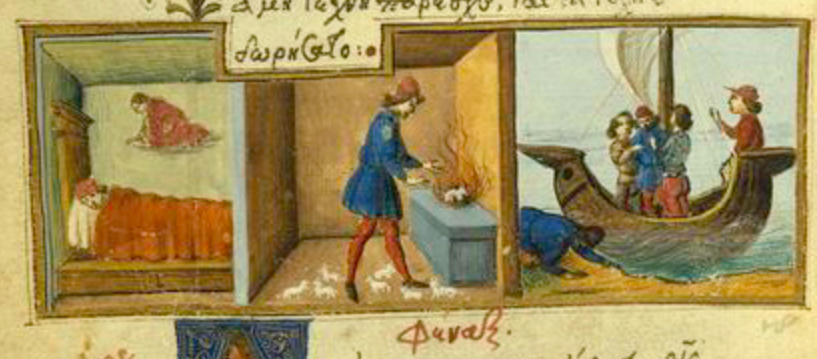
Femina, Maritus et Mors


133. Of a Young Man Singing at the Funeral of His Mother
A certain man followed his dead wife who was borne to the grave with tears and weepings, but his son sung, who, when he was blamed by the father as mad who could sing at the burial of a mother when he ought to be sad and to weep together with him, said, "My father, if you have hired priests that they might sing, why are you angry with me singing gratis?" To whom the father said, "Thy office and that of the priests is not the same."
Moral. This fable shows that all things are not decent for all men.


134. Of a Jealous Man Who Had Given His Wife to Be Guarded
A jealous man had given his wife, whom he had found to live but little chastely, to a certain friend, to whom he could trust very much, to be guarded, having promised much money if he would observe her so diligently that by no method she might violate the conjugal tie. But he, when he had experienced this charge too difficult some days and had found his wit to be overcome by the cunning of the woman, going to the husband, said that he was unwilling to bear this so hard a task any longer, seeing that not Argus indeed, who was all eyed, could be able to keep an unchaste woman. He added, moreover, if it was necessary that he had rather carry down a sack full of fleas into a meadow daily for a whole year and, the sack being loosed, to feed them among the grass and in the evening to bring them back all home than to keep an unchaste woman one day.
Moral. This fable shows that no guards are so diligent who can be able to guard unchaste women.


135. Of a Man Refusing Clysters
A certain man, a German by nation, very rich, was very sick, to cure whom many physicians came (for the flies fly in heaps to the honey) one of whom said, among other things, that there was need of clysters if he was willing to grow well, which when the man heard, unused to a medicine of this kind, moved with anger, he commands the physicians to be cast out of the house, saying that they were mad who, when the head grieved, were willing to cure the breech.
Moral. This fable shows that all things, although healthful, seem both rough and hurtful to the unaccustomed and inexperienced.


Wednesday, October 4, 2023

Clarke: English (26)

Here are some more fables from H. Clarke's Latin textbook Fabulae Aesopi selectae, or, Select fables of Aesop, and you can click here for all the fables reposted from this book at the blog.


126. Of the Wax Desiring Hardness
The wax grieved that it was soft and made penetrable to every the lightest blow. But seeing the bricks made of clay, softer by much, that they came to such great hardness by the heat of the fire that they lasted many ages, it cast itself into the fire that it might obtain the same hardness, but presently being melted in the fire it was consumed. 
Moral. This fable advises that we desire not what is denied to us by nature.


127. Of an Husbandman Affecting Warfare and Merchandise
A certain husbandman bore it ill that he daily stirred up the earth nor arrived to great riches by his perpetual labors. When he saw some soldiers who had so increased their estate in the war that they went well clad and fed with sumptuous dainties, led a happy life. Therefore his sheep being sold with his goats and oxen, he bought horses and arms, and went to the war; where, when it was fought unsuccessfully by his general, he not only lost what things he had, but also received many wounds. Wherefore, war being condemned, he resolved to follow merchandise, as in what he thought there was greater gain, and less labor. Therefore his farms being sold, when he had filled a ship with wares, he began to sail, but when he was in the deep, a great tempest having arisen, the ship was sunk and he with the rest who were in it, all perished to one.
Moral. This fable advises that everyone ought to be content with his lot, seeing misery is ready everywhere.


128. Of an Ass and a Jester
An ass, bearing it unkindly that a certain jester was honored and clothed in fair garments because he made great sounds in his belly, went to the magistrates desiring that they would not honor him less than the jester, and when the magistrates admiring asked why he thought himself so worthy of honor, he said, "Because I send out greater noises with my belly than the jester, and those without stench."
Moral. This fable reproves those who expend their monies on the lightest things.


129. Of a River Provoking his Spring with Reproaches
A certain river provoked his spring with reproaches as sluggish because he stood immoveable nor had any fish, but commended himself very much because he bred the best fishes and crept through the valleys with a pleasant murmur. The spring, angry at the river as ungrateful, kept back the waters. Then the river, deprived both of the fishes and the sweet sound, vanished away. 
Moral. This fable marketh those who arrogate the good things which they do to themselves, and do not attribute them to God from whom, as from a large fountain, our good things proceed.


130. Of a Wicked Man and the Devil
A certain wicked man when he had committed many wickednesses and, often being caught and shut in prison, was detained very closely with a watchful guard, implored the help of the devil who oftentimes was with him and freed him out of many dangers. At length the devil appeared to him, again taken and imploring the usual help, having a great bundle of shoes worn out upon his shoulders, saying, "Friend, I am not able to be a help to thee longer, for I have travelled through so many places for freeing thee that I have worn out all these shoes and, moreover, no money remains to me with which I may be able to get others, wherefore thou shall perish."
Moral. This fable advises that we should not think our sins will be always unpunished.