Friday, December 8, 2023

Roger L'Estrange (40)

Here are some more fables from Roger L'Estrange's Fables of Aesop and Other Eminent Mythologists, and you can click here for all the L'Estrange fables at this blog.


A Son Singing at his Mother's Funeral.
There was a good Man that follow'd his Wife's Body to the Grave, weeping, and wailing all the Way he went, while his Son follow'd the Corps singing. Why Sirrah, says the Father, You should howl, and wring your Hands, and do as I do, ye Rogue you; and not go Sol-Fa-ing it about like a Mad-man. Why Father, says he, You give the Priests Money to sing, and will you be angry with me for giving ye a Song Gratis? Well, says the Father, but that which may become the Priests, will not always become you. 'Tis their Office to sing, but it is your Part to cry.
Funeral Tears are as arrantly hir'd out as Mourning Cloaks: and so are the very Offices: And whether we go to our Graves snivelling or singing, 'tis all but according to the Fashion of the Country, and meer Form.


An Ass puts in for an Office.
There was a bantering Droll got himself into a very good Equipage and Employment, by an admirable Faculty he had in Farting. The Success of this Buffoon encourag'd an Ass to put in for a Place too; for, says he, I'll fart with that Puppy for his Commission, and leave it to the Judgment of those that preferr'd him, which has the Clearer, and better scented Pipe of the Two.
Where Publick Ministers encourage Buffoonery, 'tis no wonder if Buffoons set up for Publick Ministers.


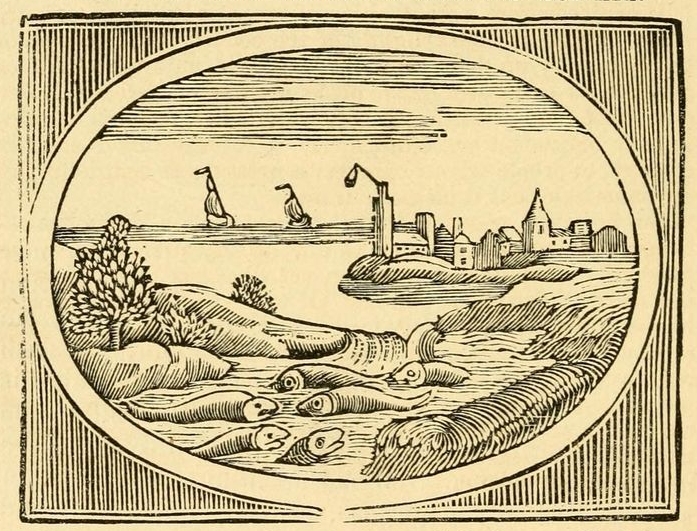
A River-Fish and a Sea-Fish.
There was a large over-grown Pike that had the Fortune to be carry'd out to Sea by a strong Curent, and had there the Vanity to value himself above all the Fish in the Ocean. We'll refer that (says a Sturgeon) to the Judgment of the Market, and see which of the Two yields the better Price.
Every Man has his Province assign'd him, and none but a Mad-Man will pretend to impose; and to give Laws where he has nothing to do.


A Man that would not take a Clyster.
When the Patient is Rich, there's no Fear of Physicians about him, as thick as Wasps to a Honey-Pot; and there was a whole College of them call'd to a Consultation upon a Purse-Proud Dutch Man, that was troubled with a Megrim. The Doctors prescrib'd him a Clyster; the Patient fell into a Rage upon't. Why, Certainly these People are all mad, says he, to talk of Curing a Man's Head at his Tail.
He that consults his Physician, and will not follow his Advice, must be his own Doctor: But let him take the old Adage along with him; He that teaches himself, has a Fool for his Master.


A Husband and Wife Twice Married.
There happen'd a Match betwixt a Widower and a Widow. The Woman would be perpetually twitting of her second Husband what a Man her First was, and her Husband did not forget the ringing of it in her Ears as often, what an admirable Woman he had to his First Wife. As the Woman was one Day upon the peevish Pin, a poor Body comes to the Door, while the froward Fit was upon her, to beg a Charity. Come in, poor Man (says the Woman) here's e'en the Leg of a Capon for thee, to pray for the Soul of my First Husband. Nay, Faith, says the Husband, and when they hand is in, e'ev take the Body and the rest on't, to pray for the Soul of my First Wife. This was their way of Teizing one another, and of Starving the Living to Honour the Dead: For they had but that One Capon betwixt them to Supper.
Sauce for a Goose is Sauce for a Gander. There's no contending with the Laws of God and Man, especially against those that have Power and Right on their Side.


Tuesday, December 5, 2023

Roger L'Estrange (39)

Here are some more fables from Roger L'Estrange's Fables of Aesop and Other Eminent Mythologists, and you can click here for all the L'Estrange fables at this blog.


A Country-man and a River.
A Country-man that was to pass a River, founded it up and down to try where it was most fordable: and upon Trial he made this Observation on't: Where the Water ran Smooth, he found it Deepest; and on the contrary, Shallowest where it made most Noise.
There's More Danger in a Reserv'd and Silent, than in a Noisy, Babbling Enemy.


A Fir and a Bramble.
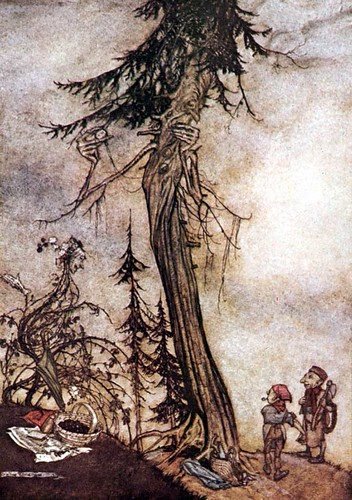
There goes a Story of a Fir-Tree, that in a vain spiteful Humour, was mightily upon the Pin of commending itself, and despising the Bramble. My Head (says the Fir) is advanc'd among the Stars. I furnish Beams for Palaces, Masts for Shipping: The very Sweat of my Body is a Sovereign Remedy for the Sick and Wounded. Whereas the Rascally Bramble runs creeping in the Dirt, and serves for nothing in the World but Mischief. Well, says the Bramble, (that over-heard all this) you might have said somewhat of your own Misfortune, and to my Advantage too, if your Pride and Envy would have suffer'd you to do it. But pray will you tell me however, when the Carpenter comes next with the Axe into the Wood, to fell Timber, whether you had not rather be a Bramble than a Fir-Tree.
Poverty secures a Man from Thieves, great and small: Whereas the Rich and the Mighty, are the Mark of Malice, and Cross Fortune; and still the Higher they are, the Nearer the Thunder.

Abies et Rubus


A Pigeon and a Pye.
A Pye was Wond'ring once to a Pigeon, why she would Breed still in the same Hole, when her Young Ones were constantly taken away from her before they were able to fly. Why That's my Simplicity, says the Pigeon. I mean no Harm, and I suspect none.
Do as you would be done by, it is a Better Rule in the Doctrine than in the Practice: For Trust as you would be Trusted, will not hold betwixt a Knave and an Honest Man. There's no Dealing with a Sharper but at his Own Play.


Oxen and a Piece of Timber.
The Timber was complaining of the Ingratitude of the Oxen. How often, says the Timber, have I fed ye with my Leaves, and reliev'd ye under my Shadow? and for you to drag me now at this Rate, over Dirt and Stones! Alas! cry'd the Oxen: Do not you see how we pant and groan, and how we are goaded on, to do what we do? The Timber consider'd how unwillingly they did it, and so forgave them.
What we are forc'd to do by an Over-ruling Power and Necessity is not properly our own Act.

Boves et Trabes


Capons Fat and Lean.
There were a great many Cramm'd Capons together in a Coop, some of 'em very Fair and Fat, and Others again did not thrive upon Feeding. The Fat Ones would be ever and anon making sport with the Lean, and calling them Starvelings; 'till in the End, the Cook was order'd to dress so many Capons for Supper, and to be sure to take the best in the Pen: When it came to that once, they that had most Flesh upon their Backs, wish'd they had had less, and 'twould have been better for 'em.
Prosperity makes People Proud, Fat, and Wanton; but when a Day of Reckoning comes, They are the First still that go to Pot.


Friday, December 1, 2023

Roger L'Estrange (38)

Here are some more fables from Roger L'Estrange's Fables of Aesop and Other Eminent Mythologists, and you can click here for all the L'Estrange fables at this blog.


A Creaking Wheel.
A Waggoner took notice upon the Creaking of a Wheel, that it was the worst Wheel of the Four that made most Noise, and was wondring at the Reason of it. Oh, says the Waggon, they that are Sickly are ever the most Piping and Troublesome.
'Tis with Creaking Wheels as 'tis with Courtiers, Physicians, Lawyers, (and with whom not?), They want Greazing.


Wolfe in a Sheeps-Skin.
There goes a Story of a Wolfe, that Wrapt himself up in a Sheeps-skin, and Worry'd Lambs for a Good while under That Disguise; but the Shepherd Met with him at last, and Truss'd him up, Sheeps-skin and all, upon an Eminent Gibbet, for a Spectacle, and an Example. The Neighbours made a Wonderment at it, and Ask'd him what he meant to Hang up his Sheep? Oh, says he, That's only the Skin of a Sheep, that was made use of to Cover the Heart, Malice, and Body of a Wolfe that Shrouded himself under it.
Hypocrisie is only the Devil's Stalking Horse, under an Affectation of Simplicity and Religion. People are not to be Judg'd by their Looks, Habits, and Appearances; but by the Character of their Lives and Conversations, and by their Works.


A Country-man and an Oxe.
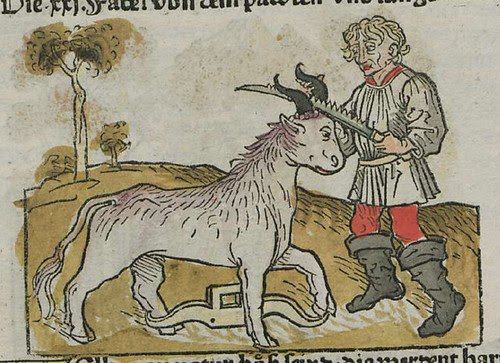
A Countryman had got a stubborn Oxe, that would still be Pushing and Flinging, whenever they went to Yoak, or to Tye him up. The Man cuts off his Horns, and puts him to the Plough, and by that means secures himself, both against his Head and his Heels, and in the mean time, he himself Guides the Plough: But though the Oxe, when he was thus Shackled and Disarmed, could not either Strike or Gore him, he made a shift yet to throw Dust enough into his Eyes, and his Mouth, almost to Blind, and to Choak him.
A Malicious Man may be bound Hand and Foot, and put out of Condition of doing Mischief, but a Malicious Will is never to be master'd.

rusticus et iuvencus


An Incorrigible Son.
It was the Hard Lot of a very Good Man to have a Vicious Young Fellow to his Son; and he did what he could to Reclaim him: But Sir (says he) for Brevity's sake, 'tis only so much Time and Councel thrown away; for all the Parsons about the Town have been Baiting me I know not how long now, upon the same Subject, and I'm not One Jot the Better for't.
Some Men Live as if they had made a Covenant with hell; Let Divines, Fathers, Friends say what they will, they Stop their Ears against them: And Good Councel is wholly Cast away upon them.


An Old Man resolv'd to give over Whoring.
There was an Old Tost, that in the very State of Impotence, had still a Whore in the Head of him. His Ghostly Father took Notice of it, and Ply'd him Hard with Wholesome Advice, upon the Subject of the Lusts of the Flesh. This Reverend Fornicator thank'd him most Heartily for his Kind and Christian Councel, and the Grace of Heaven, says he, I'll Follow it; For to tell ye the Plain Truth on't, I am told that 'tis Naught for me; and really, my Body is quite out of Tune for Those Gambols.
When Things are at the Worst they'd Mend.