Friday, November 24, 2023

Roger L'Estrange (34)

Here are some more fables from Roger L'Estrange's Fables of Aesop and Other Eminent Mythologists, and you can click here for all the L'Estrange fables at this blog.


A Council of Beasts
The Beasts (a great while ago) were so harass'd out with Perpetual feuds and Factions, that they call'd a General Council, in the nature of a Committee of Grievances, to Advise upon some way for the Adjusting of Differences, in order to a Publick Peace. After a great many Notable Things said upon the Debate, Pro and Con, the Hares at last (according to the Printed Votes of those Days) deliver'd their Sense to this Effect: There can never be any Quiet in this World, so long as one Beast shall be Allow'd Nails, Teeth, or Horns, more then Another; but the Weaker will still be a Prey to the Stronger: Wherefore we humbly propose an Universal Parity, and that we may be all upon the same Level, both for Dignity and Power; for we may then, and not till then, promise our selves a Blessed State of Agreement, when no one Creature shall be able to Hurt another.
The Mobile are still for Levelling; that is to say, for Advancing themselves, For 'tis as Broad as'tis long, whether they Rise to others, or bring others down to them. Beside, that the Doctrine of Levelling strikes at the very Order of Providence.


A Wolf and a Fox
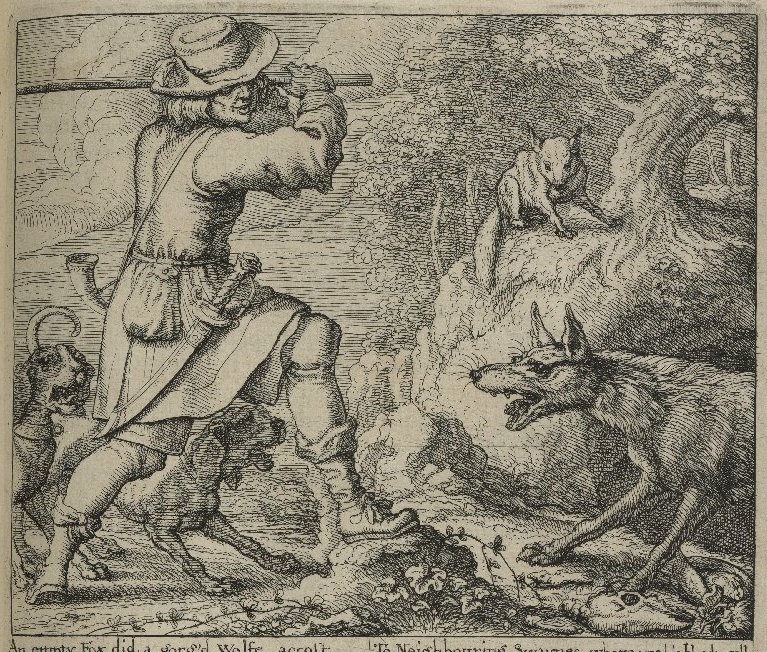
A Wolf that had a mind to take his ease, stor’d himself privately with Provisions, and so kept close a-while. Why, how now Friend, says a Fox to him, we han’t seen you abroad at the Chase this many a Day! Why truly, says the Wolf, I have gotten an Indisposition that keeps me much at home, and I hope I shall have your Prayers for my Recovery. The Fox had a fetch in’t, and when he saw it would not fadge; away goes he presently to a Shepherd, and tells him where he might surprize a Wolf, if he had a mind to’t. The Shepherd follow’d his Directions, and destroy’d him. The Fox immediately, as his next Heir, repairs to his Cell, and takes Possession of his Stores; but he had little Joy of the Purchase, for in a very short time, the same Shepherd did as much for the Fox, as he had done before for the Wolf.
‘Tis with Sharpers as ‘tis with Pikes, they prey upon their own kind; and ‘tis a pleasant Scene enough, when Thieves fall out among themselves, to see the cutting of one Diamond with another.


The Crows and Pigeons
There happen'd a Suit in Law betwixt the two Families of the Crows and the Pigeons; but for Quietness sake, they agreed upon an Order of Reference, and the Kite was to be Arbitrator. The Cause was Heard, and Judgment given for the Crows.
Ask my Brother if I'm a Thief. One Criminal upon the Bench, will be sure to bring off another at the Barr.


An Agreement between the Wolves and the Dogs
The Wolves found themselves in a great Straight once how to deal with the Dogs, they could do well enough with 'em one by one they saw, but were still worsted and over-born by Numbers. they took the Matter into Debate, and came at last to this conclusion, That unless they could make a Party among them, and by a Parcel of Fair Words and Pretences, engage them in a Confederacy against their Masters and Themselves, there was no good to be done in the matter. Upon this, they sent out their Spies among the Dogs, with Instructions to go to those among them that were nearest their own Make, Size and Colour, and to reason the matter with them, after this or the like manner. Why should not we that are all of a Colour, and in a manner all of a Kind, be all of a Party too, and all of an Interest? You'll say perhaps, that your Masters, and your Fellows may take it Ill, and pick a Quarrel with ye. Well, and what will they be able to maek on't then, against You and us together? If it comes to that once, 'twill be but One Push for all, and the Work is done. This Discourse wrought as well as Heart could wish; for a great many of the Wolf-Colour'd-Dogs cry'd out, Well mov'd upon't, and so went over to the other side: And what came on't at last, but that after the Dogs had Deserted, the Wolves Worry'd one Part of their Enemies by the help of the Curs that went over to them; and they were then strong enough to destroy the Revolters themselves.
A House divided against it self, cannot stand.


A Taylor and his Wife
There happen'd a Grievous Quarrel once betwixt a Taylor and his Wife. The Woman in contempt of his Trade, call'd her Husband Pricklouse; he gave her a Box o'th' Ear for't, which serv'd only to make her more outragious. When this would do no good, he set her up to the Chin in a Horse-Pond; but so long as her Tongue was at liberty, there was not a Word to be got from her, but the same Nick-Name in Derision over and over again. Well (says he to himself) there's no way, I perceive, to quiet this Woman, but by stopping of her Mouth; and so he had Duck's next bout over Head and Ears. When she was under Water, and could call him Pricklouse no longer with her Lips, she held up her Hands over her Head, and did it with her Thumbs by the Knicking of her Nails; and when he saw that once, he was e'ev glad to give her over.
The last Two Things that die in an Impetuous Woman, are her Tongue and her Stomach, when she cannot have her Will.

Tuesday, November 14, 2023

Clarke: English (40)

Here are some more fables from H. Clarke's Latin textbook Fabulae Aesopi selectae, or, Select fables of Aesop, and you can click here for all the fables reposted from this book at the blog.


196. Of a Lark
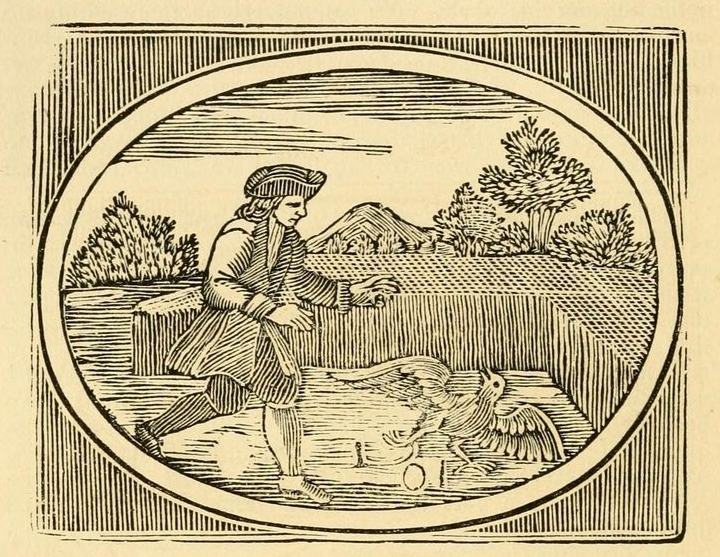
A lark, taken in a snae, said lamenting, "Ah me! Miserable and unhappy, I have not stolen the gold nor the silver of any one, but a grain of wheat has been the cause of my death."
Moral. The fable tends to them who undergo great danger for unprofitable gain.


197. Of a Lion Worn Out with Age
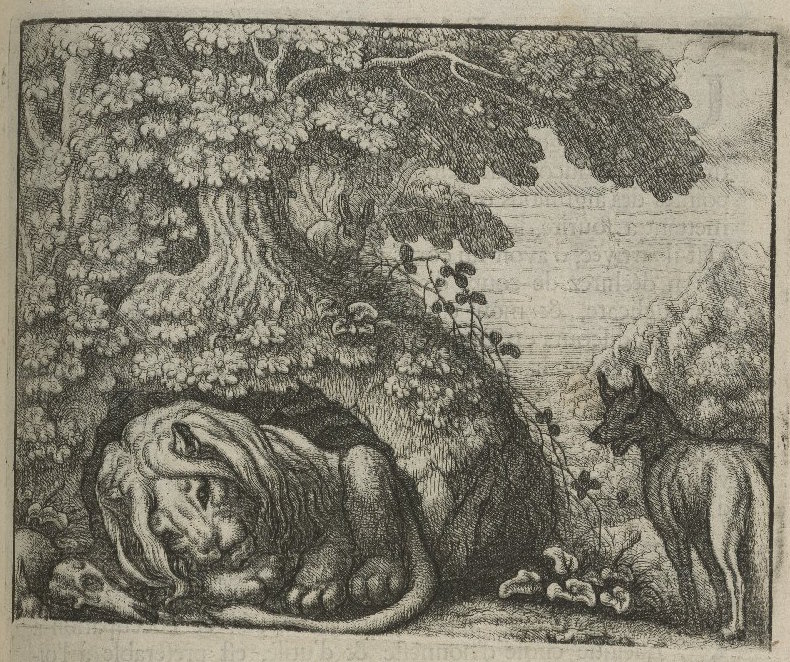
A lion when he had grown old, nor could get his living, contrived a way, how provisions should not be wanting to him. Therefore having entered the den, lying down, he feigned himself vehemently to be sick. The living creatures, thinking him verily to be sick, went to him for the sake of visiting him; whom the lion taking ate up one by one. When now he had killed many animals, the fox, the art of the lion being known, coming to the entrance of the cave, standing without, asks the lion how he did. The lion milkly answering her said, "Daughter fox, why dost thou not enter in to me?" The fox said, not unwittily, "Because, my master, I perceive indeed very many footsteps of animals entering in, but no footsteps of them coming out."
Moral. The fable signifies that a prudent man who foresees imminent dangers easily avoids them.


198. Of a Lion and a Bull
A lion, following a great bull by treachery, when he came near, invited him to supper, saying, "Friend, I have killed a sheep; you shall sup with me today if it pleases you." As soon as they had sat down, the bull, seeing many cauldrons and spits ready, and that there was no sheep for him, was willing to depart; whom the lion perceiving now going away asked him why he would go. The bull answered, "Truly, I do not go away for nothing when I see instruments prepared not to dress a sheep, but a bull."
Moral. The fable signifies that the arts of the wicked do not lie hid from the prudent.


199. Of a Sick Man and a Physician
A sick man, being asked by the physician about his health, answered that he had sweated violently; the physician says that that was good; asked by the same physician a second time how he found himself, the sick man said that he was seized with a vehement coldness; the physician also says that that was for his health. Asked a third time by the same how he found himself, the sick man said that he was not able to digest without great difficulty. The physician says again that that was the best for his health; afterwards, when some one of his domestics asked the sick man, how he did, says he, "As the physician says, there are to me many and the best signs for health, yet I perish by those signs."
Moral. The fable shows that flatterers are to be blamed.


200. Of a Certain Woodcutter
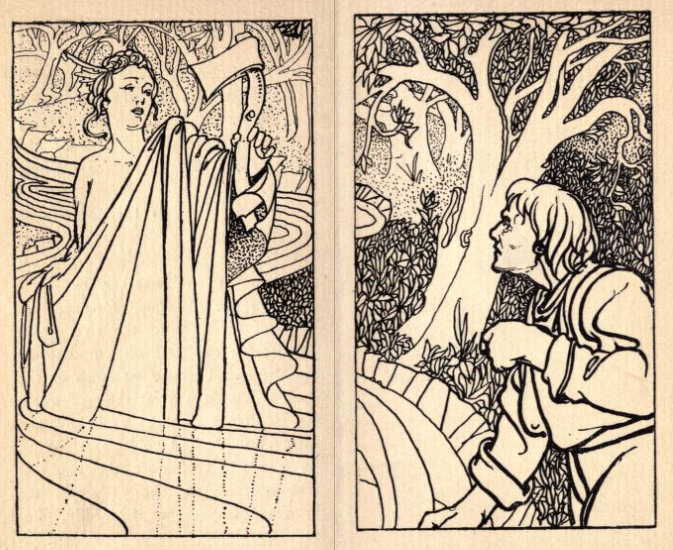
While a certain woodcutter cleaved wood near a river dedicated to the god Mercury, his ax by chance fell into the river. Therefore affected with much grief, he sat down sighing near the bank of the river. Mercury, moved with pity, appeared to the woodcutter and asked the cause of his weeping, which, as soon as he learnt, bringing him a golden ax, he asked whether it was that which he had lost. But the poor man denied that it was his. A second time Mercury brought another, a silver one, which, when the poor man denied also to be his, at last Mercury reached the wooden one, when the poor man agreed that that was his. Mercury, knowing him to be a man true and just, gave them all toh im for a gift. Therefore the woodcutter, coming to his companions, declares what had happened to him. One of his companions, willing to try it, when he came to the river threw his ax in the water, then he sat weeping on the bank; the cause of whose weeping when Mercury had heard, bringing a golden ax, he asked whether that was it, which he had lost, which, when he asserted to be his own, Mercury, his impudence being known, neither delivered to him the golden one, nor his own. 
Moral. The fable signifies that by how much God is more propitious to the honest he is the more severe to the wicked.


201. Of a Physician who Cured the Mad
Many talked of the superfluous care of those who feed dogs for fowling. A certain man of them says, the fool of Milan laughed at them rightly. When the story was demanded, he said, there was a physician, a citizen of Milan, who undertook to cure the mad, brought to him within a certain time, but the cure was of this manner; he had at home a court, and in it a pond of stinking water, in which he bound them naked to a stake, some up to the knees, others up to the belly, some more deeply, according to the degree of madness; and so long he starved them in the water, till they seemed sound in mind. A certain man was brought among the rest, whom he put into the water up to the thigh; who began to recover after fifteen days, and to ask his physician, that he might be brought out of the water; he took out the man from the torment yet on that condition that he should not go out of the court. When he had obeyed some days, he permitted that he might walk over the whole house, but that he should not go out of the outward gate (his companions, who were many, being left in the water); he obeyed the commands of the physician diligently, but standing upon the threshold on a certain time (for he did not dare to go out) he saw a young man coming on a horse with two dogs, and a hawk, moved with the novelty of the thing (for he did not retain in memory the things which he had seen before his madness) when the young man came near, he said, "So ho, you, I pray, answer me in a few things: what is this on which thou art carried?" says he, "it is a horse." Then afterwards "what is called this, which thou hast in thine hand and in what thing dost thou use it?" He answered "it is a hawk, and fit for the catching of partidges." Then the madman asks "and these, that accompany thee, who are they, and what do they profit to thee?" He says "they are dogs, and fit for fowling, to trace the birds." "But these birds, for the sake of catching which you prepare so many things, of what price are they, if you put together the prey of a whole year into done?" When he had answered, "a little, I know not what, and that it could not exceed six guineas," the madman asks, "what may be the expense of the horse, of the dogs, and of the hawk?" He affirmed the expense of them to be yearly fifty guineas. Then having admired the folly of the young man, says he, I pray, go hence quickly before that the physician return home; for if he should find thee, he will throw thee into his pond, as the most mad of all men, and he will place thee in the water up to the chin.
Moral. The fable shows many madnesses to be daily unobserved.


202. Of an Obstinate Woman who Called her Husband Lousy
A certainw oman, absove measure contrary to her husgband so that she would be superior, once in a heavy quarrel with him called him lousy. He, that she might retract that word, bruised his wife, beating her with his fists and heels. By how much the more she was beaten, by so much the more she called him lousy. The man at length tired withe beating her that he might overcome the obstinacy of his wife, let her down into a river by a rope, saying that he would suffocate her if she would not abstain from such words. She persisted in nothing the less to continue that word, although fixed upt o the chin in the water. THen the man plunged her into the river so that she could not speak more, trying if he could turn her from her obstinacy by the fear of death. But she, the faculty of speaking being taken away, expressed with her fingers what she could not with her mouth: for, her hands being raised above her head, the nails of each thumb being joined, she gave what reproach she could to her husband by that gesture.
Moral. This fable shows that some will retain their obstaincy even at the hazard of death.


Clarke: English (39)

Here are some more fables from H. Clarke's Latin textbook Fabulae Aesopi selectae, or, Select fables of Aesop, and you can click here for all the fables reposted from this book at the blog.


191. Of a Physician and a Dead Man
A certain physician, who had attended a sick man, who a little after died, said to those who bore the funeral, if that man had abstained from wine and had used clysters, he would not have been dead. A certain one of those who were present, says to the physician, not unwittily, "So ho, physician, those counsels were to be told, when they were able to profit, not now, when they avail nothing.
Moral. The fable signifies that when cuonsel does not profit, to give it at that time is truly to play upon a friend.


192. Of a Dog and a Wolf
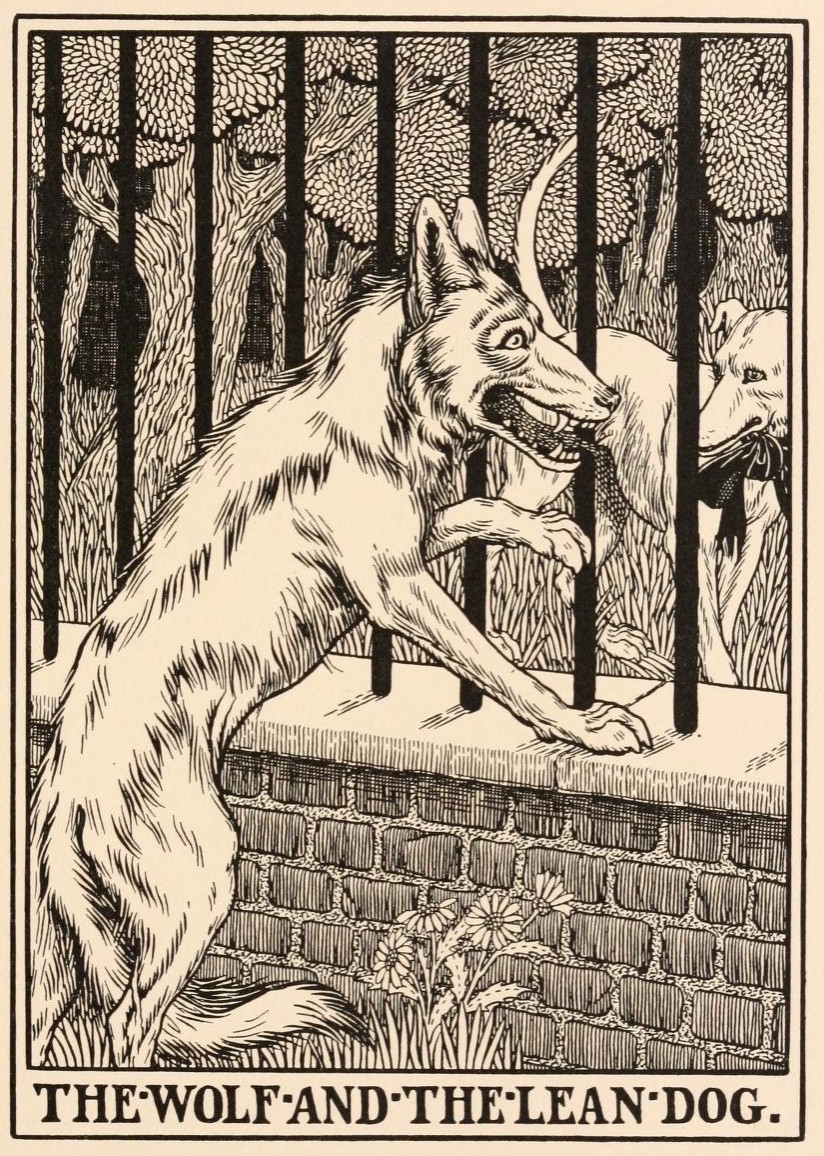
When a dog slept before the hall, a wolf coming upon him, presently took him, and when he was willing to slay him, the dog besought him that he would not kill him, saying, "So ho, my wolf, now be unwilling to kill me, for as you see I am thin, lean, and lsnder, btu my master is about to make a wedding when, if you will wait a little, I eating daintily and become fatter, shall be more advantageous to thee. The wolf having faith in these words dismissed the dog. After a few days the wolf coming, when he found the dog sleeping at home, standing before the hall, asks the dog, that he would perform his promises to him. The do gsays, "Hark ye, wolf, if thou hadst taken me before the hall, thou wouldest not have expected the wedding in vain."
Moral. This fable shows that a wise man, when once he hath avoided a danger, continually takes care for the future.


193. Of a Dog and a Cock
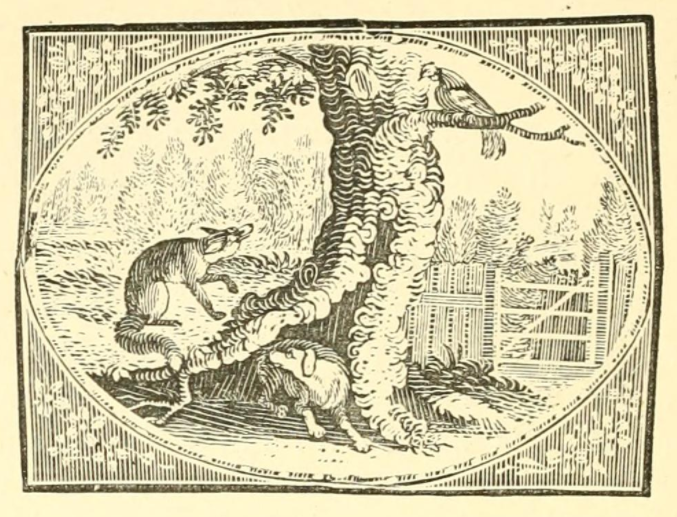
A dog and a cock companions made a journey, but evening coming on, the cock slept among the branches of a tree, but the dog at the root. When the cock, as he is wont, crowed in the night, a fox heard him, runs to him, and standing below asked that he would come down to him because he desired to embrace an animal so commendable for song, but, when he had said that first he should wake the porter sleeping at the root that he might come down when he had opened; he asking that he would call him, the dog leaping out, tore to pieces the fox.
Moral. The fable signifies that prudent men through craft send enemies more powerful than themselves to the more brave.


194. Of the Frogs
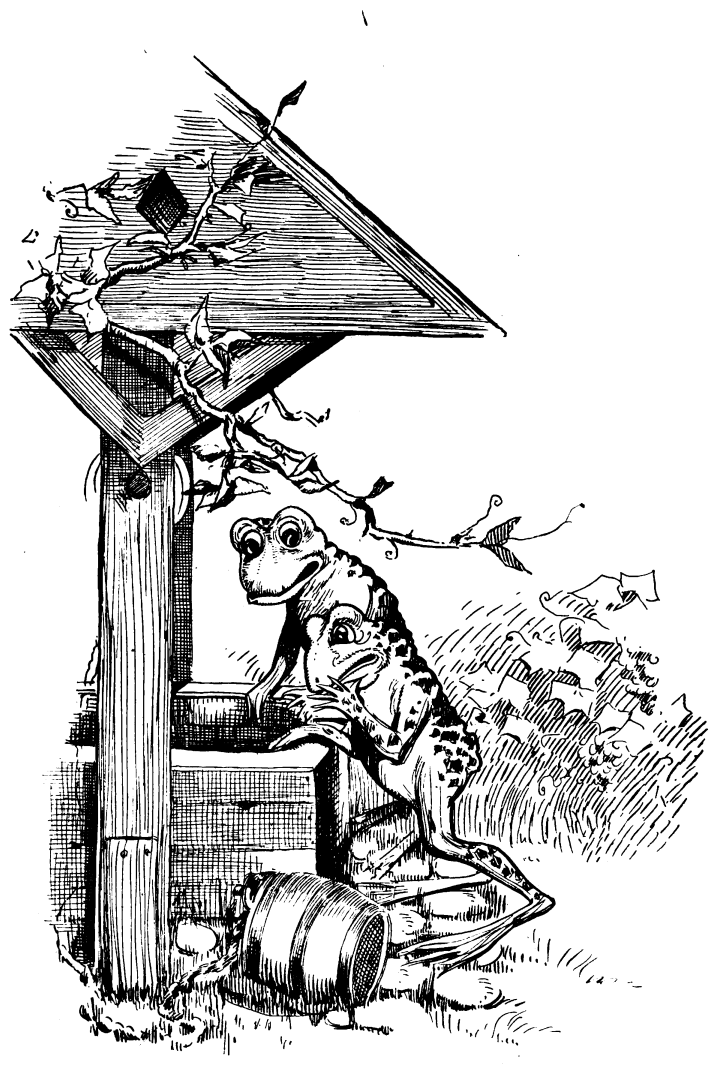
Two frogs were fed in a marsh, but in summer, the marsh being dried up, they sought another, but whey found a deep well which, being seen, one said to the other, "So ho, you, let us descend into this well." The other answering says, "If the water should dry up here, how shall we get up?"
Moral. The fable declares that no things are to be done inconsiderately.


195. Of a Lion and a Bear
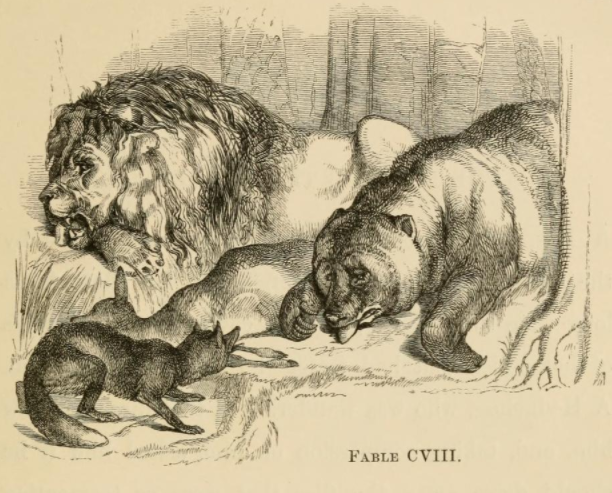
A lion and a bear, when they had taken ag reat fawn, fought about him and, wounded grievously by one another, they lay down tired. A fox, seeing them laid prostrate, and the fawn lying in the middle, snatched him, and ran away. They saw him, but because they could not rise, they said, "Alas! Wretched us, because we have laboured for the fox."
Moral. The fable signifies that whilst some labour, others enjoy the prey.