Monday, September 11, 2023

Roger L'Estrange (11)

Here are some more fables from Roger L'Estrange's Fables of Aesop and Other Eminent Mythologists, and you can click here for all the L'Estrange fables at this blog.


A Man and a Wooden God
A Man that had a great Veneration for an Image he had in his House, found, that the more he pray’d to’t to prosper him in the World, the more he went down the wind still. This put him into such a Rage, to lie dogging at his Prayers so much and so long, to so little purpose, that at last he dash’d the Head on’t to pieces against the Wall: and out comes a considerable Quantity of Gold. Why this ‘tis, says he, to adore a perverse and insensible Deity, that will do more for Blows than for Worship.
Most People, Clergy as well as Laity, accommodate their Religion to their Profit, and reckon that to be the best Church that there’s most to be got by.


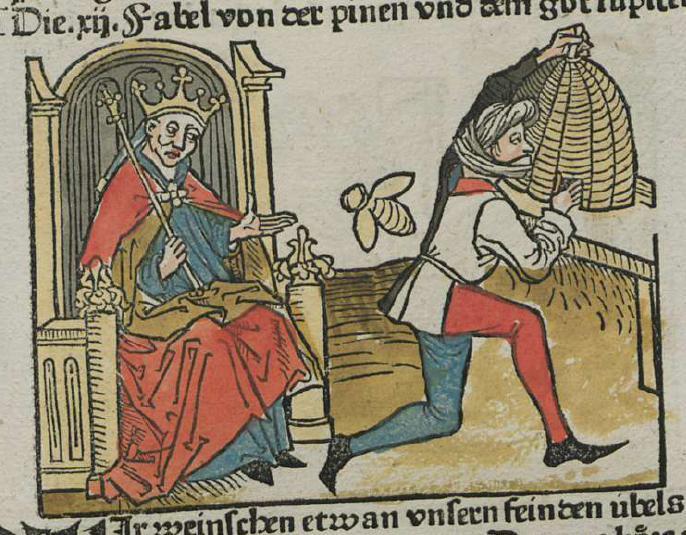
Jupiter and a Bee
A Bee made Jupiter a Present of a Pot of Honey, which was so kindly taken, that he bad her ask what she would, and it should be granted to her. The Bee desir’d it, that wherever she should set her Sting, it should be mortal. Jupiter was loth to leave Mankind at the Mercy of a little spiteful Insect, and so bad her have a care how she kill’d any body; for what Person soever she attack’d, if she left her Sting behind her, it should cost her her Life.
Spiteful Prayers are no better than Curses in Disguise, and the granting of them turns commonly to the mischief of the Petitioner.


A Fisherman and his Pipe
A Fisherman that understood Piping better than Netting, set himself down upon the side of a River, and touch’d his Flute, but not a Fish came near him. Upon this, he laid down his Pipe and cast his Net, which brought him a very great Draught. The Fish fell a frisking in the Net, and the Fisherman observing it; what Sots are these (says he) that would not dance when I play’d to ‘em, and will be dancing now without Musick!
There are certain Rules and Methods for the doing of all Things in this World; and therefore let every Man stick to the Business he understands, and was brought up to, without making one Profession interfere with another.


A Young Man and a Swallow
A prodigal young Fellow that had sold his Clothes to his very Shirt, upon the Sight of a Swallow that came before her Time, made Account that Summer was now at Hand, and away went that too. There happen’d after this, a Fit of bitter cold Weather, that almost starv’d the Bird and the Spendthrift. Well (says the Fellow to himself) this Sot of a Swallow has been the Ruin of us both.
Extraordinary Cases are excepted out of the general Rules of Life: So that irregular Accidents and Instances are not to be drawn into President.


A Dog and a Wolf
There was a hagged Carrion of a Wolf, and a jolly sort of a genteel Dog, with good Flesh upon’s Back, that fell into Company together upon the King’s Highway. The Wolf was wonderfully pleas’d with his Companion, and as inquisitive to learn how he brought himself to that blessed State of Body. Why, says the Dog, I keep my Master’s House from Thieves, and I have very good Meat, Drink, and Lodging for my Pains. Now if you’ll go along with me, and do as I do, you may fare as I fare. The Wolf struck up the Bargain, and so away they trotted together: But as they were jogging on, the Wolf spy’d a bare Place about the Dog’s Neck, where the Hair was worn off. Brother (says he) how comes this, I prithee? Oh, that’s nothing, says the Dog, but the fretting of my Collar a little. Nay says t’other, if there be a Collar in the Case, I know better things than to sell my Liberty for a Crust.
We are so dazzl’d with Glare of a splendid Appearance, that we can hardly discern the Inconveniences that attend it. ‘Tis a Comfort to have good Meat and Drink at Command, and warm Lodging: But he that sells his Freedom, for the cramming of his Gut, has but a hard Bargain of it.


Sunday, September 10, 2023

Roger L'Estrange (10)

Here are some more fables from Roger L'Estrange's Fables of Aesop and Other Eminent Mythologists, and you can click here for all the L'Estrange fables at this blog.


A Thunny and a Dolphin
A Thunny gave Chace to a Dolphin; and when he was just ready to seize him, the Thunny struck before he was aware, and the Dolphin, in the Eagerness of his Pursuit, ran himself a ground with him. They were both lost; but the Thunny kept his Eye still upon the Dolphin, and observing him when he was just at last Gasp; well, says he, the Thought of Death is now easy to me, so long as I see my Enemy go for Company.
'Tis a wretched Satisfcation, that a revengeful Man takes, even in the losing of his own Life, provided that his Enemy may go for Company.


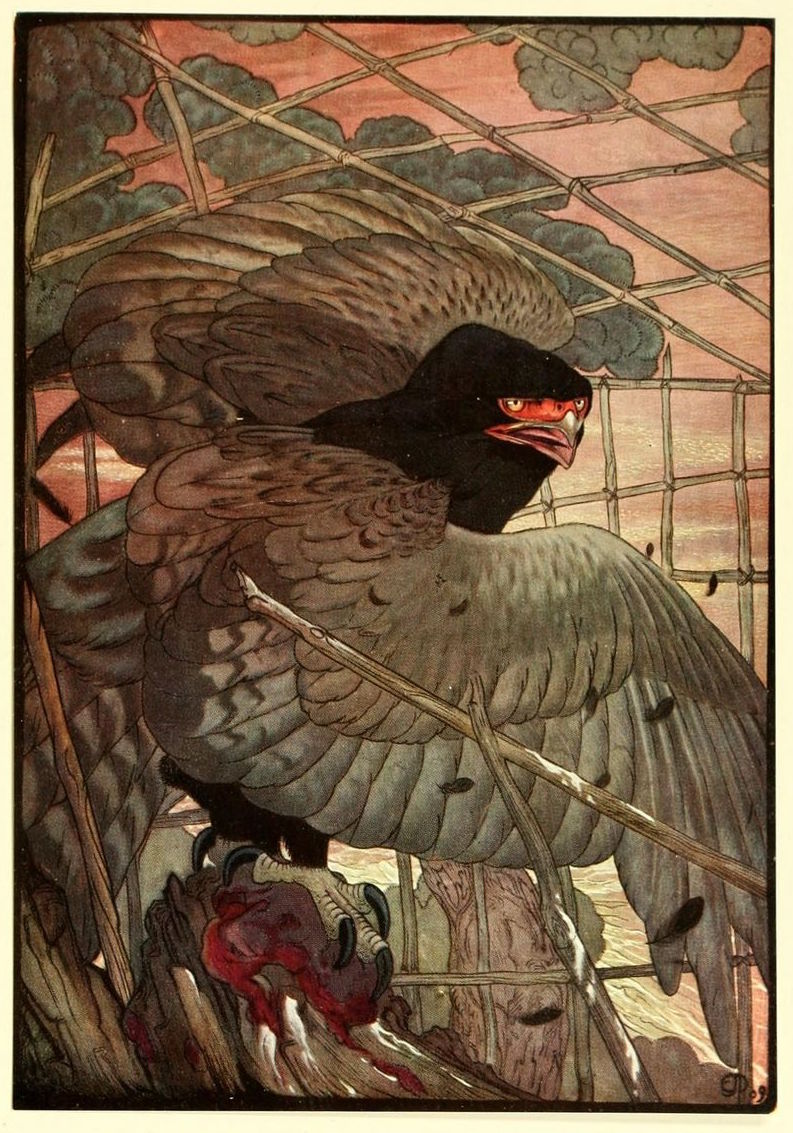
An Eagle and a Man
A Man took an Eagle, pelted her Wings, and put her among his Hens. Some body came and brought this and presently new feather’d her. She made a Flight at a Hare, truss’d it, and brought it to her Benefactor. A Fox perceiving this, came and gave the Man a piece of good Counsel. Have a care, says Reynard, of putting too much Confidence in this Eagle; for she’ll go near, one time or other else, to take you for a Hare. Upon this Advice the Man plum’d the Eagle once again.
Persons and Humours may be jumbled and disguis’d; but Nature is like Quicksilver, that will never be kill’d.


Two Enemies at Sea
There were two Enemies at Sea in the same Vessel, the one at the Ship’s Head, the other at the Stern. It blew a dreadful Storm, and when the Vessel was just ready to be swallow’d up, one of them ask’d the Master, which part of the Ship would be first under Water; so he told him the t’other End would sink first. Why then, says he, I shall have the Comfort of seeing my Enemy go before me.
'Tis a wretched Satisfcation, that a revengeful Man takes, even in the losing of his own Life, provided that his Enemy may go for Company.


A Cunning-Woman
A certain Dame that pass'd in the World under the Name of a cunning Woman, took upon her to avert Divine Judgments, and to foretel strange Things to come. She play'd the counterfeit Witch so long, till, in the Conclusion, she was taken up, arraign'd, try'd, convicted, condemn'd to die, and at last executed for a Witch indeed. D'ye hear, good Woman, (says one to her, as she was upon the Way to her Execution) are the Gods so much easier than the Judges, that you should be able to make them do any Thing for ye, and yet could not prevail with the Bench for the saving of your own Life?
There needs be more than Impudence and Ignorance, on the one side, and a superstitious Credulity on the other, to the setting up of a Fortune-teller.


An Old Man and a Lion
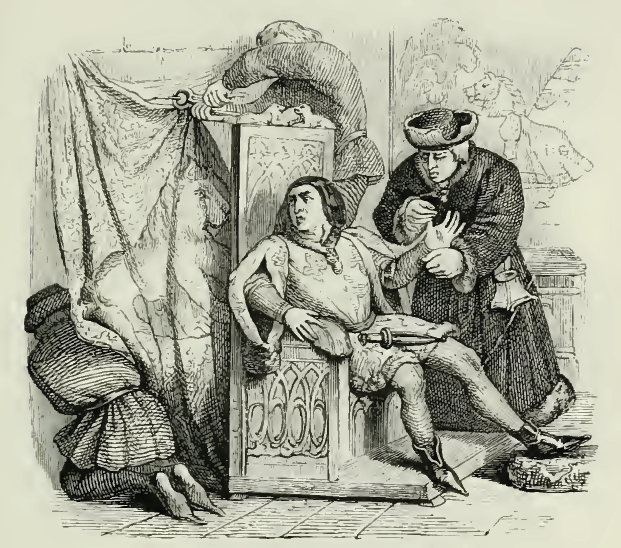
A Person of Quality dream’d one Night that he saw a Lion kill his only Son, who was, it seems, a generous Cavalier, and a great Lover of the Chace. This Fancy ran in the Father’s Head to that degree, that he built his Son a House of Pleasure, on purpose to keep him out of harm’s way; and spar’d neither Art nor Cost to make a delicious Retreat. This House, in short, was to be the young Man’s Prison, and the Father made himself his Keeper. There was a world of Paintings every where up and down, and among the rest, there was the Picture of a Lion, which stirred the Blood of the young Man for the Dream sake, and to think that he should now be a Slave for the Fancy of such a Beast. In this Indignation he made a blow at the Picture; but striking his Fist upon the Point of a Nail in the Wall, his Hand cancerated, he fell into a Fever, and soon after died on’t: So that all the Father’s Precaution could not secure the Son from the Fatality of dying by a Lion.
A body may as well lay too little as too much stress upon a Dream; for some Dreams are monitory, as others are only complexional; but upon the Main, the less we heed them better; for when that Freak has once taken possession of a fantastical Head, the Distemper is incurable.


Saturday, September 9, 2023

Clarke: English (13)

Here are some more fables from H. Clarke's Latin textbook Fabulae Aesopi selectae, or, Select fables of Aesop, and you can click here for all the fables reposted from this book at the blog.


61. Of the Ass and the Horse
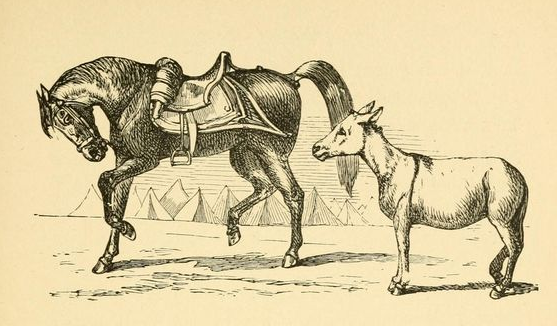
The ass thought the horse happy because he was fat and lived in idleness, but he called himself unhappy because he was lean, and raw-boned, and daily was exercised by an unmerciful master in bearing burdens. Not much after, they cry to arms; then the horse drove not back the bridle from his mouth, the horseman from his back, nor the dart from his body. The ass, this being seen, gave great thanks to the gods that they had not made him a horse, but an ass.
Moral. They are miserable whom the vulgar judges happy, and not a few are happy who think themselves most miserable. The cobbler calls the king happy, not considering into how great affairs and troubles he is drawn, whilst in the meantime he sings with excellent poverty.


62. Of the Lion and the Bull
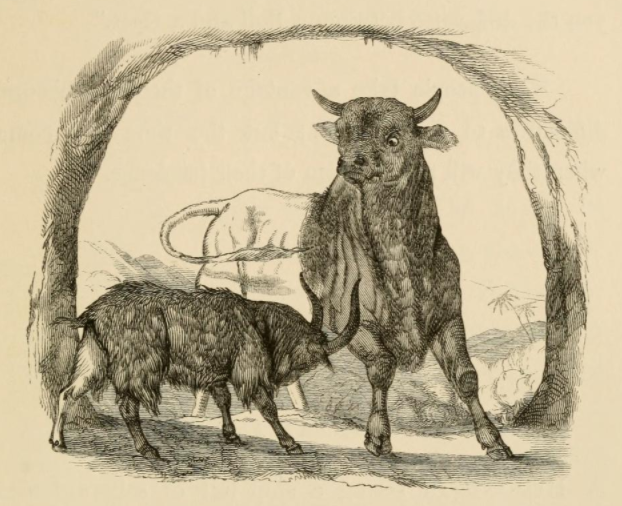
The bull, flying the lion, fell upon the goat; he threatened with his horn and wrinkled brow, to whom the bull, full of anger, said, "Thy brow contracted into wrinkles does not affright me, but I fear a vast lion who, unless he stuck to my back, now you should know that it is not so little a thing to fight with a bull."
Moral. Calamity is not to be added to the calamitous. He is miserable enough who is once miserable.


63. Of the Tortoise and the Eagle
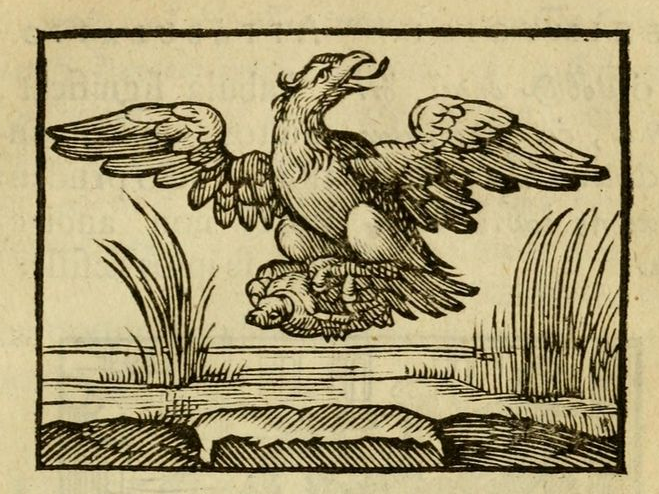
Weariness of creeping had seized the tortoise; if anyone would lift her up into heaven, she promises the pearls of the red sea. The eagle took her up, demands the reward, and pierces her, not having it, with her talons. Thus the tortoise, which desired to see the stars, left her life in the stars. 
Moral. Be contented with thy lot. There have been some, who, if they had remained low, would have been safe; become high, have fallen into dangers.


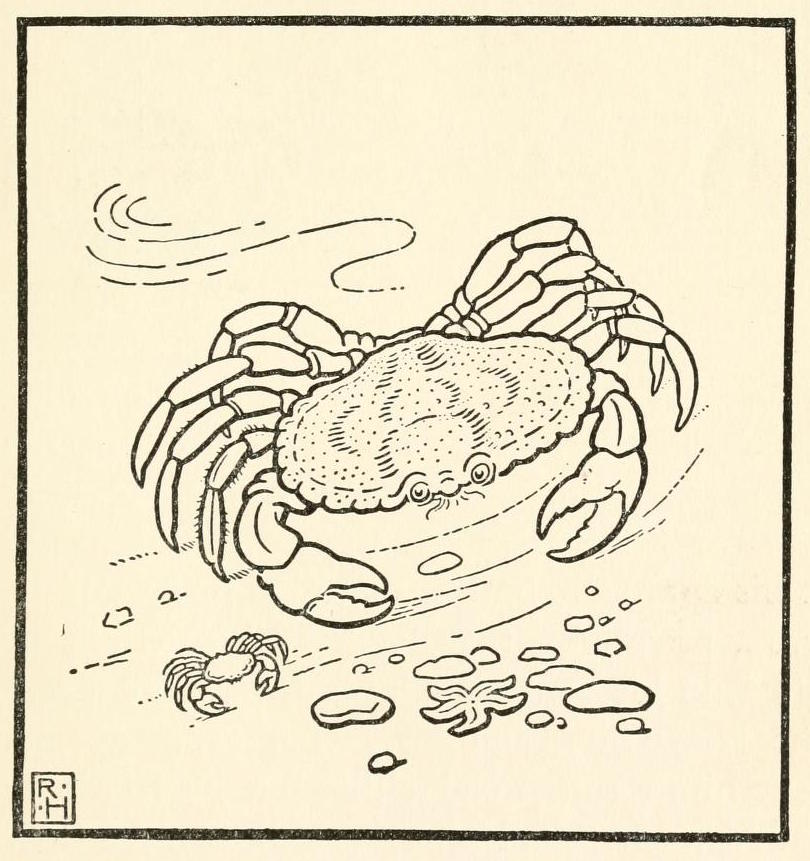
64. Of the Crab and his Mother
The mother advises the crab going backwards that he would go forwards. The son answers, "MOther, go you before; I will follow."
Moral. You should reprehend no one of a vice of which you yourself may be reprehended.


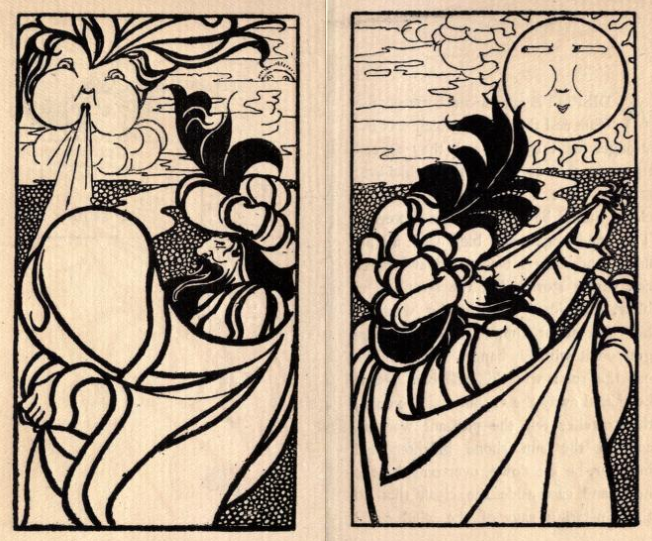
65. Of the Sun and the North Wind
The sun and the north wind strive which of them is the stronger. It is agreed by them to try their strength upon a traveler; that he shall bear the palm who shall have shaken off his cloak. Boreas sets upon the traveler with a rattling cloud, but he does not desist to double his cloak in going on. The sun tries his strength and, the storm little by little being overcome, sends forth his beams. The traveler begins to grow hot, to sweat, to pant; at length, not being able to go on, he sits down under a shady grove. Thus the victory fell to the sun.
Moral. That often is obtained by gentleness which is not able to be extorted by force.