Saturday, October 28, 2023

Roger L'Estrange (33)

Here are some more fables from Roger L'Estrange's Fables of Aesop and Other Eminent Mythologists, and you can click here for all the L'Estrange fables at this blog.


 A Wolf and a Hog
A Wolf that had liv'd many Years upon the Spoil, came at last to be Troubled in Conscience for the Spilling of so much Innocent Blood, and so took up a christian Resolution to keep a long Lent for't; and not to Eat One Bit of Flesh for a whole Twelve-Month: But Fasting it seems did not agree with his Constitution, for upon the sight of a Hog Wallowing in a Muddy Puddle, he ran presently to him, and ask'd him what he was? Why, says the Hog, I belong to a Neighbour here in the Village, and the Ancient Romans call me Porcus. In Good Time, says the Wolf; for I have read in Littleton's Dictionary, that Porcius is a Fish, that being Taken, Grunteth like a Hog; and so he made a Supper of the Hog, without breaking his Fast, and without any Offence to his Vow of Mortification.
In a long Practice of Wickedness, now and then a Faint Vow or Promise of Amendment, goes for Nothing: And if a Body should have a Mind to break a Commandment under such an Obligation, it will be hard if he cannot bring himself off at last with some Salvo or Distinction, and be his own Confessor.


A Man that Would Never Hear Ill News
One came to a Country Grazier, and ask'd him if he should tell him a piece of News. Is't Good or Bad? (says he.) Nay, says t'other, 'tis not very Good. Pray, says the Grazier, keep it to your self then; and so he went his way. The Grazier was telling the next day, that the Wolves had Kill'd one of his Bullocks: That's like enough says the same Man, for I saw hin Wandring from the Herd, and I was afraid on't. I would you had told me this in time, says the Grazier. Why I came I know not how far Yesterday a-purpose to tell you the Story, and you would not hear on't.
The Man is too Delicate to be Happy, that makes it in his Bargain not to hear any ting that may give him a Present Trouble.


A Crow and a Raven
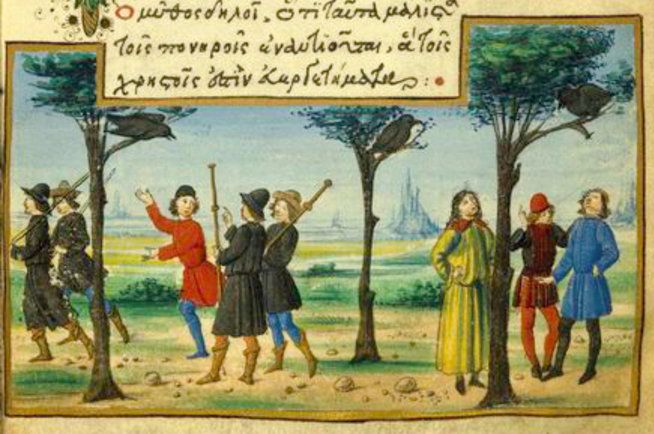
Your Raven has a Reputation in the World for a Bird of Omen, and a kind of small Prophet. A Crow that had Observ’d the Raven’s manner and Way of Delivering his Predictions, sets up for a Foreboder too; nd so gets upon a Tree, and there stands Nodding and Croaking, just over the Heads of some People that were Passing by. They were a little Surpriz’d at first; but so soon as they saw how ‘twas. Come, my Masters (says One of the Company) let’s e’en go forward, for this is but the chattering of a foolish Crow, it signifies Nothing.
How are Superstitious Men Hagg’d out of their Wits and Senses, with the Fancy of Omens, Forebodings, Old Wives Tales and Visions; and upon a Final Examination of the Matter, nothing at all in the Bottom on’t.


A Woman, Cat and Mice
A Good Woman that was willing to keep her Cheese from the Mice, thought to mend the matter by getting her a Cat. Now Puss Answer'd the Womans Intent and Expectation, in keeping the Mice from Nibbling the Cheeses; but she her self at the same time devour'd the Mice, Cheese and all.
This has been our Case within the Memory of Man: There were a matter of Half a Dozen Little Roguy Political Mice lay Nibbling at our Liberties and Properties, and all Peoples Mouths Open'd for the Providing of some 500 Cats to Destroy them. The End on't was this, they Kill'd the Vermine; but then they Gobbled up Privileges and All: And was not the World well Amended?


An Eagle and a Leveret
An Eagle that was Sharp set, and upon the Wing, looking about her for her Prey, spy'd out a leveret, made a Stoop like Light'ning, and Truss'd it; and as she had it in the Foot, the Miserable Wretch Enter'd into an Idle Expostulation upon the Conscience, and Justice of the Proceeding: With what Honesty, says the Hare, Can you Invade the Right of another Body? Why, says the Eagle, To whom do you belong then? I belong to him, (says the Other) whom Heaven has made the Matter of all Living Creatures under the Sun, and from whom That Propriety cannot be taken without manifest Wrong and Usurpation. Man is My Master, and I know no other. Well, says the Eagle again in Wrath, And what's the Title now, that he pretends to this Propriety? Why 'tis the Excellency of his Reason, says the Hare, that Entitles him to this Sovereignty; which is a Claim that from the Creation of the World, to this Day, was never Subjected to the Question. In Truth, says the Eagle, You have advanc'd a very Pretty Invention here, insestting up Reason against Force, where the Cause is not to be Decided by Argument, but by Power: And to Convince ye now how much I am in the Right, You shall find, in despite of all other Pretensions, since I have ye under my Government and Law, that you were not Born for Him, but for Me.
Laws with Penalties are made for the Government of the Simple, and the Weak, like Cobwebs to Catch Flies; but Power is the Law of Laws, and there's no Disputing with it, but pon the Swords Point.

Friday, October 27, 2023

Clarke: English (35)

Here are some more fables from H. Clarke's Latin textbook Fabulae Aesopi selectae, or, Select fables of Aesop, and you can click here for all the fables reposted from this book at the blog.


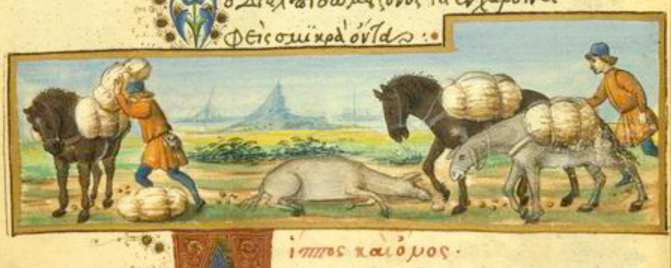
171. Of a Horse and an Ass
A certain man had a horse and an ass, but whilst they make a journey, the ass says to the horse, "If you are willing that I be safe, lighten me of a part of my burden." The horse not obeying his words, the ass, falling under the burden, dies. Then the master of the beasts puts on the horse all the packs which the ass carried, and moreover the hide which he had stripped off from the dead ass, with which burden the horse depressed and groaning said, "Woe to me, most unhappy of beasts! What an evil has happened to wretched me! For, refuing a part, now I carry the whole burden, and moreover his hide.
Moral. This fable hints that superiors ought to be partakers in the labours of inferiors that both may be safe.


172. Of a Trumpeter
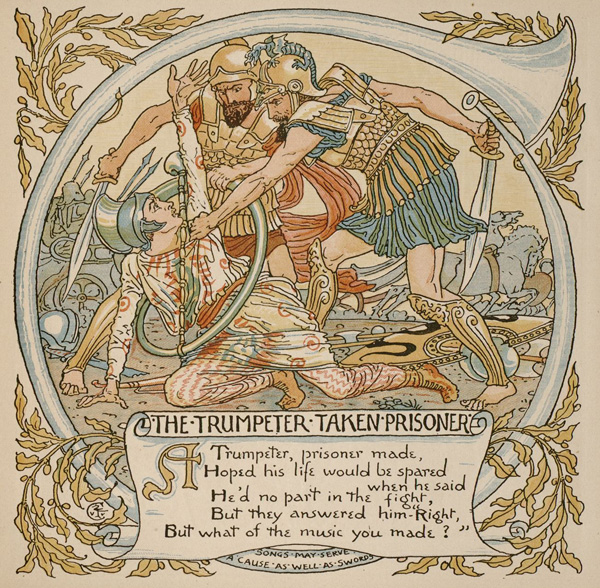
A certain trumpeter, taken by enemies in war, cried out to them who stood about, O men, be not willing to kill me, harmless and innocent, for never have I killed any one, for I have nothing else than this trumpet." To whom they answered in turn with a noise, "But thou shalt be slain rather on this same account, because when thou thyself can'st not fight, thou art able to impel the rest to the engagement."
Moral. This fable hints that they sin beyond others who persuade bad and wicked princes to act unjustly


173. Of a Fortuneteller
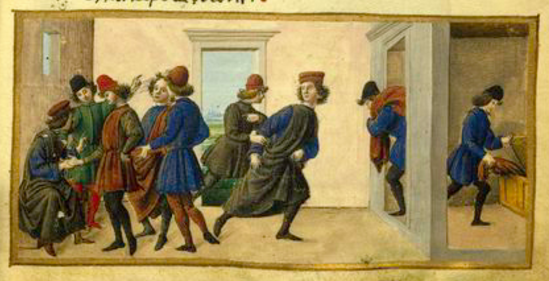
A fortuneteller, sitting in a market, discoursed, to whom one declares that his doors were broken open and all things taken away which had been in the house. The fortuneteller, sighing and hasting in his pace, betook himself home; whom a certain man perceiving running said, "O thou, who promisest that thou wilt divine others' affairs, surely thou hast not divined thine own."
Moral. This fable regards those who, not rightly administering their own affairs, endeavour to foresee and consult for other men's, which do not belong to them.


174. Of a Boy and his Mother
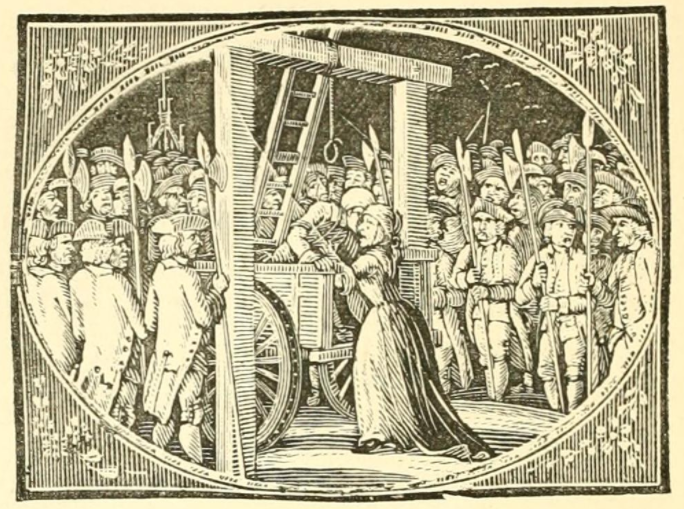
A certain boy in school, having stolen a little book, brought it to his mother, by whom not being chastised, daily he stole more and more, but in progress of time he began to steal greater things. At length being apprehended by the magistrate, he was led to punishment. But the mother following and crying, he asked that it might be lawful for him to speak a little with her in her ear. He, being permitted and the mother hastening and moving her eat to the mouth of the son, he tore off the ear of his mother with his teeth. When the mother and the others who stood about blamed him, not ly as a thief, but also as impious to his parent, he said, "She has been the cause of my destruction, for if she had chastised me for the little book which I stole first, I had done nothing further; now I am led to punishment."
Moral. This fable shows that they who are not restrained at the beginnings of sinning, go on to greater crimes.


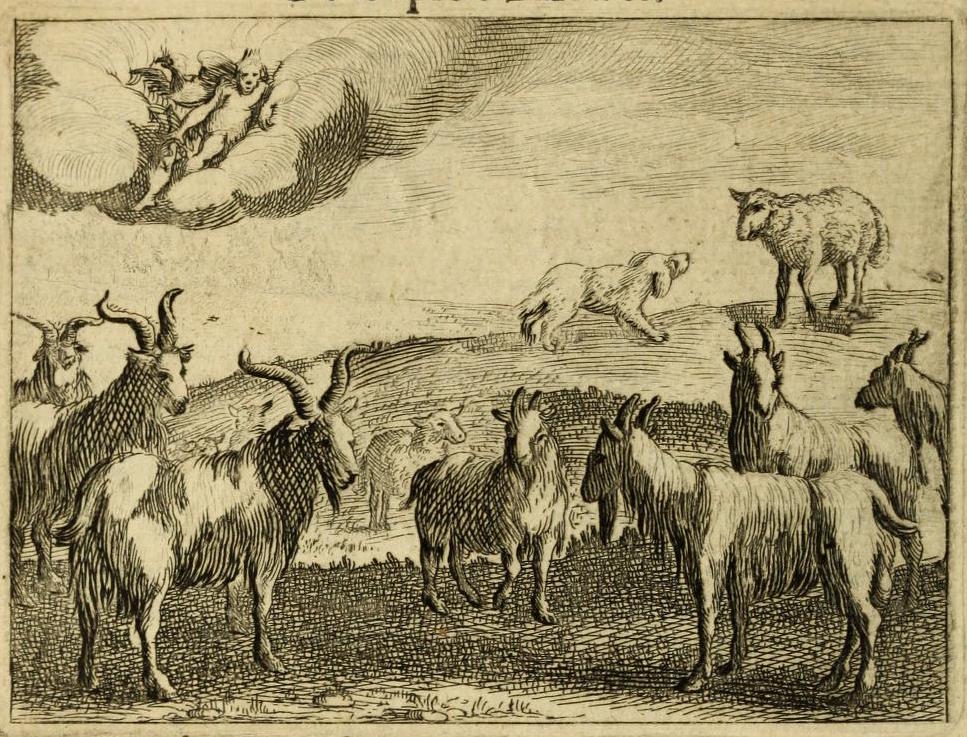
175. Of the He-Goats and the She-Goats
When the she-goats had obtained a beard from Jupiter, the he-goats began to be offended because the females had equal honour with them. Jupiter said, "Suffer ye them ot enjoy the vain gloyr and to usurp the ornament of your dignity, since they do not equal your virtue.
Moral. This fable teaches thee that thou mayest bear those to usurp thy ornament who are inferiors to thee in virtue.


Thursday, October 26, 2023

Clarke: English (34)

Here are some more fables from H. Clarke's Latin textbook Fabulae Aesopi selectae, or, Select fables of Aesop, and you can click here for all the fables reposted from this book at the blog.


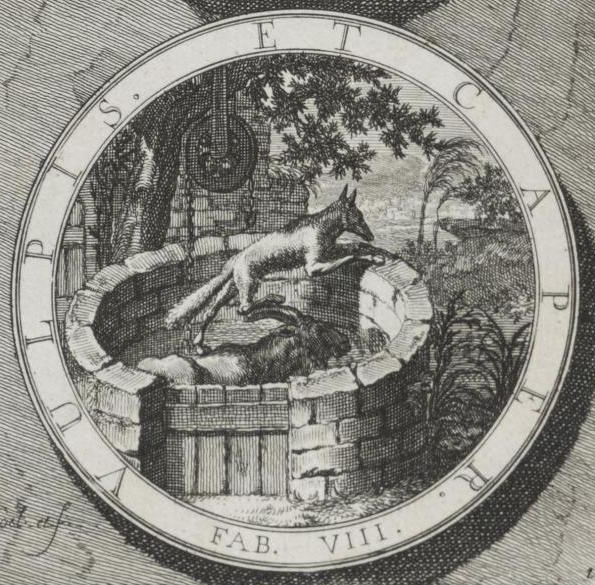
166. Of a Fox and a He-Goat
A fox and a goat being thirsty descended into a certain well, in which, when they had well drank, the fox says to the goat, looking about for a return, "Goat, be of good cheer, for I have thought by what means we both may be brought back. If truly thou wilt raise up thyself straight they forefeet being set to the wall, and wilt lean forward thy horns, thy chin being drawn to thy breast, I leaping over thy back and horns, and escaping out of the well, will bring thee thence afterwards. In whose counsel the goat having faith and obeying, as she commanded, she leaped out of the well, and then jumped for joy upon the bring of the well, and rejoiced, having no care of the goat. But when she was accused by the goat as a league-breaker, she answered, "Indeed, goat, if there had been to thee as much of sense in thy mind as there i of hairs on thy chin, thou wouldst not have descended into the well before that thou hadst examined about a return."
Moral. This fable hints that a prudent man ought to examine the end before that he comes to perform a thing.


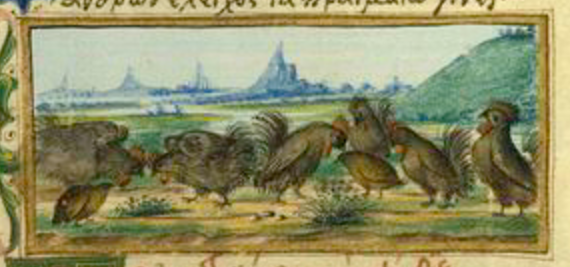
167. Of the Cocks and a Partridge
When a certain man had cocks at home, he bought a partridge, and gave her into the company of the cocks to be fed, and fattened together with them. The cocks every one for himself bit and drove her away. But the partridge was afflicted with herself, thinking that such things were offered to her by the cocks, because her kind was different from their kind. But when not long afterwards she saw them fighting amongst themselves and mutually striking, recovered from grief and sadness, she said, "Truly after these things I shall not be afflicted more, seeing them fighting even amonst themselves."
Moral. This fable hints that prudent men ought to bear the contumelies offered by foreigners, whom they see not to abstain from the injury of their own countrymen.

illustration from the Medici Aesop


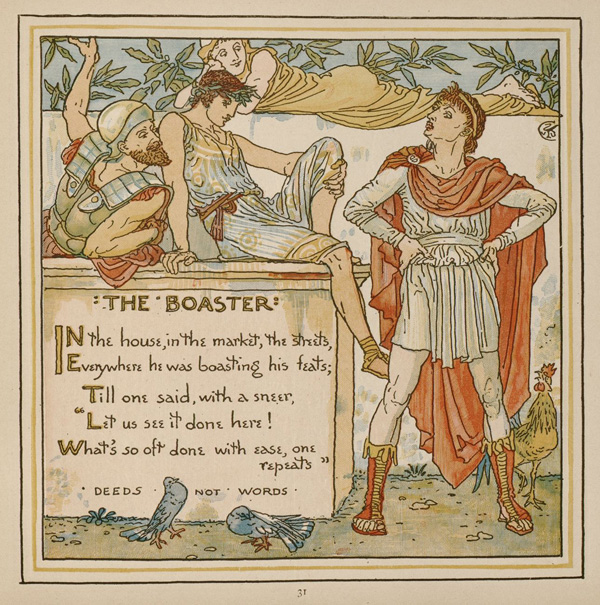
168. Of a Boaster
A certain man having traveled a long while, when he was returned home again, when boasting told many other things done by him manfully in diverse regions, and truly that especially, that at Rhodes, he had excelled all in leaping, that the Rhodians who had been present, were witnesses of the same thing: one of those, who were present, answering him said, "O man, if that is true, which you speak, what need is there to you of witnesses? Behold a Rhodian! Behold here a trial of leaping!"
Moral. This fable shows that where true testimonies are present there is no need of words.


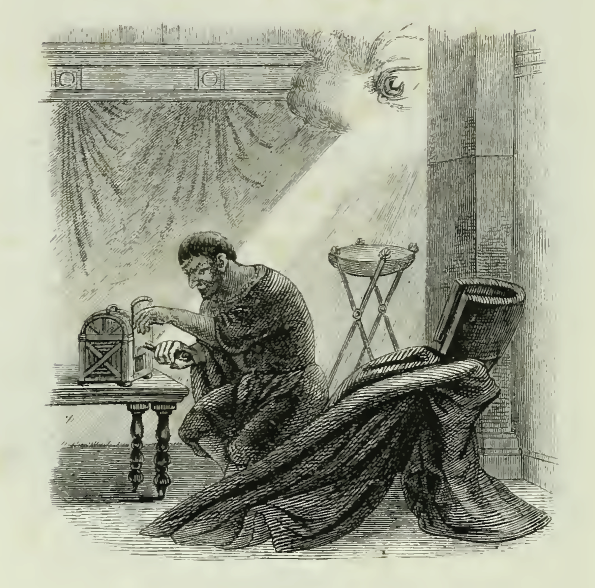
169. Of a Man Tempting Apollo
A certain wicked man betook himself to Delphos about to tempt Apollo, and having a little sparrow under his cloak which he held in his first, and going to the trevet, he asked him, saying, "What I have in my right hand: is it living or is it dead?" About th epluck forth the sparrow alive, if he had answered dead; again about the pluck it forth dead, if he had answered, alive, for he would have killed it presently under the cloak privily before that he plucked it out. But the God, understanding the deceitful craftiness of the man, said, "O consulter, do thou which of the two thou art more willing to do, for it is in the power of thee, and pluck out either alive or dead what thou hast in thy hands.
Moral. This fable hints that nothing lies hid from nor deceives the divine mind.


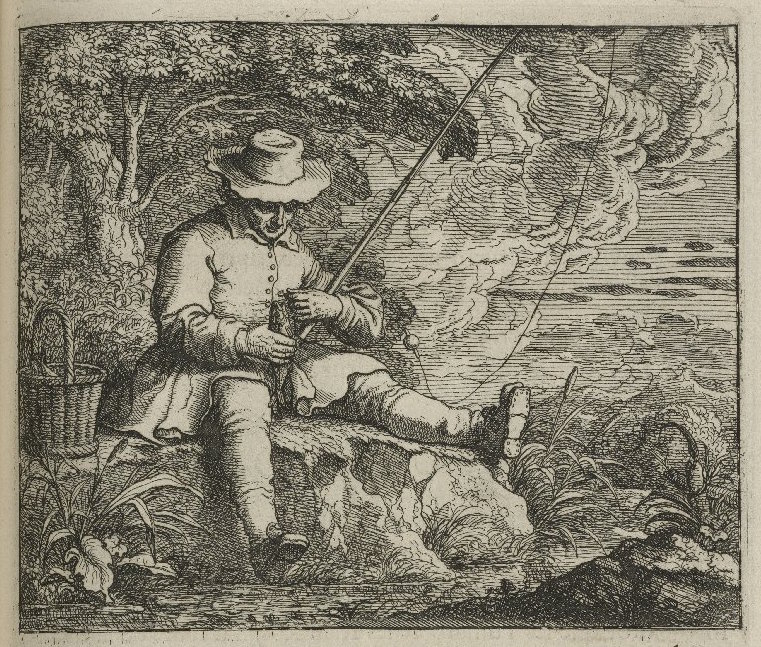
170. Of the Fisherman and the Sprat
A certain fisherman, hsi nets being let down into the sea, brought out a small sprat, which thus besought the fisherman, "Be not willing to take me so little at present; suffer me to go away and to grow, that afterwards thou mayest obtain me thus gorwn up with greater advantage." To whom the fisherman said, "But I should be mad if I should omit a gain, although small, which I have between my hands for the hope of a future good, although great."
Moral. This fable shows him to be foolish who, for hope of a greater advantage, does not embrace a thing both present and certain, although small.