Saturday, June 24, 2023

William Caxton (2)

Here are some more fables from the The Fables of Aesop as printed by William Caxton in 1484, with woodcuts adapted from Steinhowel's Aesop; click here for more fables from Caxton's Aesop here at the blog.


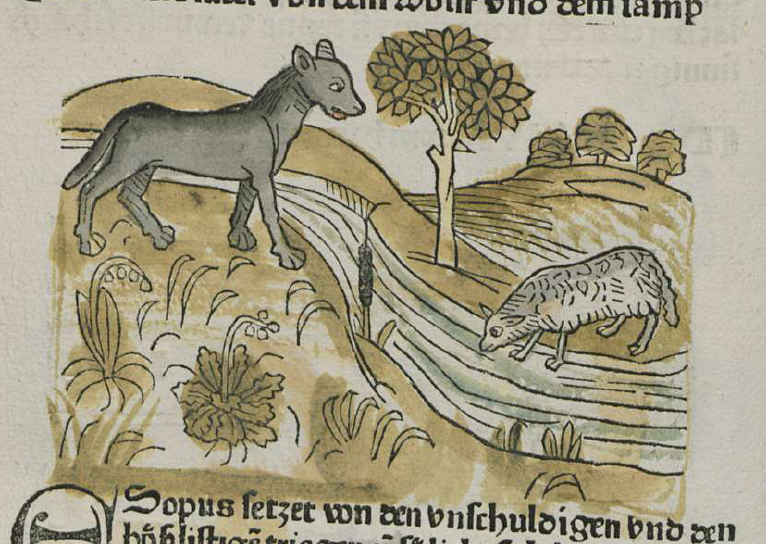
Of the wulf and of the lambe
Of the Innocent and of the shrewe Esope reherceth to vs suche a fable / how it was so / that the lambe and the wulf had bothe thurst / and went bothe to a Ryuer for to drynke / It happed that the wulf dranke aboue & the lambe dranke bynethe / And as the wulf sawe and perceyued the lambe / he sayd with a hyghe voys / Ha knaue why hast thou troubled and fowled my water / whiche I shold now drynke / Allas my lord sauf your grece / For the water cometh fro yow toward me / Thenne sayd the wulf to the lambe / Hast thow no shame ne drede to curse me / And the lambe sayd My lord with your leue / And the wulf sayd ageyne / Hit is not syxe monethes passyd that thy fader dyd to me as moche / And the lambe ansuerd yet was I not at that tyme born / And the wlf said ageyne to hym / Thou hast ete my fader / And the lambe ansuerd / I haue no teeth / Thenne said the wulf / thou arte wel lyke thy fader / and for his synne & mysded thow shalt deye / The wulf thenne toke the lambe and ete hym /
This fable sheweth that the euylle man retcheth not by what maner he may robbe & destroye the good & innocent man


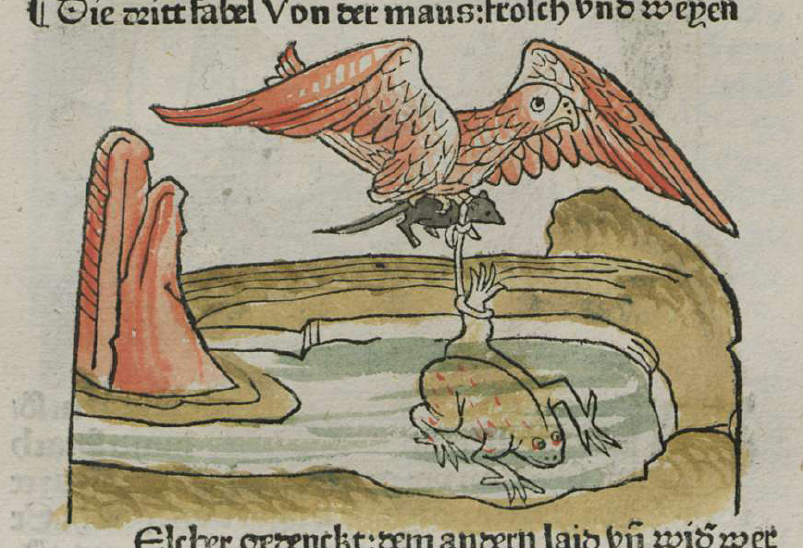
Of the rat / and of the frogge
Now it be so / that as the rat wente in pylgremage / he came by a Ryuer / and demaunded helpe of a frogge for to passe / and go ouer the water / And thenne the frogge bound the rats foote to her foote / and thus swymed vnto the myddes ouer the Ryuer / And as they were there the frogge stood stylle / to thende that the rat shold be drowned / And in the meane whyle came a kyte vpon them / and bothe bare them with hym / This fable made Esope for a symylytude whiche is prouffitable to many folkes / For he that thynketh euylle ageynst good / the euylle whiche he thynketh shall ones falle vpon hym self /
This fable made Esope for a symylytude whiche is prouffitable to many folkes / For he that thynketh euylle ageynst good / the euylle whiche he thynketh shall ones falle vpon hym self


Of the lyon and of the asse
Of them whiche mocken other esope reherceth such a fable / Ther was an asse whiche met with a lyon to whom he said my broder god saue the & the lyon shaked his hede and with grete payne he myght hold his courage / to haue forthwith deuoured hym / But the lyon sayd to hym self / It behoueth not that teethe soo noble and so fayre as myn be touchen not / ne byten suche a fowle beest /
For he that is wyse must not hurte the foole ne take hede to his wordes / but lete hym go for suche as he is


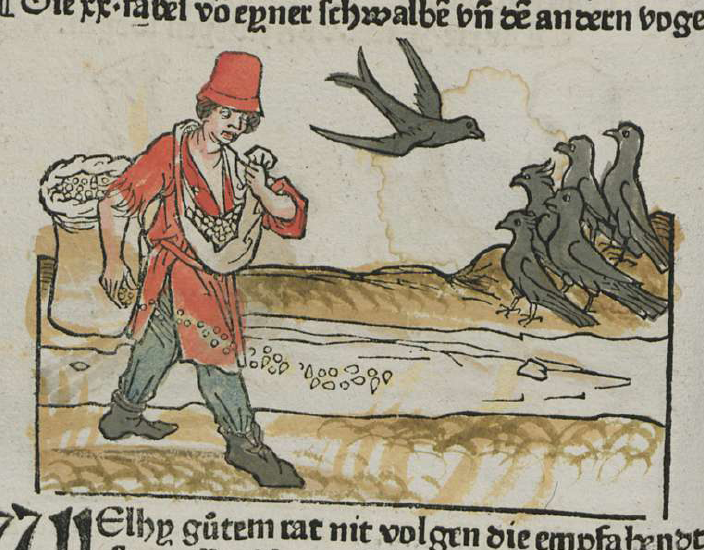
Of the swalowe / and other byrdes
He that byleueth not good counceyll / may not fayll to be euylle counceylled / wherof Esope reherceth to vs suche a fable / of a plowgh man / whiche sowed lynseed / & the swalowe seyng that of the same lynseed men myght make nettes and gynnes / wente and sayd to alle other byrdes / Come with me ye al & lete vs plucke vp al this / For yf we leue hit growe / the labourer shal mowe make therof gynnes and nettes for to take vs al / Alle the byrdes dispraysed his counceyl / And thenne as the swalowe sawe this / he wente and herberowed her in the plough mans hows / And whanne the flaxe was growen and pulled vp / the labourer made grynnes and nettes to take byrdes / wherwith he took euery day many other byrdes / and brought them in to his hows / to the whiche byrdes the swalowe thenne sayd / I told yow wel / what that shold happe therof / wherfore men ought not to disprayse good counceylle /
For he that is euyl aduysed and not wel counceyled shalle haue moche payne


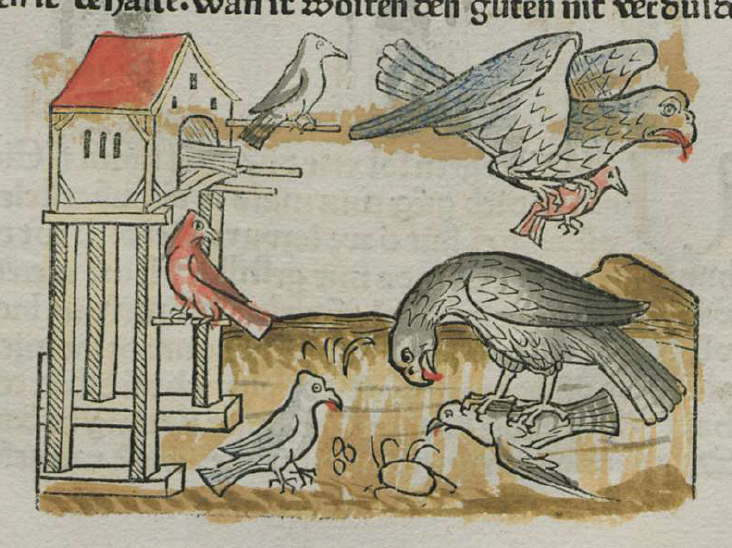
Of the Columbes or douues of the kyte and of the sperehawke 
Who that putte and submytteth hym self vnder the saue gard or protection of the euylle / thou oughtest to wete & knowe / that whan he asketh & demaunded ayde & helpe / he geteth none / Wherof Esope reherceth to vs suche a fable / Of the douues whiche demaunded a sperehawke for to be theyr kynge / for to kepe them fro the kyte or mylan / And whanne the sperehawke was maade kynge ouer them / he beganne to deuoure them / the whiche columbes or douues sayd amonge them / that better it were to them to suffre of the kyte than to be vnder the subiection of the sperehawke / & to be martred as we be / but therof we be wel worthy / For we oure self been cause of this meschyef /
And therfore whanne men done ony thyng / men ought well to loke and consydere thende of hit / For he dothe prudently and wysely whiche taketh good hede to the ende

Tuesday, June 20, 2023

Linton and Crane (2)

Here are some more fables from The Baby's Own Aesop, which features fables-as-limericks by W. J. Linton and beautiful illustrations by Thomas Crane; you can click here for more fables from this book here at the blog.

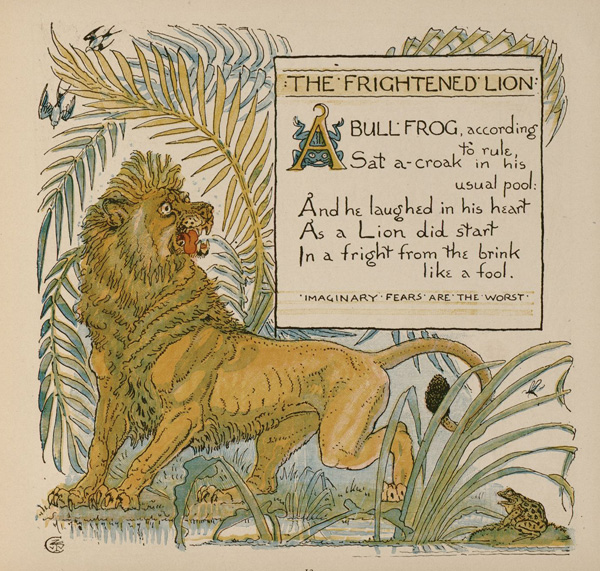
THE FRIGHTENED LION.
A Bull-Frog, according to rule,
Sat a-croak in his usual pool:
And he laughed in his heart
As a Lion did start,
In a fright from the brink like a fool.
IMAGINARY FEARS ARE THE WORST


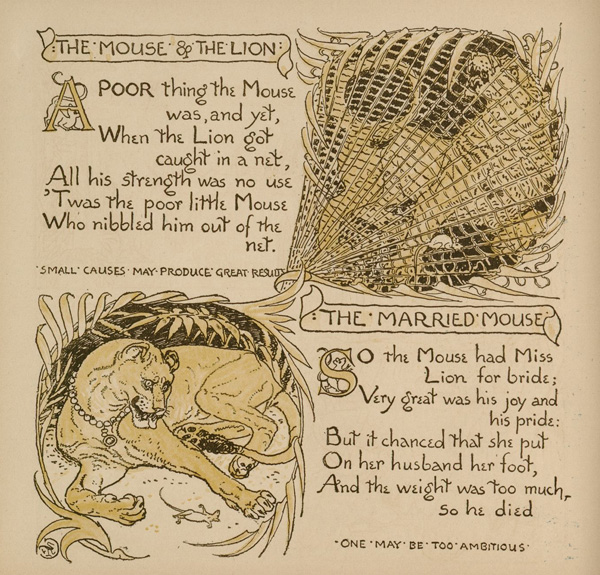
THE MOUSE AND THE LION.
A poor thing the Mouse was, and yet,
When the Lion got caught in a net,
All his strength was no use.
'Twas the poor little Mouse
Who nibbled him out of the net.
SMALL CAUSES MAY PRODUCE GREAT RESULTS

THE MARRIED MOUSE.
So the Mouse had Miss Lion for bride;
Very great was his joy and his pride:
But it chanced that she put
On her husband her foot,
And the weight was too much so he died.
ONE MAY BE TOO AMBITIOUS


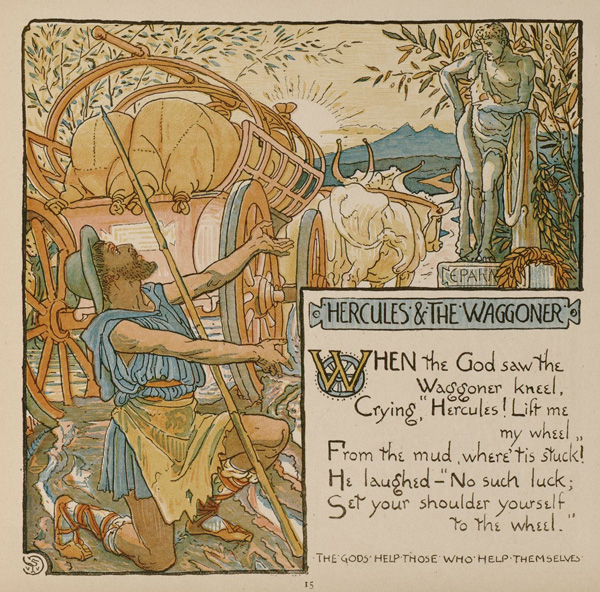
HERCULES AND THE WAGGONER.
When the God saw the Waggoner kneel,
Crying, "Hercules! Lift me my wheel
From the mud, where 'tis stuck!"
He laughed — "No such luck;
Set your shoulder yourself to the wheel."
THE GODS HELP THOSE WHO HELP THEMSELVES


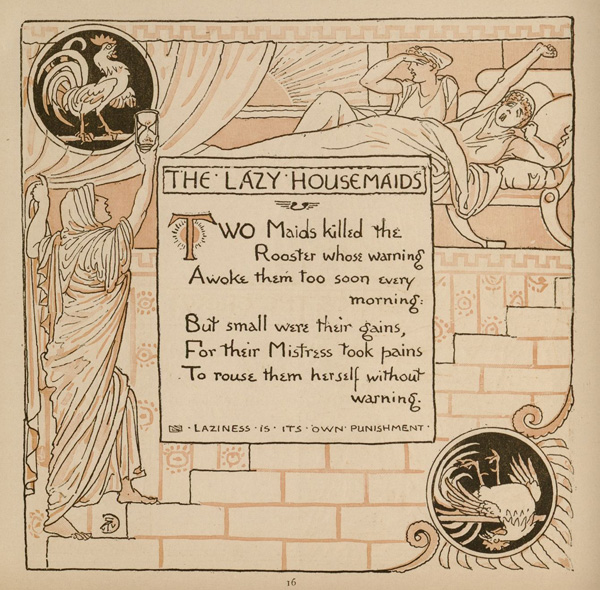
THE LAZY HOUSEMAIDS.
Two Maids killed the Rooster whose warning
Awoke them too soon every morning:
But small were their gains,
For their Mistress took pains
To rouse them herself without warning.
LAZINESS IS ITS OWN PUNISHMENT


Monday, June 19, 2023

Joseph Jacobs (2)

Here are some more fables from the The Fables of Aesop by Joseph Jacobs, with illustrations by Richard Heighway. Click here for more fables from Jacobs' Aesop here at the blog.


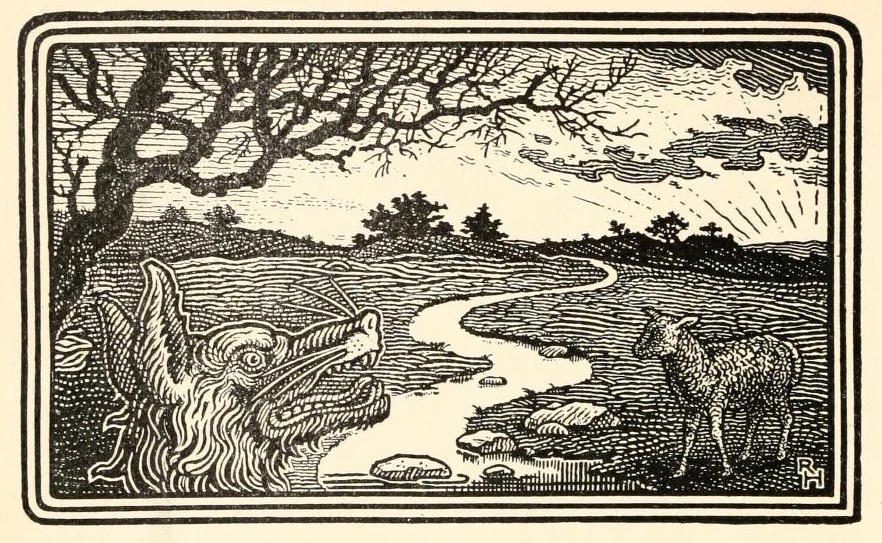
The Wolf and the Lamb  
Once upon a time a Wolf was lapping at a spring on a hillside, when, looking up, what should he see but a Lamb just beginning to drink a little lower down. "There's my supper," thought he, "if only I can find some excuse to seize it." 
Then he called out to the Lamb, "How dare you muddle the water from which I am drinking?"
"Nay, master, nay," said Lambikin; "if the water be muddy up there, I cannot be the cause of it, for it runs down from you to me."
"Well, then," said the Wolf, "why did you call me bad names this time last year?"
"That cannot be," said the Lamb; "I am only six months old."
"I don't care," snarled the Wolf; "if it was not you it was your father;" and with that he rushed upon the poor little Lamb and WARRA WARRA WARRA WARRA WARRA ate her all up.
But before she died she gasped out, "Any excuse will serve a tyrant."


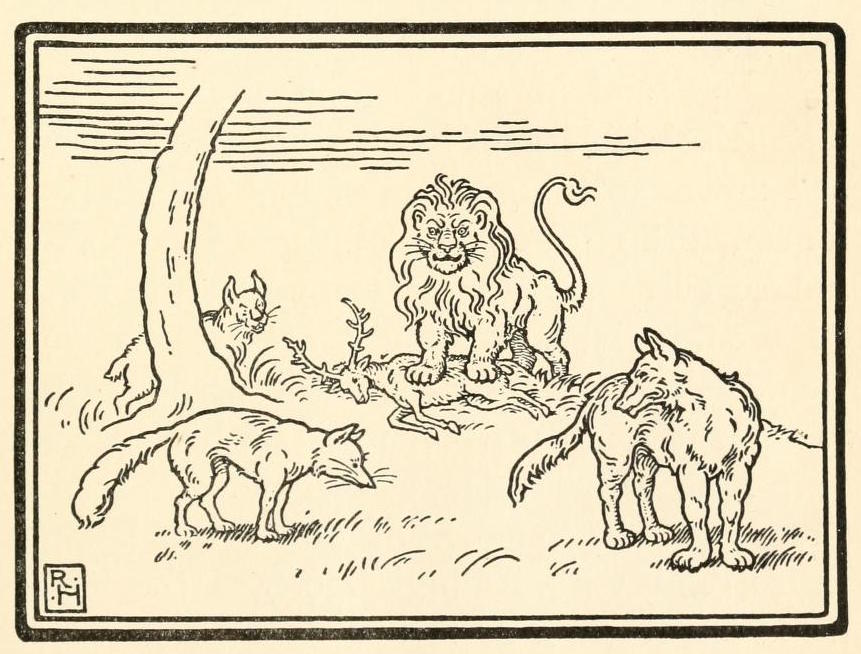
The Lion's Share  
The Lion went once a-hunting along with the Fox, the Jackal, and the Wolf. They hunted and they hunted till at last they surprised a Stag, and soon took its life. Then came the question how the spoil should be divided. 
"Quarter me this Stag," roared the Lion; so the other animals skinned it and cut it into four parts. 
Then the Lion took his stand in front of the carcass and pronounced judgment, "The first quarter is for me in my capacity as King of Beasts; the second is mine as arbiter; another share comes to me for my part in the chase; and as for the fourth quarter, well, as for that, I should like to see which of you will dare to lay a paw upon it."
"Humph," grumbled the Fox as he walked away with his tail between his legs; but he spoke in a low growl. "You may share the labours of the great, but you will not share the spoil."


The Wolf and the Crane 
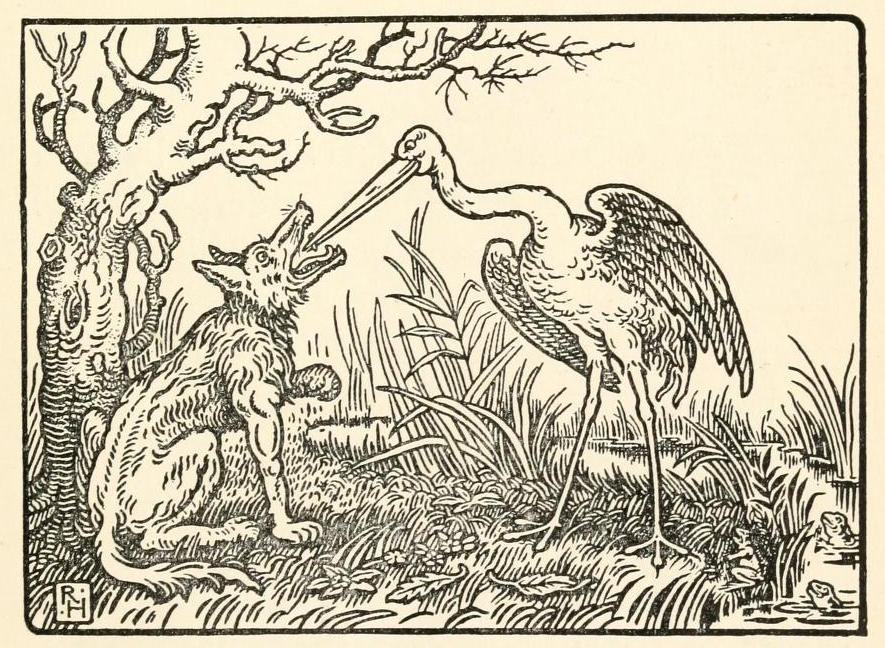
A Wolf had been gorging on an animal he had killed, when suddenly a small bone in the meat stuck in his throat and he could not swallow it. He soon felt terrible pain in his throat, and ran up and down groaning and groaning and seeking for something to relieve the pain. He tried to induce every one he met to remove the bone. "I would give anything," said he, "if you would take it out." 
At last the Crane agreed to try, and told the Wolf to lie on his side and open his jaws as wide as he could. Then the Crane put its long neck down the Wolf's throat, and with its beak loosened the bone, till at last it got it out.
"Will you kindly give me the reward you promised?" said the Crane.
The Wolf grinned and showed his teeth and said: "Be content. You have put your head inside a Wolf's mouth and taken it out again in safety; that ought to be reward enough for you."


The Man and the Serpent  
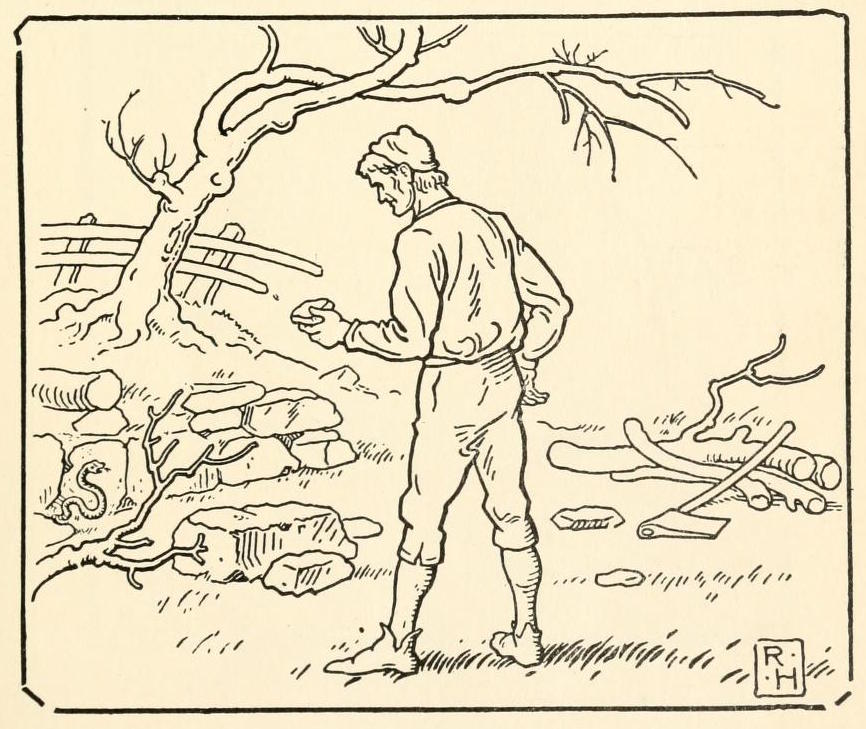
A Countryman's son by accident trod upon a Serpent's tail, which turned and bit him so that he died. The father in a rage got his axe, and pursuing the Serpent, cut off part of its tail. So the Serpent in revenge began stinging several of the Farmer's cattle and caused him severe loss. 
Well, the Farmer thought it best to make it up with the Serpent, and brought food and honey to the mouth of its lair, and said to it: "Let's forget and forgive; perhaps you were right to punish my son, and take vengeance on my cattle, but surely I was right in trying to revenge him; now that we are both satisfied why should not we be friends again?"
"No, no," said the Serpent; "take away your gifts; you can never forget the death of your son, nor I the loss of my tail."
Injuries may be forgiven, but not forgotten.


The Swallow and the Other Birds  
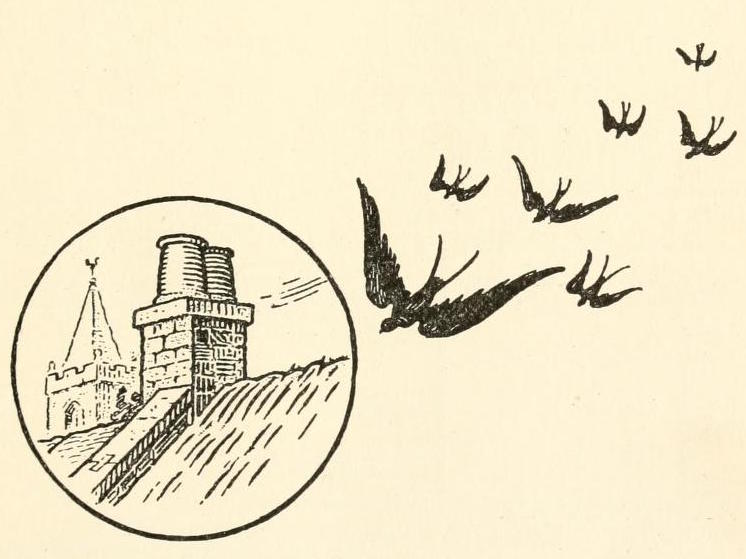
It happened that a Countryman was sowing some hemp seeds in a field where a Swallow and some other birds were hopping about picking up their food. "Beware of that man," quoth the Swallow. "Why, what is he doing?" said the others. "That is hemp seed he is sowing; be careful to pick up every one of the seeds, or else you will repent it." The birds paid no heed to the Swallow's words, and by and by the hemp grew up and was made into cord, and of the cords nets were made, and many a bird that had despised the Swallow's advice was caught in nets made out of that very hemp. "What did I tell you?" said the Swallow.
Destroy the seed of evil, or it will grow up to your ruin.