Monday, September 4, 2023

Clarke: English (11)

Here are some more fables from H. Clarke's Latin textbook Fabulae Aesopi selectae, or, Select fables of Aesop, and you can click here for all the fables reposted from this book at the blog.


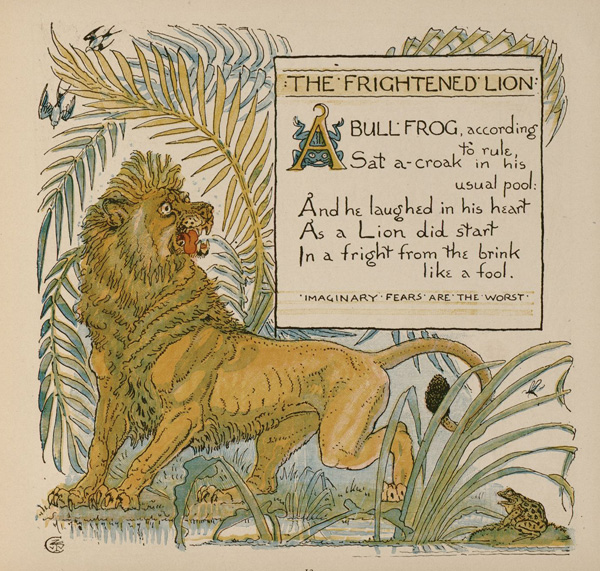
51. Of the Lion and the Frog
The lion, when he heard the frog talking at a great rate, thinking it to be some great beast, turned himself back, and, standing a little, he sees the frog going out of the pool; which presently, enraged, he trod under with his feet, saying, "Thou shalt not move any more any animal with thy noise, that he may look at thee."
Moral. The fable signifies that among noisy men, nothing is found except a tongue.


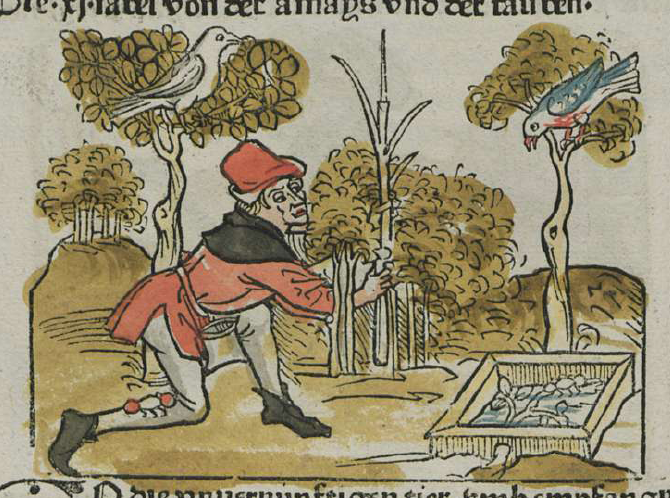
52. Of the Pismire and the Dove
The pismire, thirsting, came to a fountain, that she might drink; by chance, she fell into a well. The dove, sitting upon a tree hanging over the fountain, when she saw the pismire overwhelmed in the waters, breaks a little branch from the tree, which she throws without delay into the fountain. The pismire, getting upon this, is saved. The fowler comes, that he may take the dove; the ant, perceiving that, bites one of the feet of the fowler; the dove flies away.
Moral. The fable signifies: when brutes are grateful to benefactors, by so much the more they ought to be who are partakers of reason.


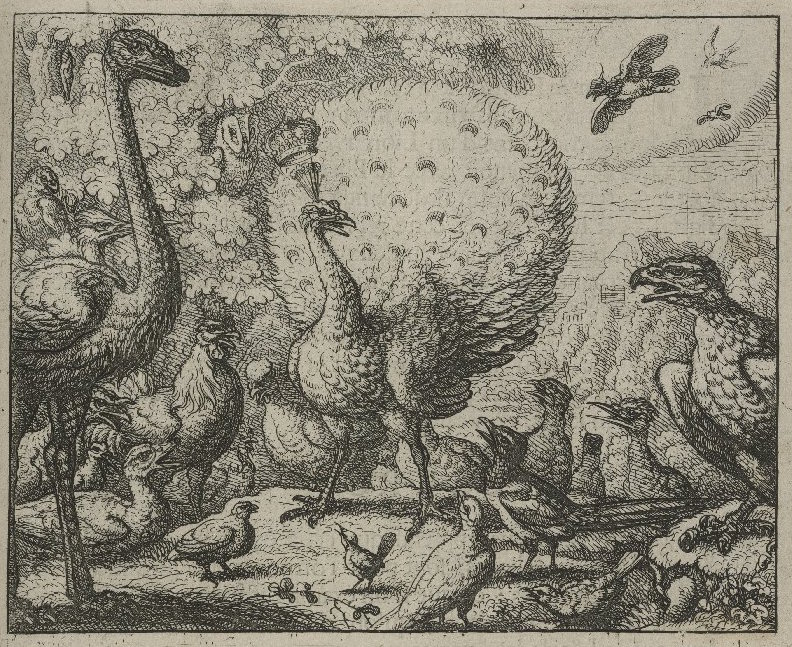
53. Of the Peacock and the Magpie
The nation of birds, when they wandered freely, wished for a king to be given to them. The peacock thought himself chiefly worthy who should be chosen, because he was the most beautiful. He, being received for king, the magpie says, "O king, if, you governing, the eagle should begin to pursue us strenuously, as she is wont, by what method will you drive away her? By what means will you preserve us?
Moral. In a prince, beauty is not so much to be regarded as strength of body and prudence.


54. Of the Sick Man and the Physician
A physician had in cure a sick man; at length he dieth. Then the physician said to the kinsmen, "This man perished by intemperance."
Moral. Unless any one shall have left drunkenness and lust timely, either he never will arrive to old age, or is to have a very short old age.
[Clarke has missed the point of this one; for the traditional fable, where the doctor is mocked at the funeral, see The Doctor and His Patient.]


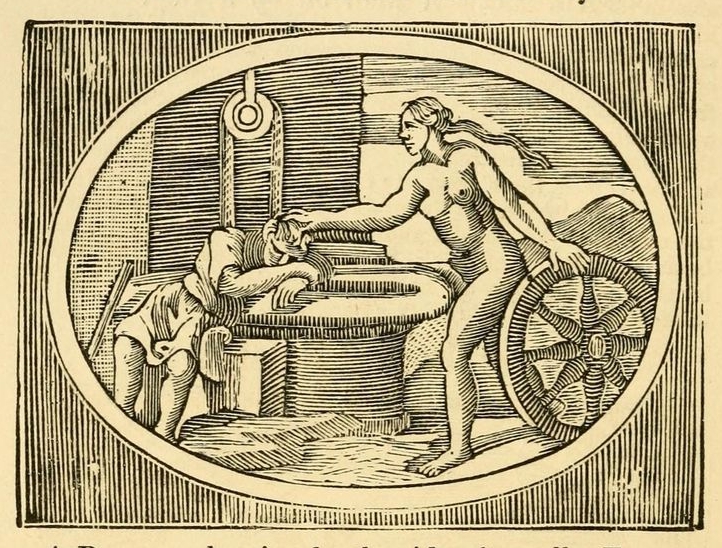
55. Of the Lion and Other Beasts
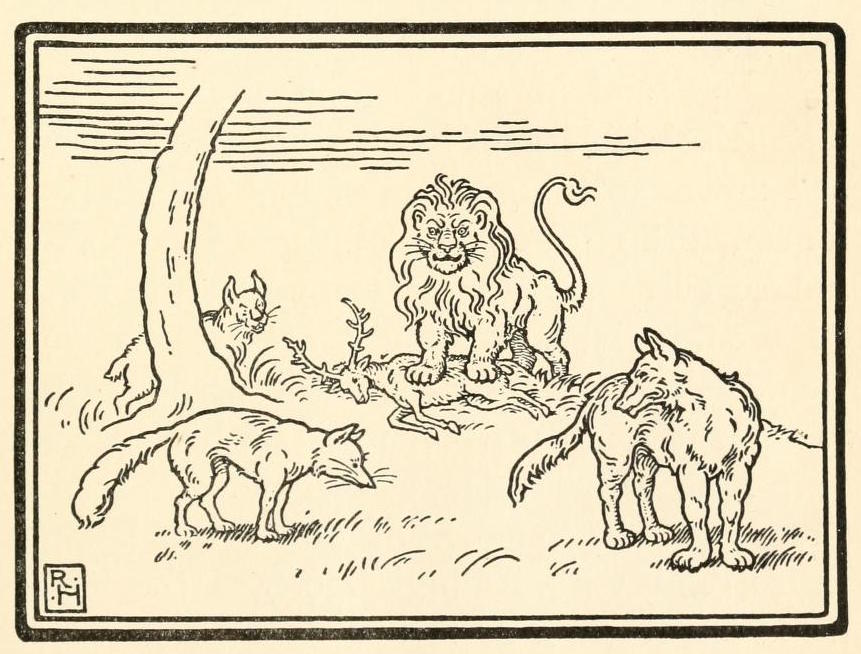
The lion, the ass, and the fox go to hunt. An ample prey is taken; taken, is commanded to be parted. The ass, putting to each their single parts, the lion roared, seizes the ass, and butchers him. Afterwards, he gives that business to the fox, who, more cunning by far, the best part being proposed, she had reserved scarce a very small one; the lion asks, "By whom so taught?" To whom she says, "The calamity of the ass has taught me."
Moral. He is happy whom others' dangers make cautious.

Saturday, September 2, 2023

Babrius (8)

Here are some more fables by Babrius, translated into English verse by James Davies: The Fables of Babrius, and you can click here for all the Babrius fables at this blog.


The Wolf and the Lamb
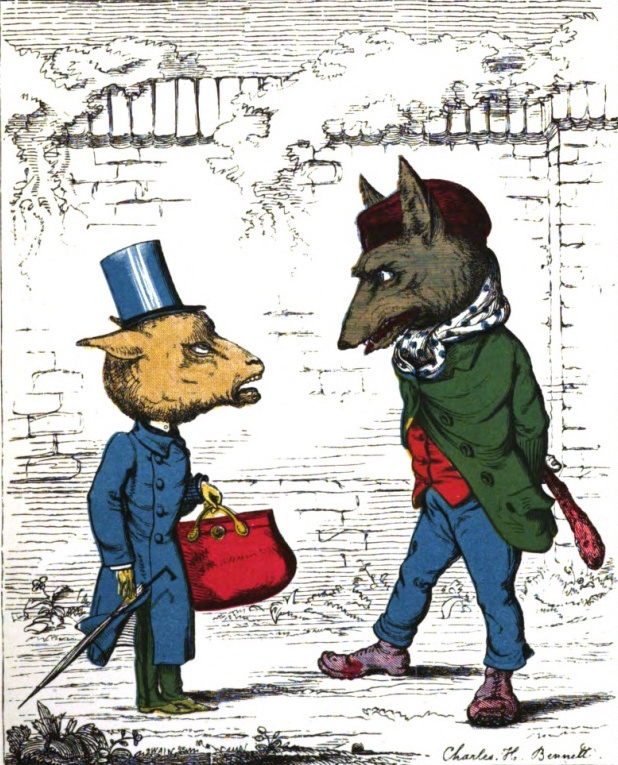
A wolf beheld a lambkin once astray,
And did not give brute force at once its way,
But, bent to seize it, found this specious plea:
"Small though you were last year, you slander'd me."
"Nay! How last year? A year I've not been born."
"Well, then, you nibbled my own field of corn!"
"I eat nor grass nor corn! A nursling still!"
"Have you not drunk then of my private rill?"
"As yet, my mother's milk's my beverage."
Upsprang the wolf, and ate the lamb in rage.
" A wolf," said he, "can't for his supper wait,
Though all his pleas you may invalidate."


The Boy Eating the Entrails
What time with vineboughs men the broad-floor strew,
A bull to Ceres once the rustics slew.
Tables of meat and casks of wine were there;
But one poor lad had gorged too large a share
Of the bull's entrails. Swoln he homeward hies,
And sore bewails his stomach's weight and size.
Once in his mother's arms, "Alas!" cried he.
"What is't?" she said. "Oh, all is o'er with me!
My wretched fate is present death, no doubt;
For, mother, see, my bowels gushing out."
"Don't try to keep it down!" the dame replied;
"'Tis not your own, dear, but the bull's, inside!"
So when an orphan's substance guardians spend,
And retribution comes to faithless friend,
To such, deep-groaning at disgorging hour,
Methinks this fable one might quote with power.


The Swollen Fox
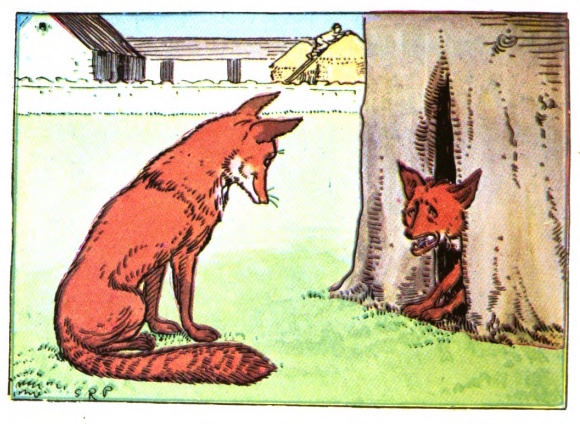
An aged oak was at its roots decay'd,
Wherein the wallet of a hind was laid,
Ragged and brimful of stale bread and meat;
A fox ran in, and its contents did eat.
Her stomach thence, no marvel, wax'd so stout,
That through the opening she could not get out.
She wept. Another fox, that came that way,
Said jeeringly, "Till you are fasting, stay!
You won't find egress, till you grow as thin
"In stomach, as you were when you got in."


The Dolphins and the Crab
'Twixt whales and dolphins there was difference great,
And to them came a crab to mediate.
Just as, in states, if one of small renown
Should act peacemaker for each rival crown.


The Sick Stag
A stag, whose lissome joints grew stiff, had made
A grassy couch outside a woodland shade.
Hence ample fodder to his need he found.
Till soon, to see their neighbour, gathered round
Whole tribes of beasts (a right good neighbour he!)
Each came, and each with his supplies made free
By thoughtless nibbling, ere it sought the wood.
Thus sank, not by disease, but want of food,
A stag that scarce had yet two crow-lives told:
Had he lack'd friends, he haply had died old!


Friday, September 1, 2023

Babrius (7)

Here are some more fables by Babrius, translated into English verse by James Davies: The Fables of Babrius, and you can click here for all the Babrius fables at this blog.


The Workman and Fortune
Close to a well a workman slept one night,
Unwittingly. But Fortune met his sight.
He seem'd to hear: "What ho, there, sirrah, wake!
Lest of thy tumble I the blame should take
Among mankind, and earn an uglier name; 
For each man's trips and haps I bear the blame,
Howe'er his own the fault, 'tis just the same."


The Driver and the Wagon
Strong bulls to town upon their shoulders drew
A four-wheel'd wain. Its creakings were not few.
Then was the driver wroth, and, drawing near,
He spoke so plain it could not choose but hear.
"Thou worst of goods, will not thy groaning cease,
"Though they whose shoulders draw thee, hold their peace?"
It is a base man's way to raise a moan,
As if the toil of others were his own!


The Wolves and the Sheep
The wolf-tribe sent the flock an embassy,
And proffer'd oaths of peace and amity.
The terms were that the dogs should be disgraced,
Who caused the feud now sought to be effaced.
The sheep, weak, silly creatures, were disposed
To scout old friends. An old ram interposed,
And said, his thick wool bristling from below,
"A novel mediation this, I trow!"
How, if unguarded, am I safe with you,
When even now my perils are not few,
Though, while I feed, I keep my watch-dog true?"


The Lizard
'Tis said a lizard burst its back in twain
In vain attempts a dragon's size t' attain.
Hurt to thyself will be thy certain fate,
If men far higher thou shouldst imitate.


The Woman and her Maidservants
A very careful dame, of busy way,
Kept maids at home, and these, ere break of day,
She used to rouse as early as cock-crow.
They thought 'twas hard to be awaken'd so,
And o'er wool-spinning be at work so long;
Hence grew within them all a purpose strong
To kill the house-cock, whom they thought to blame
For all their wrongs. But no advantage came.
Worse treatment than the former them befell;
For when the hour their mistress could not tell
At which by night the cock was wont to crow,
She roused them earlier, to their work to go.
A harder lot the wretched maids endured.
Bad judgment oft hath such results procured.