Monday, August 14, 2023

Clarke: English (5)

Here are some more fables from H. Clarke's Latin textbook Fabulae Aesopi selectae, or, Select fables of Aesop, and you can click here for all the fables reposted from this book at the blog. I plan to do a LibriVox recording of this book, so I will be transcribing all the fables here, and later I will be able to embed the LibriVox audio.


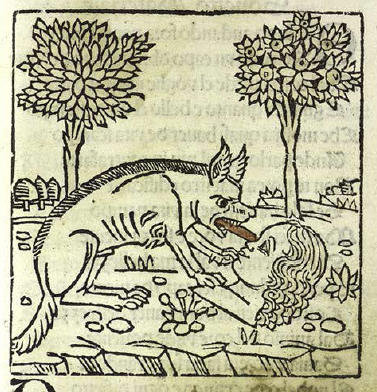
21. Of the Wolf and the Painted Head
The wolf turns about and admires a human head found in the shop of a carver: perceiving it to have nothing of sense, he says, "O fair head, there is in thee much of art, but nothing of sense."
Moral. Outward beauty, if the inward be present, is pleasing; but if we must want either, it is better to want the outward than the inward; for that without this sometimes incurs hatred, as a fool is by so much the more odious by how much the more handsome.


22. Of the Jackdaw
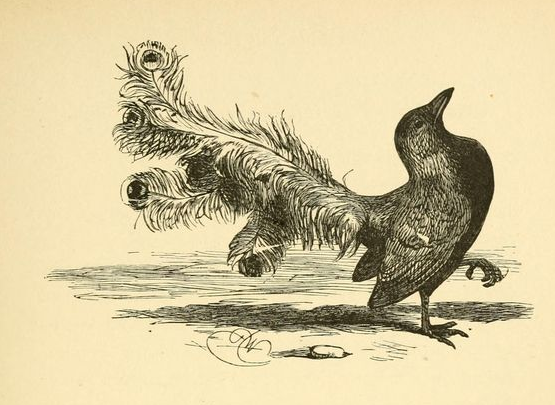
The jackdaw adorned himself with the feathers of the peacock: then seeming pretty to himself, he betook himself to the race of the peacocks, his own race being despised. They at length understanding the cheat, stripped the foolish bird of his colors, and belavored him with blows.
Moral. This fable denotes those who carry themselves more loftily than is fit; who live with those who are both more rich and more noble; wherefore often they become poor, and are for a laughing-stock.


23. Of the Frog and the Ox
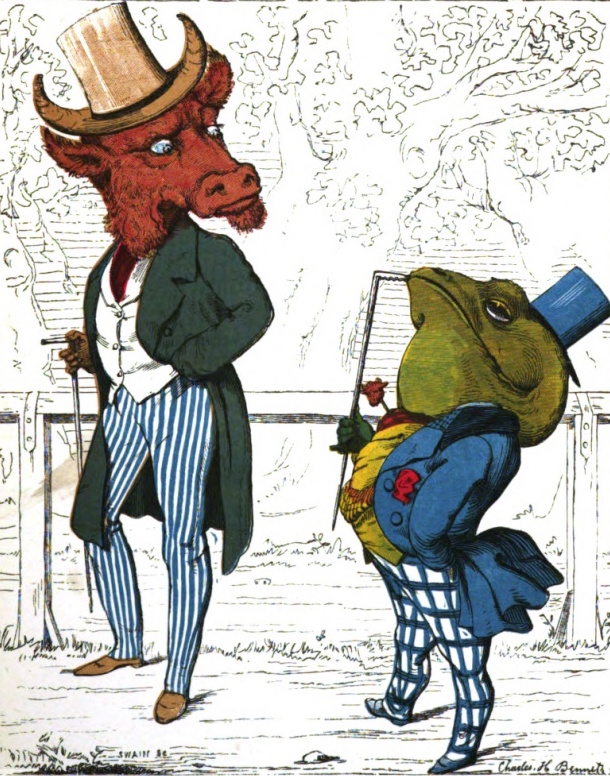
A frog desirous of equalling an ox stretched herself. The son advised the mother to desist from the undertaking, saying that a frog was nothing to an ox. She swelled a second time. The son cries out, "Mother, although you burst, never will you exceed the ox." But, when she had swelled a third time, she burst.
Moral. Every one has his gift. This man excels in beauty, that in stremgth. This is powerful in riches, that in friends. It becometh every one to be content with his own. He is strong in body; thou in wit: Wherefore let every one consult himself, nor envy a superior, which is a miserable thing; nor wish to contend, which is the part of folly.


24. Of the Horse and the Lion
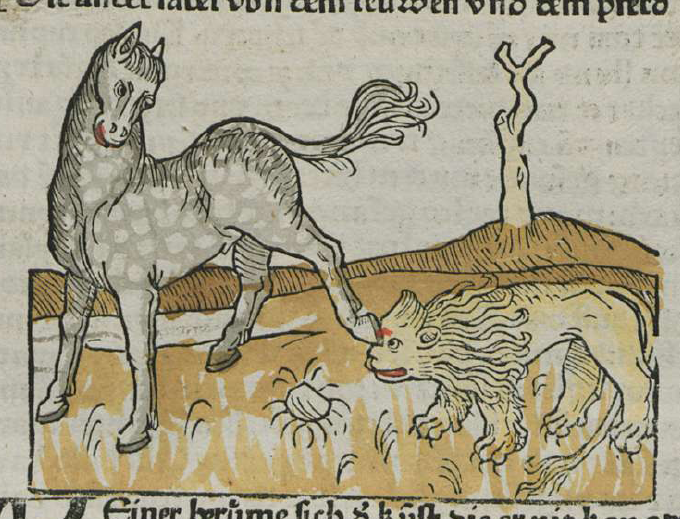
The lion cometh to eat the horse, but wanting strength thro' old age, he began to meditate art: he professes himself a physician: he stays the horse with a circuit of words. He opposes deceit to deceit: he feigns that he lately had pricked his foot in a thorny place; he prays that the physician looking into it would draw out the thorn. The lion obeys. But the horse, with how great force he could, strikes his heel upon the lion, and immediately betakes himself to his heels. The lion scarce at length returning to himself, for he had been almost dead with the blow, says, "I bear a reward for my folly, and he deservedly has fled away; for he has revenged deceit with deceit."
Moral. Dissimulation is worthy of hatred, and to be taken with dissimulation. An open enemy is not to be feared, but he who pretends benevolence, when he is an enemy, he indeed is to be feared and is most worthy of hatred.


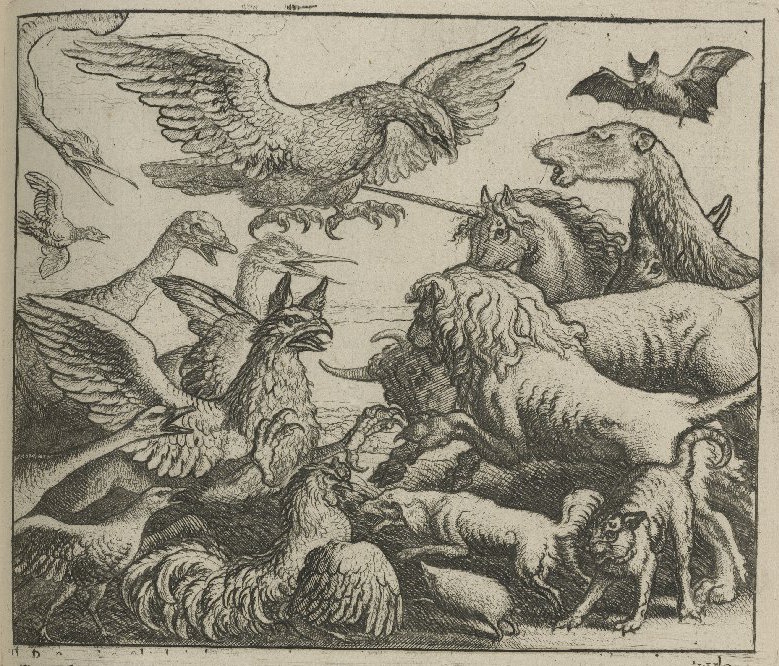
25. Of the Birds and the Four-Footed Beasts
There was a battle to the birds with the four-footed beasts. There was on both sides hope, on both sides fear, on both sides danger: but the bat, leaving his companions, revolts to the enemies. The birds overcome, the eagle being captain and leader, but they condemn the runaway bat that he never return to the birds, that he never fly in the light. This is a reason for the bat that he flies not, unless in the night.

Sunday, August 13, 2023

Clarke: English (4)

Here are some more fables from H. Clarke's Latin textbook Fabulae Aesopi selectae, or, Select fables of Aesop, and you can click here for all the fables reposted from this book at the blog. I plan to do a LibriVox recording of this book, so I will be transcribing all the fables here, and later I will be able to embed the LibriVox audio.


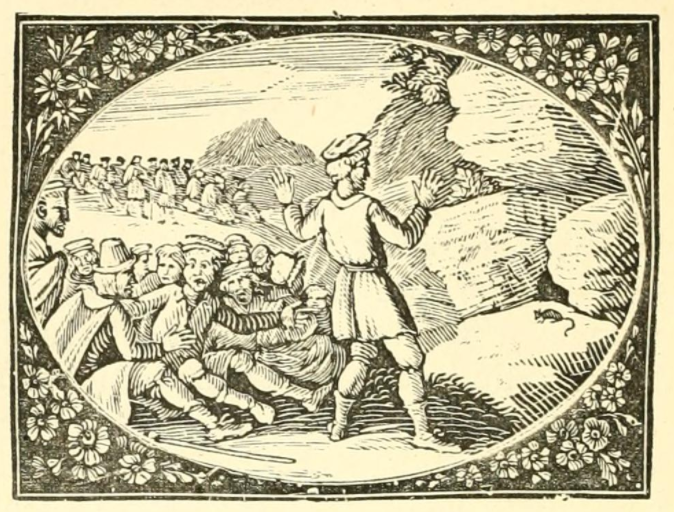
16. Of the Bringing Forth of the Mountains
Formerly there was a rumor that the mountains would bring forth. The men run thither, stand round about, expecting something of a monster, not without fear. At length the mountains bring forth. A mouse comes out; then all laughed.
Moral. Braggers, when they profess and boast great things, scarce do little things. Wherefore those Thrasos are by right the matter of jest and scoffs. This fable also forbids vain fears. For commonly the fear of danger is more grievous than the danger itself; nay: that which we fear is often ridiculous.


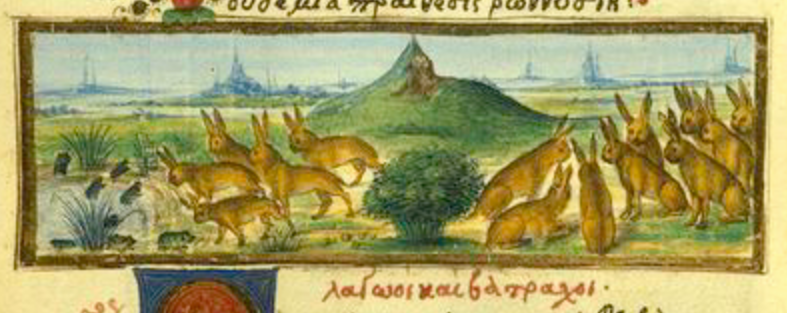
17. Of the Hares and the Frogs
The wood roaring with an unusual whirlwind, the trembling hares begin hastily to fly away. When a fen stopped them flying, they stood anxious, encompassed with dangers on both sides. And what was an incitement of greater fear, they perceive the frogs to be plunged in the fen. Then one of the hares more prudent and more eloquent than the rest said, "What vainly do we fear? There is need of courage indeed: There is to us agility of body, but courage is wanting. This danger of the whirlwind is not to be fled from, but contemned.
Moral. There is need of courage in every thing. Virtue lies dead without confidence. For daringness is the leader and queen of virtue.


18. Of the Kid and the Wolf
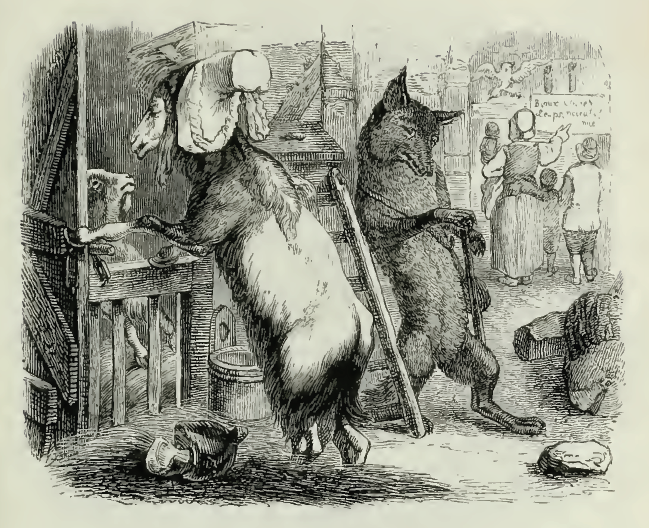
The goat, when she was about to go to feed, shuts up the kid at home, warning her to open to nobody till she return. The wolf, who had heard that afar off, after the departure of the mother, knocks at the doors, acts the goat in voice, ordering them to be opened. The kid, perceiving the cheat, says, "I do not open; for altho' the voice acts the goat, yet indeed I see a wolf through the chinks."
Moral. Children, obey your parents, for it is profitable, and it becometh a young man to hearken to an old man.


19. Of the Countryman and the Snake
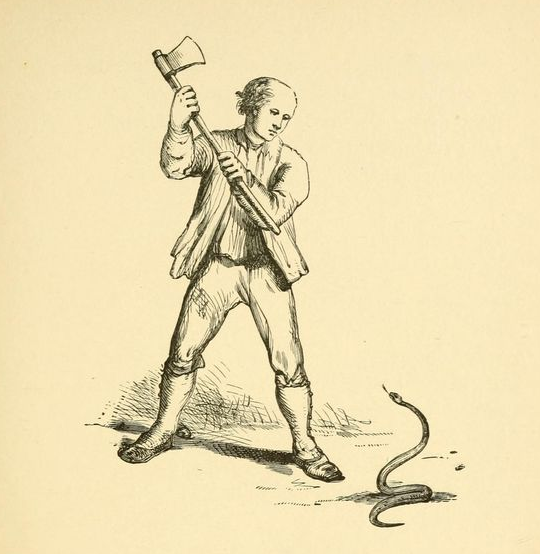
A certain countryman had nourished a snake; on a time being angry, he strikes the beast with an axe. He escapes, not without a wound. Afterwards the countryman coming into poverty thought that misfortune happened to him for the injury of the snake. Therefore he entreats that he would return. He says that he forgave but was unwilling to return; nor could he be secure with the countryman when there is so great an axe at home; that the pain of the wound was worn away, yet the memory remained.
Moral. It is scarce safe to have faith in him who once has broke faith. To forgive an injury, that indeed is the part of mercy, but to take heed of one's self both becometh and is part of prudence.


20. Of the Fox and the Stork
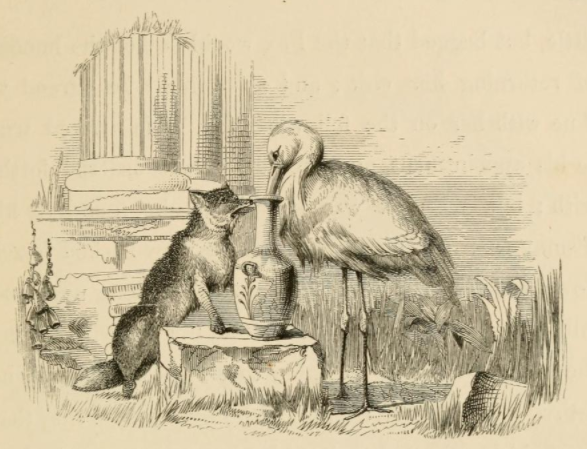
The fox called the stork to supper. She pours out the victuals upon the table, which, when it was liquid, the stork endeavouring with her bill in vain, the fox licks up. The deluded bird goes away, and is ashamed and vexed at the injury. After some days she returns, invites the fox. A glass vessel was placed full of victuals; which vessel, when it was of a narrow neck, it was lawful for the fox to see, and hunger, not to taste. The stork easily drew it out with her beak.
Moral. Laughter deserves laughter; a jest, a jest; a trick, a trick; and deceit, decit.


Saturday, August 12, 2023

Clarke: English (3)

Here are some more fables from H. Clarke's Latin textbook Fabulae Aesopi selectae, or, Select fables of Aesop, and you can click here for all the fables reposted from this book at the blog. I plan to do a LibriVox recording of this book, so I will be transcribing all the fables here, and later I will be able to embed the LibriVox audio.


11. Of the Sick Kite
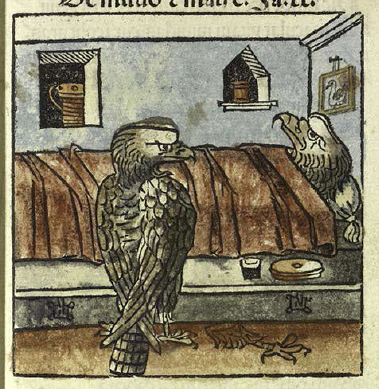
The kite lay in bed; now almost dying, begs his mother to go to pray to the Gods. The mother answers, no help was to be hoped by him from the Gods, whose sacred things so often he had violated by his [own] rapines.
Moral. It becometh us to worship the Gods, for they help the pious and withstand the impious. Neglgected in felicity, they do not hear in misery. Wherefore, be mindful of them in prosperous things, that, being called, they may be present in adverse things.


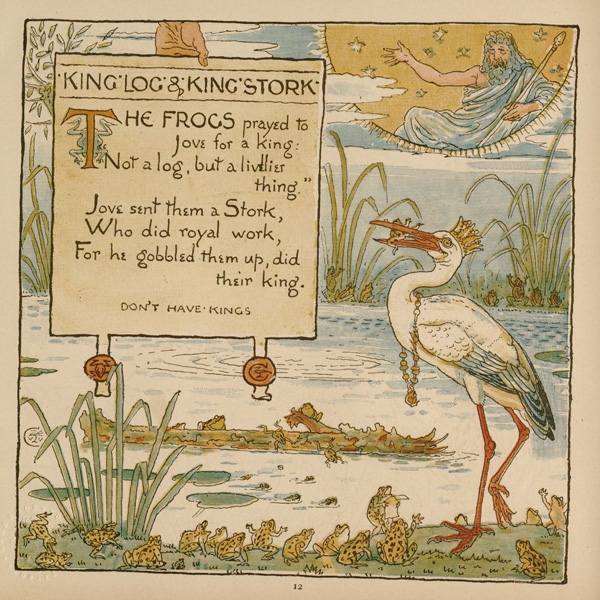
12. Of the Frogs and their King.
The nation of frogs, when it was free, besought Jupiter for a king to be given to them. Jupiter laughed at the wishes of the frogs. They nevertheless pressed him again, and again, until they drove him to it. He threw down a log; that mass shakes the river with a great noise. The frogs, affrighted, are silent; they reverence their king; they come nearer step by step; at length, fear being thrown away, they leap upon and leap off him; the sluggish king is their sport and contempt. Again they provoke Jupiter; they pray for a king to be given to them who may be valiant; to whom Jupiter gives the stork. He, very nimbly stalking through the marsh, devours whatever of the frogs comes in the way. Therefore, the frogs in vain have complained of the cruelty of him. Jupiter does not hear, for they complain even this day: for in the evening, the stork going to rest, having come out of their caves, they murmur with a hoarse croaking, but they sing to one deaf. For Jupiter wills that they who petitioned against a merciful king now bear an unmerciful.
Moral. It is wont to happen to the common people, as to the frogs, who, if they have a king a little milder, condemn him of idleness and sluggishness, and wish at sometimes for a man to be given to them: on the contrary, if at any time they have got an active king, they condemn the cruelty of him, and praise the clemency of the former; either because it always repents us of the present, or because it is a true saying that new things are better than old.


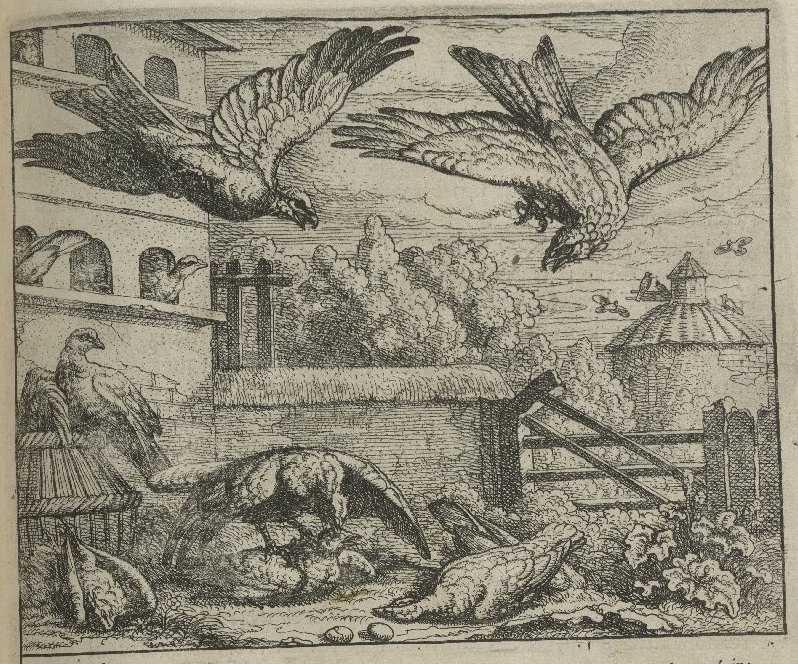
13. Of the Pigeons and the Kite
The pigeons formerly carried on a war with the kite, whom that they might subdue, they chose to themselves the hawk king. He, being made king, acts the enemy, not the king: he tears and butchers no slower than the kite. It repents the pigeons of their undertaking, thinking that it had been better to endure the war of the kite than the tyranny of the hawk.
Moral. Let it repent no man of his condition too much. As Horace says, nothing is happy from every part. Truly I would not wish to change my lot, provided it be tolerable. Many, when they have sought a new state, again have wished for the old. We are almost all of so various a temper that it repenteth us ourselves of ourselves.


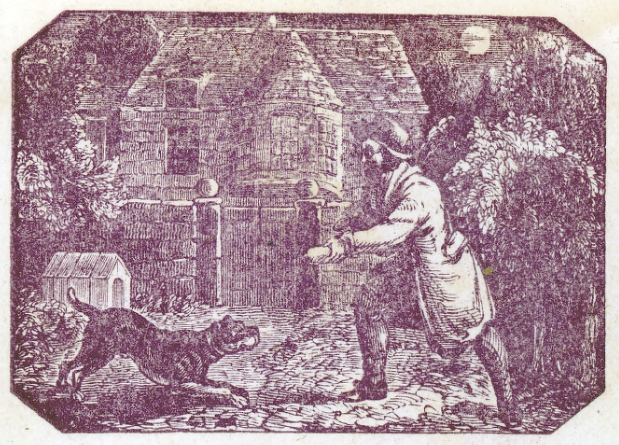
14. Of the Thief and the Dog
The dog answered the thief holding out bread that he would be silent, "I know thy treacheries! Thou givest bread that I may cease to bark, but I hate thy gift; for if I shall take the bread, thou wilt carry all the things out of these houses."
Moral. Take heed for the sake of a small profit, thou losest not a great one. Take heed that thou hast not faith in every man; for there are who not only say kindly, but also do kindly, with deceit.


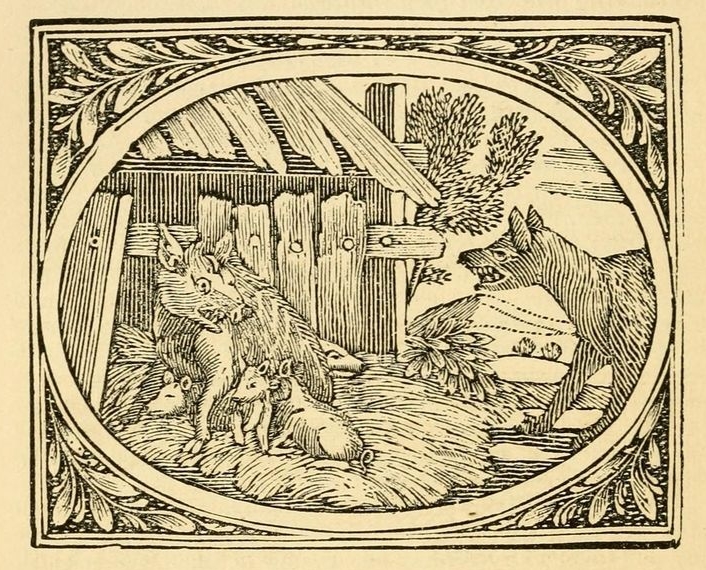
15. Of the Wolf and the Sow
The sow brought forth; the wolf promises that he would be the keeper of the young. The sow answered that she did not want the service of the wolf; if he is willing to be accounted affectionate, if he desires to do that which is grateful, let him go farther off, for that the office of the wolf consisted not in his presence, but absence.
Moral. All things are not to be trusted to all men. Many promise their service not out of love of you, but of themselves; not seeking thine advantage, but their own.