Monday, August 7, 2023

Clarke: English (2)

Here are some more fables from H. Clarke's Latin textbook Fabulae Aesopi selectae, or, Select fables of Aesop, and you can click here for all the fables reposted from this book at the blog. I plan to do a LibriVox recording of this book, so I will be transcribing all the fables here, and later I will be able to embed the LibriVox audio.


6. Of the Eagle and the Jackdaw
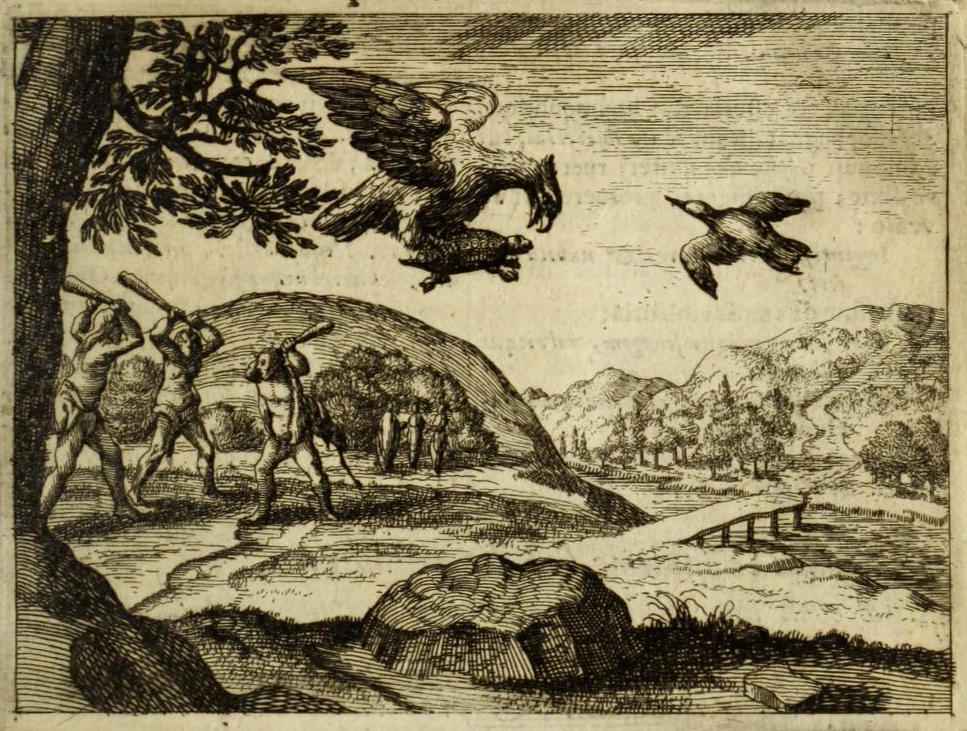
An eagl,e having got a cockle, was not able to get out the fish by force or art. The jackdaw coming up gives counsel, persuades her to fly up, and from on high to throw down the cockle upon the stones, for that so it would be that the cockle would be broken. The jackdaw stays on the ground that she may watch the fall: the eagle throws it down; the shell is broken; the fish is snatched away by the jackdaw; the deluded eagle grieves.
Moral. Be not willing to have faith in all men, and do you look into the counsel which you have received from others; for many, being consulted, do not counsel for their consultors, but for themselves.

7. Of the Crow and the Fox
A Crow having got a prey, makes a noise in the branches: the fox sees him rejoicing, runs up: "The fox," says he, "compliments the crow with very much health. Very often had I heard, that fame was a liar; now I find it in the fact itself: for, as by chance I pass by this way, seeing you in the tree, I fly to you, blaming fame: for the report is, that you are blacker than pitch, and I see you whiter than snow. Truly in my judgment you surpass the swans and are fairer than the white ivy. But if as you excel in feathers, you do so also in voice, truly I should call you the queen of all birds." The crow allured by this flattery prepares to sing. But the cheese fell from his beak; which, being snatched by the fox, he sets up a laughter: then at last the crow, shame being joined to the loss of the thing, grieveth.
Moral. Some are so greedy of praise that they love a flatterer, with their own disgrace and damage. Men of this kind are a prey to the parasite. But if you had avoided boasting, easily would you have avoided the pestilent race of flatterers. If thou art willing to be a Thraso, a Gnatho never will be wanting to thee.

8. Of the Dog and the Ass
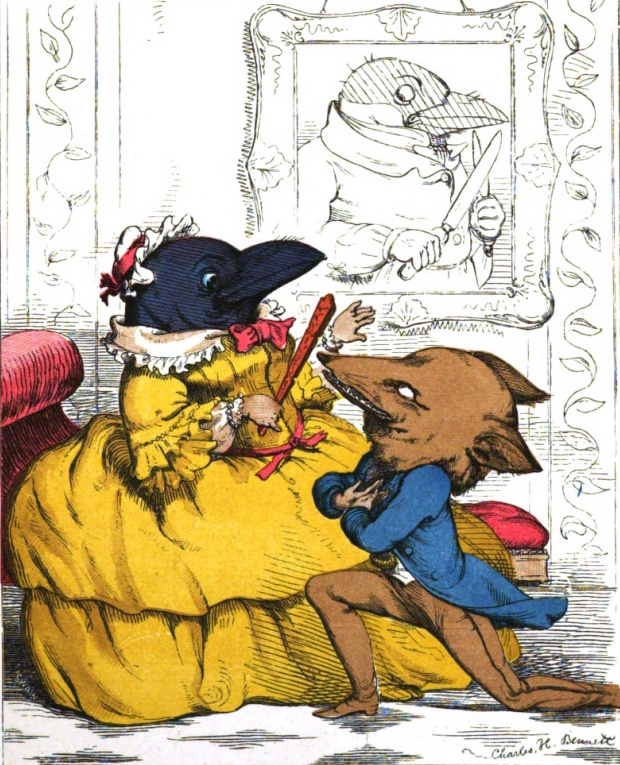
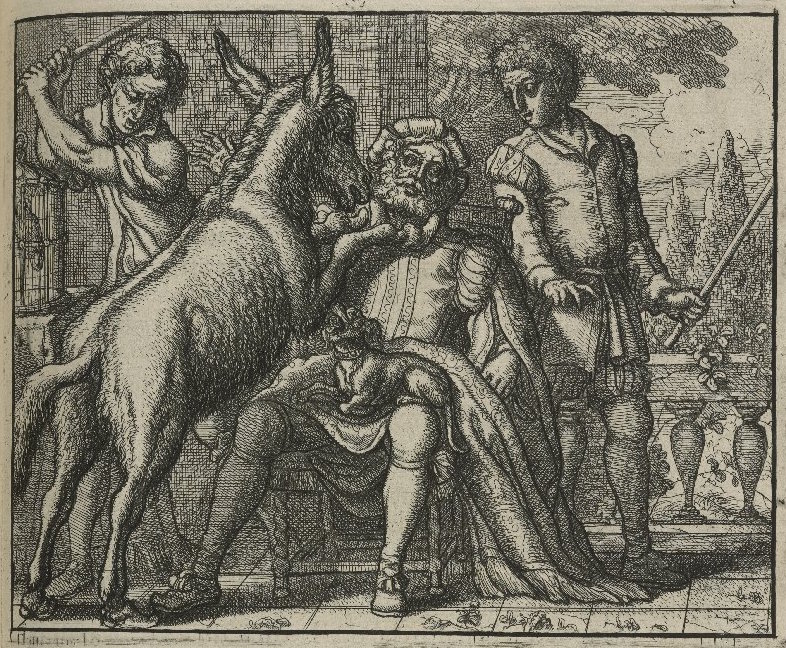
While the dog fawned on his master and the family, the master and the family stroke the dog. The ass, seeing that, groans most deeply; for he began to be weary of his condition: he thinks it unjustly ordered that the dog should be acceptable to all, and be fed from his master's table, and that he should get this by idleness and play: that himself on the contrary carried the dorsers, was beaten with the whip, was never idle, and yet odious to all. If these things are done by fawnings, he resolves to follow that art which is so profitable. Therefore on a certain time about to try the thing, he runs in the way to his master returning home, leaps on him, strikes him with his hoofs. The master crying out, the servants ran to him, and the silly ass, who thought himself courtly, is beaten.
Moral. We all cannot do all things; nor do all things become all men. Let every one do, let every one try that which he is able.

9. Of the Lion and Some Other Beasts
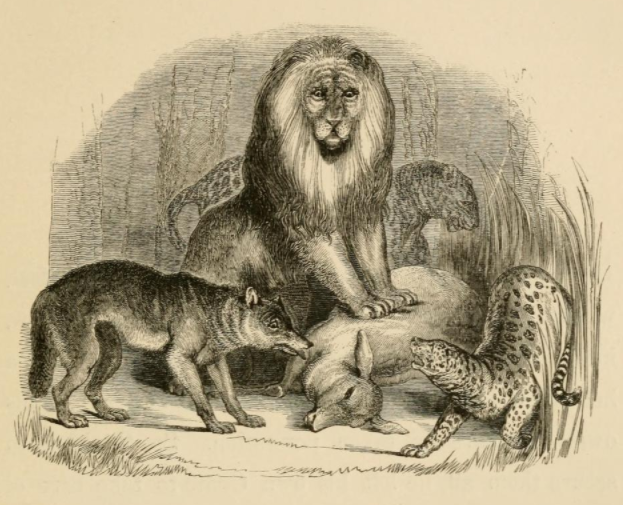
The lion had agreed with the sheep and some others that the hunting should be common. They hunt, a stag is taken: all beginning to take their single parts, as had been agreed, the lion roared, saying, one part is mine, because I am the most worthy; another also is mine, because I am most excellent in strength; moreover, I claim a third because I have sweated more in taking the stag; lastly, unless you will grant the fourth, there is an end of friendship. His companions, hearing this, depart, emtpy and silent, not having dared to mutter against the lion.
Moral. Faith always has been rare: in this age it is rarer; among the powerful it is, and always has been, most rare. Wherefore it is better to live with an equal. For, he who liveth with one more powerful, often hath a necessity to depart from his right.

10. Of the Lion and the Mouse
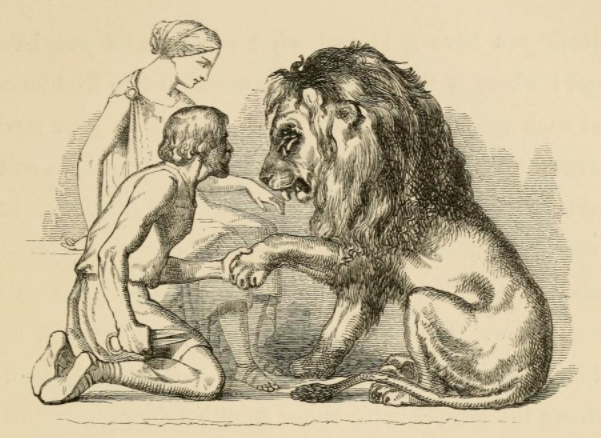
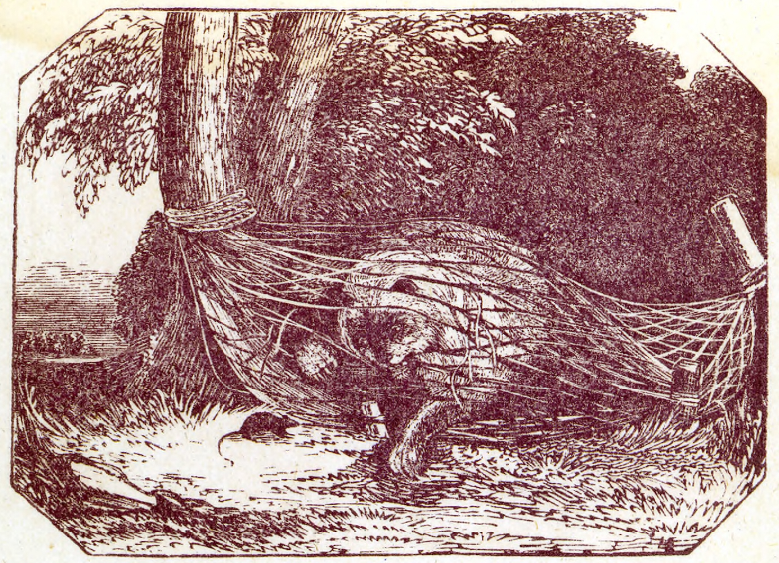
The lion, tired with heat and running, rested under the shade upon the green grass; a company of mice running over his back, having arose, he takes one of them. The captive begs, cries that he was unworthy whom the lion should be angry with. He, thinking there would be nothing of praise in the death of so little a beast, dismisses the captive. Not long after, the lion, whilst he runs through the forest, falls into the toils. He roars, but cannot get out. The mouse hears the lion miserably roaring, knows the voice, creeps into the holes, seeks the knots, which he finds and gnaws; the lion escapes out of the toils.
Moral. This fable recommends clemency to the powerful; for as human things are unstable, the powerful themselves sometimes want the help of the lowest; wherefore a prudent man, although he is able, feareth to hurt even a mean man; but he that does not fear to hurt another, plays the fool very much. Why so? Because, although now having relied on his power he feareth nobody, perhaps, hereafter, it will be that he may have wanted either the favor of mean men, or have feared their anger.

Sunday, August 6, 2023

Clarke (1)

Here are some fables from H. Clarke's Latin textbook Fabulae Aesopi selectae, or, Select fables of Aesop, and you can click here for all the fables reposted from this book at the blog. I plan to do a LibriVox recording of this book, so I will be transcribing all the fables here, and later I will be able to embed the LibriVox audio.


1. Of the Cock
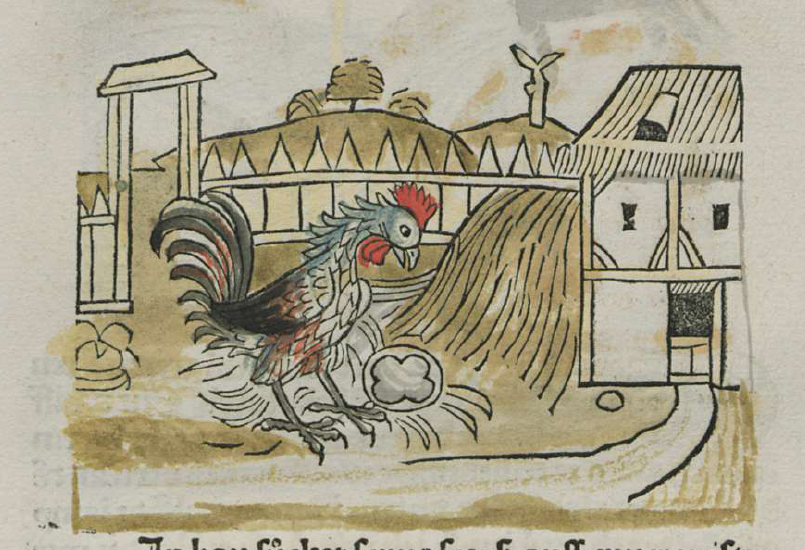
A Cock, while he turns up a dunghill, finds a jewel, saying, why do I find a thing so bright? If a jeweller had found thee, nothing would be more joyful than he, as who would know the price: indeed it is of no use to me, nor do I esteem it at a great rate; nay indeed I had rather have a grain of barley than all jewels.
The Moral. Understand by the jewel, art and wisdom; by the cock, a man foolish and voluptuous; neither fools love liberal arts, when they know not the use of them; nor a voluptuous man, because pleasure alone pleases him.


2. Of the Dog and the Shadow
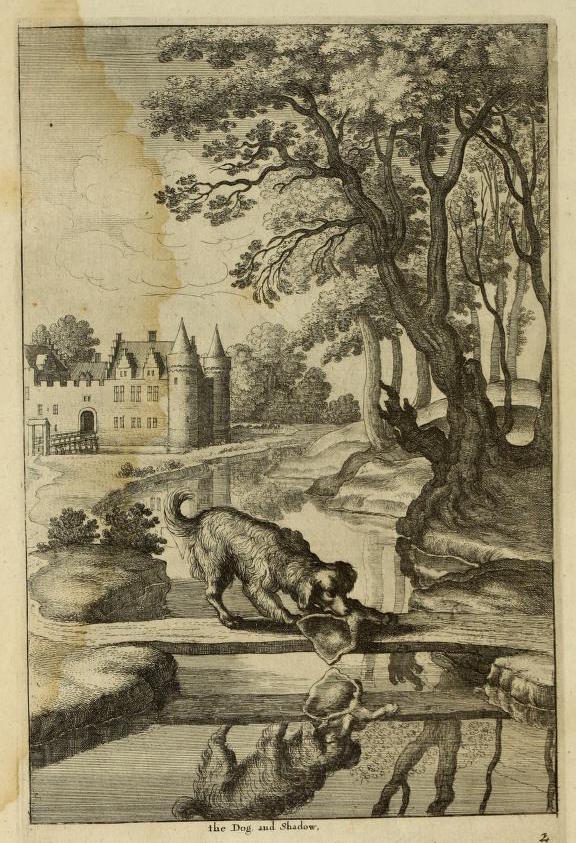
A dog swimming over a river carried flesh in his chops; the sun shining, the shadow of the flesh shone in the waters; which he, seeing and greedily catching at, lost what was in his jaws: therefore struck with the loss both of the thing and his hope, at first he was amazed; afterwards, taking courage, thus he barked out: wretch! moderation was wanting to thy desire: there was enough, and too much, unless thou hadst been mad. Now, through thy folly, there is less than nothing for thee.
Moral. Let there be moderation to thy desire, lest thou lose certain things for uncertain.


3. Of the Wolf and the Crane
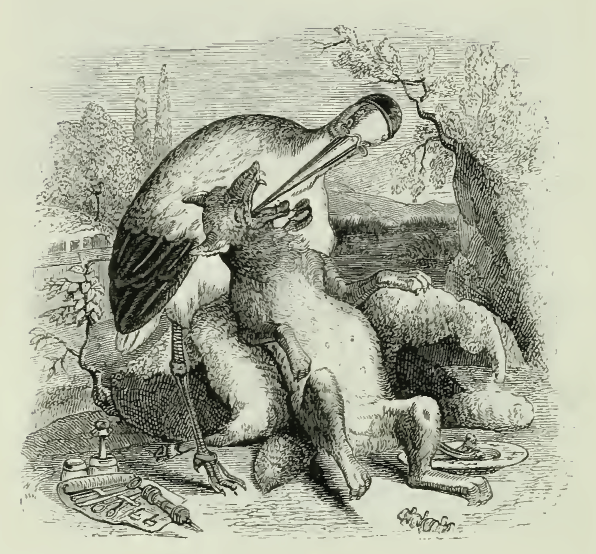
While a wolf devoureth a sheep, by chance the bones stuck in his throat; he goes about, asks help, nobody assists; all say that he had got the reward of his greediness: at length, with many flatteries and more promises, he draws in the crane, that her very long neck being thrust into his throat, she would pull out the bone fixed in. But he played upon her asking a reward, saying, fool, go away! hast thou not enough, that thou livest? Thou owest thy life to me; if I would, I was able to bite off thy neck.
Moral. What thou doest for the ungrateful, perisheth.


4. Of the Countryman and the Snake
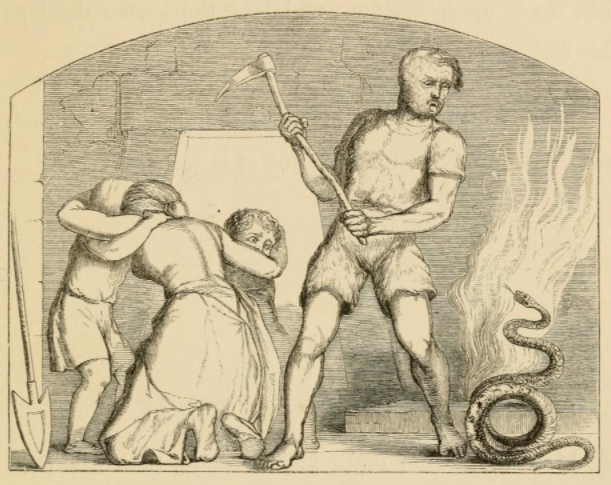
A countryman brought home a snake found in the snow, almost dead with cold; he lays him to the fire; the snake, recovering strength and poison, then not bearing the flame, filled all the cottage with hissing. The countryman, snatching a stake, runs up, and expostulates the injury with him in words and blows, whether he would return these thanks? Whether he would take life from him, who had given life to him?
Moral. Sometimes it happens that they are hurtful to thee, whom thou hast profited; and they deserve ill of thee, of whom thou hast deserved well.


5. Of the Boar and the Ass
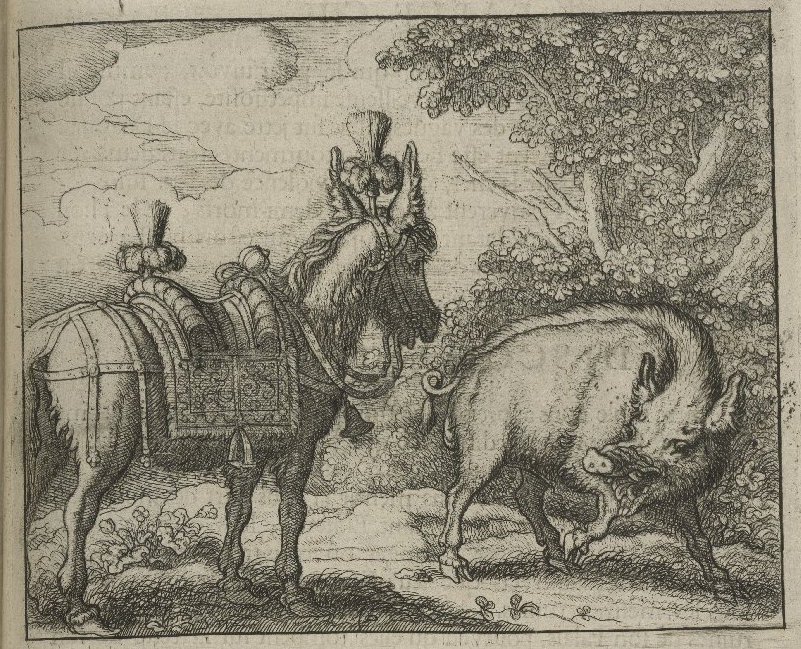
While the sluggish ass laughed at the boar, he, fretting, gnashed his teeth. Most slothful wretch, thou hast indeed deserved evil; but although thou hast been worthy of punishment, yet I am unfit who may punish thee. Laugh secure, for thou art safe for thy sluggishness.
Moral. Let us give an endeavour, that when we hear or endure things unworthy of us, we do not say or do things unworthy of us. For bad and lost men generally rejoice, if any one of the good resist them; they value it at a great rate that they are accounted worthy of revenge. Let us imitate horses and great beasts who pass by barking curs with contempt.


Thursday, August 3, 2023

Philip Ayres (6)

Here are some more fables from Mythologia Ethica: or, Three Centuries of Aesopian Fables by Philip Ayres, and you can click here for all the Ayres fables at this blog.


The Lion in Love
WIth a very handsom Maid, the Daughter of a Husbandman, was a Lion fallen in Love, and demanded her of her Father for his Wife. The Man with scorn rejected the offer, telling him he might forbear any further Courtship, or troubling him on that subiect, for he would make no Affinity nor Alliance with a Beast. 
Which surly refusal so much incensed the Lion, that he threatned to devour him. The Husbanman was then glad to change his proposal, letting him know, that he would consent to the Marriage, provided the Lion would suffer the sharp nails of his paws to be pared, and his Teeth to be filed, that his Daughter at her Nuptials might approach him with safety: To which the Generous Lion (not suspecting the intended Malice) readily yielded. 
But this treacherous Countryman seeing his Enemy, thus deprived of the use of his Paws and Teeth, arming himself with his Sword, fought with, and slew the Amorous Lion.


The Gourd and the Pine
At the foot of a tall Pine, appeared a young Gourd, which suddenly sprouting up very high, by the fall of some late showers, extended its Boughs all about the Pine, with abundance of broad Leaves, gaudy Flowers, and large Fruit. 
This so much swell'd her with Pride, that she began to stand in Competition with the Pine. Dost thou see, said she, stretching out her self, How nimbly I advance to over-top thee? 
I have endured, answered the Pine, many a Cold Blast, and many a Scorching Heat, yet still continue here safe and sound. But thou, Poor Fool, with the first Nipping Frost that comes, shalt lose thy strength, thy Leaves shall fade and come to nothing, and thou be seen no more.


The Hawk and the Dove
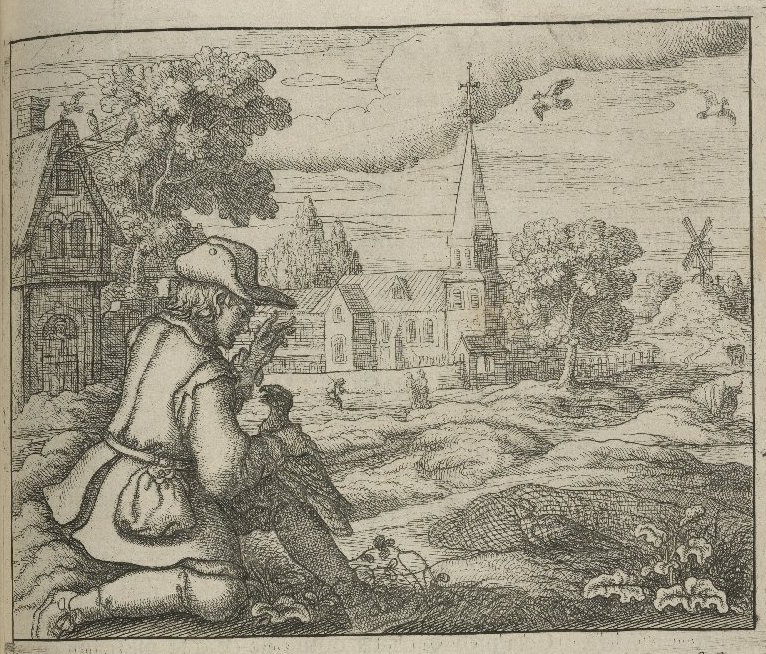
To her Masters House for shelter, flew an innocent Dove, to save herself from the swift pursuit of a Hawk; into which being eagerly followed by her fierce Adversary, he was there taken by the Country-man: To whom when he would have excused himself, begging his pardon, and alledging that having done him no wrong, he hoped he would spare his Life. 
Nor had this Dove, said the Country-man, offended you, whose Life you would so fain have taken away.


The Beasts, the Fowls and the Fishes
The Four-footed Beasts, finding themselves necessitated to Declare a War against the Fowls, who on divers occasions had broke the ancient League made betwixt them: They sent and made an Alliance with the Fishes, that they might assist them in this War. 
But at the time of Battel, when both Armies were in the Field, and the Beasts expected to be joyned by the Fishes, they sent an Excuse, That they could not come to help them fight by Land.


The Spider and the Gout
Two Friends, the Spider and the Gout, travelling together, came to a little Town called Tyche, and there took up their Lodgings. The Spider got into a Noble mans Palace, where so soon as she had spread her Nets, they were immediately pull'd down, which obliged her to remove to another part of the House; but wheresoever she began to settle, she was presently swept off again. 
And the Gout, happening into a Poor mans Cottage, was also miserably entertained with a hard Bed, Course Sheets, mean Diet, and even a scarcity of that too. Which Inconveniences, next Morning when the two Fellow Travellers meeting, had well consider'd, they resolved to try their Fortunes another way. 
So that coming at Night to a City; the Gout entred into the House of a Rich Magistrate, where she was quickly entertained, with Honourable Attendance, Down Beds, and Soft Couches to lye on, Variety also of the best Meats and choicest Wines; nor was there any Pleasure she could wish for, which she enjoy'd not. 
Whilst the Spider in a Poor mans House, weaved all the Gins, Snares and Nets, which she could contrive necessary for the catching her Game; without any Interruption; and there she lived in great Quietness and Plenty, free from the fear of Brush or Broom. 
When they had spent some time in this Felicity; the two Friends met again, and after mutual Salutations, they enquired of each others good Fortunes, where both extolling their Admirable Success since their last parting; they made a Resolution that from thenceforward, which way soever they should happen to Travel, the Gout by consent, should turn into the Rich and Noble mens Palaces, and the Spider into the Cottages of Poor men.